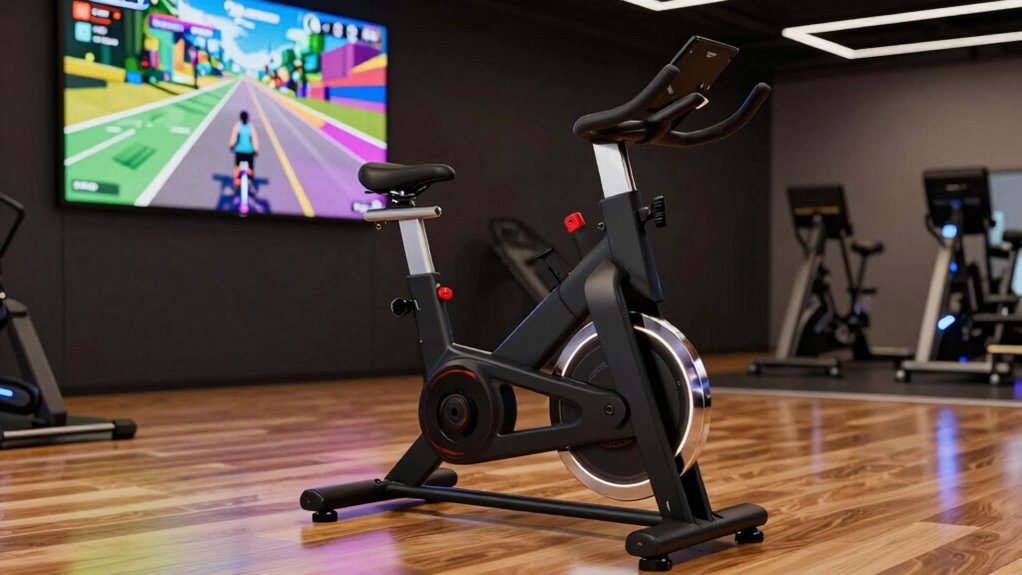

Among these smart bikes and trainers for Zwift, I’d put the Wahoo KICKR Bike PRO first for riders who want a dedicated indoor bike, while the Wahoo KICKR V6 is a stronger fit for those keeping their own bicycle. The ThinkRider XXPRO stands out on stated power and gradient figures, while the Saris M2 offers a simpler wheel-on route into virtual riding. The main choice is between a purpose-built bike, a direct-drive trainer, and a more basic wheel-on trainer, with setup, compatibility, and realistic ride feel varying across those formats. Smart trainers can pair with Zwift, but a trainer is not the same thing as a complete smart bike. Read on for how I rank these six options and which tradeoffs matter most for your setup.

Get sports gear delivered free with Prime
- Fast, free delivery on millions of items
- Prime Video, Amazon Music and more included
- Member-only deals all year
Complete the kit



Key Takeaways
- The KICKR Bike PRO is the dedicated-bike pick; it avoids mounting your road bike, but takes more room and calls for a larger commitment than a trainer.
- The KICKR V6 keeps your existing bicycle in use, making it a more flexible choice than a complete indoor bike if you value outdoor riding too.
- The ThinkRider XXPRO has the highest stated power and gradient figures here, but those headline specs alone do not establish app compatibility, accuracy, or ride feel.
- The Saris M2 is the wheel-on option; it can lower the barrier to entry, though tire contact introduces setup and wear considerations that direct-drive designs avoid.
- The KICKR V6 Zwift Click and Cog package is aimed at Zwift-specific convenience; compare its included controls and drivetrain approach with the standard V6 before paying for features you may not use.
| ThinkRider X2Max Smart Bike Trainer, 2000W, Simulates 18% Slope, ANT+ & BLE Compatibility |  | Best Value for Steep Virtual Climbs | Power output: 2,000W | Slope simulation: 18% | Connectivity: ANT+ and BLE | VIEW ON AMAZON | See Our Full Breakdown |
| Wahoo Fitness KICKR Bike PRO Indoor Trainer |  | Best Premium All-in-One Smart Bike | Maximum power output: 2,500W | Power accuracy: ±1% | Virtual shifting: Yes | VIEW ON AMAZON | See Our Full Breakdown |
| Wahoo KICKR V6 Smart Indoor Trainer |  | Best for Accurate, Data-Focused Training | Maximum resistance: 2,200W | Connectivity: Wi-Fi 2.4GHz | Calibration: Automatic | VIEW ON AMAZON | See Our Full Breakdown |
| Saris M2 Smart Indoor Electromagnetic Resistance Bike Trainer, Compatible with Zwift App |  | Best for Easy Bike Setup | Trainer type: Wheel-on smart trainer | Connectivity: Bluetooth and ANT+ | Resistance mechanism: Electronic electromagnetic | VIEW ON AMAZON | See Our Full Breakdown |
| ThinkRider XXPRO Smart Bike Trainer, 2500W, 25% Gradient, ANT+ & BLE |  | Best for Steep Virtual Climbs | Maximum power: 2,500W | Maximum slope: 25% | Connectivity: Bluetooth and ANT+ | VIEW ON AMAZON | See Our Full Breakdown |
| Wahoo KICKR V6 Zwift Click and Cog Smart Cycling Indoor Trainer |  | Best for Zwift-First Training | Brand: Wahoo Fitness | Model: KICKR V6 Zwift Click and Cog | Model series: WFBKTR122-3CC | VIEW ON AMAZON | See Our Full Breakdown |
| smart bikes for zwift | Connectivity | Dimensions | Weight | Load capacity |
|---|---|---|---|---|
| ThinkRider X2Max Smart Bike Tr | ANT+ and BLE | 17.7 x 19.2 x 21.6 in | 35.2 lb | 240 lb |
| Wahoo Fitness KICKR Bike PRO I | KICKR Direct Connect; Wi-Fi required for firmware updates and full features | 47 x 37 x 29 in | 42kg | 250 lb |
| Wahoo KICKR V6 Smart Indoor Tr | Wi-Fi 2.4GHz | 71 x 44 x 51 in | 22kg | 250kg |
| Saris M2 Smart Indoor Electrom | Bluetooth and ANT+ | 22 x 20 x 9 in | 20 lb | 300 lb |
| ThinkRider XXPRO Smart Bike Tr | Bluetooth and ANT+ | 19.49 x 18.9 x 20.87 in | — | 242 lb |
| Wahoo KICKR V6 Zwift Click and | Wi-Fi | 17 × 20 × 27 inches | 18 kg | — |
More Details on Our Top Picks
ThinkRider X2Max Smart Bike Trainer, 2000W, Simulates 18% Slope, ANT+ & BLE Compatibility
The ThinkRider X2Max is a practical pick for Zwift riders who want automatic resistance changes without moving up to a feature-heavy indoor bike. Its 18% slope simulation and 2,000W capacity cover demanding virtual climbs, while ANT+ and BLE give you options for connecting devices and apps. Compared with the ThinkRider XXPRO, it has less climbing range and power headroom, but its stated capabilities should be ample for many home training sessions. The tradeoff is setup: this trainer weighs 35.2 pounds, and the cassette is not included, so you’ll need a compatible cassette before riding. Its iron frame and 240-pound load limit also make it a less flexible choice for heavier riders. I’d choose it for a capable, app-connected trainer rather than a ready-to-ride setup.
Pros:- ANT+ and BLE support offers flexible connections to cycling apps and devices.
- 18% slope simulation adds resistance for virtual climbs.
- 2,000W maximum output suits demanding indoor sessions.
- Listed operating noise is approximately 58dB.
Cons:- Cassette is not included, adding a compatibility and setup step.
- At 35.2 pounds, it is cumbersome to carry or reposition.
- Its 240-pound load limit is lower than the Saris M2’s stated 300-pound capacity.
Best for: Zwift riders seeking ANT+ and BLE connectivity, substantial climbing simulation, and a trainer for a road or mountain bike.
Not ideal for: Riders who want a complete setup out of the box, need to move their trainer often, or exceed the 240-pound load capacity.
- Power output:2,000W
- Slope simulation:18%
- Connectivity:ANT+ and BLE
- Resistance mechanism:Electromagnetic
- Weight:35.2 lb
- Load capacity:240 lb
- Dimensions:17.7 x 19.2 x 21.6 in
- Warranty:1 year
Our verdict“Choose the X2Max if you want a connected trainer with meaningful climb simulation and can handle cassette setup and a relatively heavy frame.”
Wahoo Fitness KICKR Bike PRO Indoor Trainer
The Wahoo KICKR Bike PRO is the premium choice here for Zwift riders who want a dedicated indoor bike rather than a trainer that relies on their own bicycle. Virtual shifting, integrated handlebar controls, and downhill simulation bring more interactive features into the ride than the ThinkRider X2Max offers. Its 2,500W maximum output and stated power accuracy of ±1% also suit riders who place a high priority on detailed training data. The convenience comes with a substantial footprint: at 42kg and 47 x 37 inches, it is not a casual pick for a small room or a setup that needs frequent moving. It also relies on Wi-Fi for firmware updates and full features. Compared with the Wahoo KICKR V6, this is the more integrated bike-style option, while the V6 is a trainer for riders using a compatible existing bicycle.
Pros:- Virtual shifting and integrated handlebar controls keep ride adjustments close at hand.
- Downhill simulation adds another layer to virtual terrain changes.
- Stated ±1% power accuracy supports data-focused training.
- 2,500W maximum output provides substantial power headroom.
Cons:- At 42kg, it is difficult to move without planning a permanent location.
- Its 47 x 37-inch footprint takes more room than a compact trainer.
- Wi-Fi is required for firmware updates and full features.
Best for: Dedicated Zwift riders who want a permanent indoor-bike setup with virtual shifting, handlebar controls, and downhill simulation.
Not ideal for: Apartment riders with limited floor space, anyone who needs to store or move equipment regularly, or cyclists who prefer training on their own bike.
- Maximum power output:2,500W
- Power accuracy:±1%
- Virtual shifting:Yes
- Downhill simulation:Integrated
- Connectivity:KICKR Direct Connect; Wi-Fi required for firmware updates and full features
- Weight:42kg
- Dimensions:47 x 37 x 29 in
- Load capacity:250 lb
Our verdict“Pick the KICKR Bike PRO if you want a feature-rich, dedicated Zwift bike and have room to leave it set up.”
Wahoo KICKR V6 Smart Indoor Trainer
The Wahoo KICKR V6 suits Zwift riders who want precise power data and a more lifelike response from a trainer used with their own bike. Its 2,200W capacity, automatic calibration, and Wi-Fi connectivity favor structured sessions where repeatable readings matter. A high-inertia flywheel and KICKR AXIS feet are intended to bring more movement and outdoor-like feel than a basic fixed trainer. Compared with the KICKR Bike PRO, the V6 leaves the bike choice to you and avoids its dedicated-bike format, but it does not list the PRO’s virtual shifting or integrated handlebar controls. The supplied dimensions are unusually large for an indoor trainer, so check your available setup space rather than assuming it will fit like a small stand. At 22kg, it is also not especially portable.
Pros:- Automatic calibration supports consistent power readings across sessions.
- 2,200W resistance capacity accommodates demanding efforts.
- High-inertia flywheel and KICKR AXIS feet are designed to create a more natural ride feel.
- Wi-Fi connectivity supports data transfer without relying only on a direct device connection.
Cons:- At 22kg, it is heavy to reposition or store after each ride.
- Listed dimensions of 71 x 44 x 51 inches call for careful space checks.
- It lacks the KICKR Bike PRO’s stated virtual shifting and integrated handlebar controls.
Best for: Road, mountain, or hybrid bike owners who use Zwift for structured workouts and prioritize consistent power data and ride feel.
Not ideal for: Riders seeking an all-in-one bike with integrated virtual shifting, or households that need a compact trainer that is easy to move and store.
- Maximum resistance:2,200W
- Connectivity:Wi-Fi 2.4GHz
- Calibration:Automatic
- Weight:22kg
- Dimensions:71 x 44 x 51 in
- Bike compatibility:Hybrid, mountain, and road
- Load capacity:250kg
- Material:Alloy steel
Our verdict“Choose the KICKR V6 if you already own a compatible bike and value calibrated power data and ride feel over integrated bike features.”
Saris M2 Smart Indoor Electromagnetic Resistance Bike Trainer, Compatible with Zwift App
The Saris M2 is the simplest route into Zwift for riders who want to keep their existing bike intact. Its wheel-on design clamps the rear tire against a roller, avoiding the wheel removal and cassette setup required by many direct-drive arrangements. ANT+ and Bluetooth support app connections, while electromagnetic resistance lets Zwift adjust effort during a ride. Compared with the ThinkRider X2Max, the M2 has less emphasis on steep-climb capability and lists only one resistance setting, but it is lighter at 20 pounds and simpler to fit into a routine where the bike also gets outdoor use. The main compromise is the tire-on-roller experience: listed noise reaches 69dB at 20mph, and the tire contact may be less appealing to riders seeking a dedicated, quiet indoor setup. Check bike and wheel compatibility before buying.
Pros:- Wheel-on attachment avoids removing the rear wheel for indoor sessions.
- Bluetooth and ANT+ support connections to Zwift and other cycling apps.
- Electromagnetic resistance can respond to virtual riding demands.
- At 20 pounds, it is lighter than the ThinkRider X2Max.
Cons:- Listed noise reaches 69dB at 20mph, which may be intrusive in shared living spaces.
- One resistance setting offers less adjustment flexibility than more feature-rich options.
- Wheel-on setup requires tire-to-roller contact rather than a direct-drive connection.
Best for: Zwift newcomers and multi-use bike owners who want to attach their rear wheel without removing it or installing a cassette.
Not ideal for: Riders who prioritize quiet high-speed training, want multiple resistance settings, or need a trainer designed around steep virtual climbs.
- Trainer type:Wheel-on smart trainer
- Connectivity:Bluetooth and ANT+
- Resistance mechanism:Electronic electromagnetic
- Resistance settings:1
- Weight:20 lb
- Dimensions:22 x 20 x 9 in
- Listed wheel size:29 in
- Load capacity:300 lb
Our verdict“Pick the Saris M2 if quick wheel-on setup matters more than quiet operation and extensive resistance features.”
ThinkRider XXPRO Smart Bike Trainer, 2500W, 25% Gradient, ANT+ & BLE
For Zwift riders who chase mountainous routes, the ThinkRider XXPRO offers the most pronounced climbing capability in this group: its stated 25% gradient simulation exceeds the X2Max’s 18% and the Saris M2’s single listed resistance setting. The 2,500W ceiling and electromagnetic resistance add headroom for hard intervals, while self-power generation means the trainer does not need an external power supply according to the product details. Bluetooth and ANT+ support connections to common training devices. This is still a trainer, not a complete indoor bike, and the listing specifies a 26-inch wheel size; confirm that this matches your setup before choosing it. Compared with the Wahoo KICKR Bike PRO, the XXPRO puts the emphasis on steep gradient and power figures rather than integrated handlebar controls and virtual shifting.
Pros:- 25% slope simulation exceeds the X2Max’s listed 18% gradient.
- 2,500W maximum power supports demanding indoor efforts.
- Bluetooth and ANT+ provide broad device connection options.
- Self-power generation means no external power supply is required according to the product description.
Cons:- The listed 26-inch wheel size limits suitability; confirm fit before purchase.
- Its iron construction and 242-pound load capacity may not suit every rider or setup.
- The available details list five settings but do not explain how they affect resistance adjustment.
Best for: Zwift climbers with a compatible 26-inch-wheel setup who want steep gradient simulation and high power capacity.
Not ideal for: Riders whose bikes do not match the listed 26-inch wheel size, or those who want an integrated indoor bike with virtual shifting and handlebar controls.
- Maximum power:2,500W
- Maximum slope:25%
- Connectivity:Bluetooth and ANT+
- Resistance mechanism:Electromagnetic
- Listed wheel size:26 in
- Load capacity:242 lb
- Dimensions:19.49 x 18.9 x 20.87 in
- Number of settings:5
Our verdict“Choose the XXPRO if steep Zwift climbs are your priority and your bike matches its listed wheel-size requirement.”
Wahoo KICKR V6 Zwift Click and Cog Smart Cycling Indoor Trainer
The KICKR V6 Zwift Click and Cog is a strong choice for riders who want to use their existing bike in Zwift and value interactive control over a bike built solely for indoor use. Its Click and Cog setup is tailored to Zwift, while Wi-Fi connectivity and automatic calibration help keep setup and power readings consistent. The high-inertia flywheel and KICKR AXIS feet add a more dynamic ride feel than a basic fixed trainer, and up to 2,200 watts of resistance gives hard efforts room to grow. Compared with the Wahoo KICKR Bike PRO, this trainer avoids requiring a dedicated indoor bike, but it depends on having a compatible 8–12-speed bike and fitting it to the trainer. Its 18 kg weight also makes frequent moving less appealing, so it suits a dedicated training spot better than a shared space.
Pros:- Zwift Click and Cog controls are designed around Zwift riding.
- Up to 2,200 watts of electromagnetic resistance supports demanding intervals.
- High-inertia flywheel and KICKR AXIS feet provide a more dynamic ride feel.
- Wi-Fi connectivity and automatic calibration support convenient setup and consistent readings.
Cons:- At 18 kg, it can be cumbersome to move between workouts.
- Requires a compatible 8–12-speed bike, which adds setup and fit considerations.
- A feature-rich setup may be more than casual riders need.
Best for: Zwift-focused cyclists with a compatible 8–12-speed bike who want interactive resistance, measured power, and some side-to-side movement without buying a dedicated indoor bike.
Not ideal for: Casual riders who want a low-cost, easy-to-store setup, or cyclists who lack a compatible bike and prefer the ready-to-ride format of the Wahoo KICKR Bike PRO.
- Brand:Wahoo Fitness
- Model:KICKR V6 Zwift Click and Cog
- Model series:WFBKTR122-3CC
- Resistance mechanism:Electromagnetic
- Maximum resistance:Over 2,200 watts
- Bike compatibility:Most 8–12-speed bikes
- Connectivity:Wi-Fi
- Weight:18 kg
- Dimensions:17 × 20 × 27 inches
Our verdict“Choose this trainer if Zwift is your main indoor platform and you want a connected, high-resistance setup for a compatible bike rather than a dedicated smart bike.”

How We Picked
I ranked these options by how well their format and stated features serve Zwift riders, not by power numbers alone. I weighed whether each is a complete indoor bike or a trainer that requires a separate bicycle, the stated resistance range and gradient simulation, Zwift-relevant connectivity, and the practical demands of setup, space, and ongoing use. I also separated the direct-drive models from the wheel-on Saris M2 because their installation and maintenance tradeoffs differ.
The KICKR Bike PRO leads for a dedicated indoor setup, while the KICKR V6 leads among trainers for riders using their own bike. ThinkRider’s XXPRO ranks ahead of the X2Max on its stated power and gradient capacity, but those figures do not by themselves confirm better accuracy or compatibility. I place the Saris M2 lower for riders seeking a low-fuss, realistic Zwift setup because its wheel-on design has extra tire and calibration considerations. The V6 Click and Cog is a distinct Zwift-focused package, not automatically a better fit than the standard V6 for every rider.
| smart bikes for zwift | Connectivity | Resistance mechanism |
|---|---|---|
| ThinkRider X2Max Smart Bike Tr | ANT+ and BLE | Electromagnetic |
| Wahoo Fitness KICKR Bike PRO I | KICKR Direct Connect; Wi-Fi required for firmware updates and full features | — |
| Wahoo KICKR V6 Smart Indoor Tr | Wi-Fi 2.4GHz | — |
| Saris M2 Smart Indoor Electrom | Bluetooth and ANT+ | Electronic electromagnetic |
| ThinkRider XXPRO Smart Bike Tr | Bluetooth and ANT+ | Electromagnetic |
| Wahoo KICKR V6 Zwift Click and | Wi-Fi | Electromagnetic |
Factors to Consider When Choosing Smart Bikes For Zwift
Before choosing a model, I’d settle the practical questions that product specs can obscure: whether you need a bike or a trainer, what bicycle it must fit, and how often you’ll ride indoors. Those decisions can matter more to day-to-day satisfaction than a higher maximum wattage.
Decide Whether You Need a Complete Bike or a Trainer
A smart bike is a standalone indoor riding setup; a smart trainer uses your existing bicycle or another compatible bike. That distinction affects cost, storage, setup time, and whether you can switch between indoor and outdoor riding without changing equipment. A dedicated bike can make sense for a household with different riders or for someone who wants a fixed indoor station. A trainer is often the more practical choice if your current bike already fits well and you want to use it on Zwift. Don’t assume a listing called a smart trainer includes a bicycle. Check the package contents and required components before deciding.
Match the Trainer to Your Bicycle and Drivetrain
Before ordering a trainer, check axle type, frame clearance, cassette or freehub requirements, and the drivetrain setup specified by the manufacturer. Small compatibility mismatches can turn an otherwise suitable trainer into a return or an extra-parts project. Wheel-on models add another detail: the tire must sit correctly against the resistance unit, and some setups may call for a suitable tire. A direct-drive trainer removes the rear wheel from the equation but still needs the right fit and drivetrain parts. If more than one person will ride, check how easily the setup accommodates their bikes. Treat compatibility as a purchase requirement, not a detail to solve after delivery.
Read Power and Gradient Figures in Context
Maximum wattage and simulated gradient describe upper limits, not a complete measure of how Zwift riding will feel. Many riders will get more practical value from predictable resistance changes, reliable app communication, and stable operation than from the highest number on a spec sheet. A large gradient figure matters most to riders who regularly tackle steep virtual climbs and want stronger resistance simulation. Don’t assume two products with similar advertised limits have the same accuracy or responsiveness; look for manufacturer details on those points. Also check whether the resistance range suits your actual workouts, not just an occasional sprint. Choose capacity for the riding you expect to do.
Check Connectivity and Zwift Controls
Zwift needs the trainer and any relevant sensors to communicate through supported connections, so verify the specific model’s app and device compatibility. ANT+ and Bluetooth are connection methods, but their presence does not guarantee every combination of phone, computer, and accessories will pair as you expect. A Zwift-focused Click and Cog bundle may simplify some virtual shifting or control tasks, but its added features matter only if they fit your preferred setup. Consider where Zwift will run and whether that device has the connections you plan to use. If you already own compatible sensors or controls, avoid buying duplicates without a clear reason. Confirm compatibility against current manufacturer guidance before ordering.
Plan for Noise, Space, and Setup
Indoor equipment affects the room as much as the ride. A dedicated bike needs a stable footprint, while a trainer may be easier to put away but requires mounting and removing your bicycle. Noise can come from the trainer, the bike’s drivetrain, or vibration through the floor, so a mat and good maintenance may help even with a quieter resistance unit. Check the manufacturer’s dimensions and storage recommendations rather than judging by product photos. If you share walls or ride early, ask about operating noise for the specific model and setup. A powerful trainer is not a good match if it makes your available space or household routine harder to manage.
Decide What Convenience Is Worth Paying For
A premium dedicated bike can reduce the hassle of mounting a bicycle, while a simpler trainer may leave more room in your budget for a fan, mat, or other essentials. Extra controls and bundled components are useful when they replace equipment you would otherwise buy or solve a real setup problem. They add less value when you already own the same accessories or prefer a different control method. For a first Zwift setup, a straightforward compatible trainer may be enough to learn what features you use most. Frequent riders may place greater value on a stable, permanent station. Compare the whole setup you need, not only the trainer’s headline feature list.
Frequently Asked Questions
Is the Wahoo KICKR V6 a smart bike or a trainer?
The KICKR V6 is a smart trainer, so you use it with a compatible bicycle rather than riding it as a standalone bike. That makes it a better fit if you already have a bicycle that suits your position and you want to use it indoors. The KICKR Bike PRO is the dedicated-bike alternative in this roundup. Before choosing the V6, confirm your bike’s axle and drivetrain requirements against Wahoo’s current specifications. If you want to avoid removing and mounting your bike, a complete indoor bike may suit you better.
Should I choose the standard KICKR V6 or the Click and Cog version?
Start by comparing what the Click and Cog package includes with the equipment you already own and the Zwift controls you plan to use. The bundled version is aimed at riders who want a Zwift-focused setup, while the standard V6 may be the simpler fit if you already have suitable accessories or prefer your current controls. Check compatibility with your bicycle and the rest of your devices for either option. Don’t assume the bundle changes the trainer’s basic role: both are trainer-based choices that require a bicycle. Pick the package whose additions solve a real need in your setup.
Is a wheel-on trainer like the Saris M2 a poor choice for Zwift?
No, a wheel-on trainer can work for Zwift, especially if you want a trainer format that uses your existing bicycle and are comfortable with its setup requirements. The main tradeoff is that the rear tire contacts the resistance unit, so tire condition, pressure, and correct adjustment can affect the riding setup. Direct-drive models avoid that tire contact but require removing the rear wheel and checking drivetrain compatibility. Think about how often you’ll ride and whether you want to leave the bike mounted or ready for outdoor use. The Saris M2 makes more sense when its simpler wheel-on approach suits your routine than when you want to avoid tire-related upkeep.
Do the ThinkRider XXPRO’s higher power and gradient figures make it the best Zwift trainer?
Not on their own. The XXPRO has the highest stated power and gradient capacity among these options, which may appeal to riders who want substantial headroom for hard efforts and steep virtual climbs. Those figures don’t tell you everything about resistance responsiveness, accuracy, app pairing, noise, or bicycle fit. Compare those details with the KICKR V6 and the rest of your planned setup before treating the headline limits as decisive. If your rides rarely approach the XXPRO’s stated range, compatibility and everyday convenience may matter more.
What should I check before buying a trainer for use with my road bike?
Check the trainer’s supported axle standards, frame compatibility, drivetrain and cassette requirements, and whether any parts are included or sold separately. For a wheel-on model, also check tire type and the manufacturer’s setup guidance. Confirm that your intended phone, tablet, or computer can connect using the trainer’s supported wireless protocols. If you have multiple bikes, check each one rather than assuming the same fit across frames. These checks can prevent a mismatch that no power or gradient specification can fix.
Conclusion
For the best overall dedicated indoor bike, I’d choose the Wahoo KICKR Bike PRO; for the best trainer for riders keeping their own bicycle, I’d pick the standard Wahoo KICKR V6. The ThinkRider X2Max is my value-oriented candidate among the listed models, though I’d verify compatibility and support details before buying; the XXPRO suits riders drawn to its higher stated power and gradient limits. For a beginner who wants a wheel-on route, the Saris M2 is the straightforward format to compare, provided its tire-contact setup fits your routine. Choose the KICKR V6 Click and Cog if its Zwift-focused controls match your needs. The right choice depends first on whether you want a complete bike or a trainer, then on fit, connectivity, and how much convenience your riding schedule warrants.