Power meters come in several types, each offering different accuracy levels. Digital meters provide precise measurements and often include features like data logging and remote access, making them ideal for detailed energy management. Analog meters are simple, durable, and don’t require power, but tend to be less accurate. Smart meters combine digital technology with real-time data, improving measurement accuracy and connectivity. Exploring these options helps you find the best fit for your energy needs. Keep exploring to learn more.
Open a free Amazon Business account
Business pricing, bulk buying and tax-exempt orders.
As an affiliate, we earn on qualifying purchases.
Key Takeaways
- Digital power meters offer higher accuracy and detailed data compared to analog meters.
- Analog meters are simple, durable, but generally less precise and lack advanced features.
- Smart meters integrate digital technology for real-time monitoring and superior measurement accuracy.
- Calibration and software updates are essential to maintain the accuracy of digital and smart meters.
- The choice of meter type depends on required precision, budget, and integration needs for energy management.
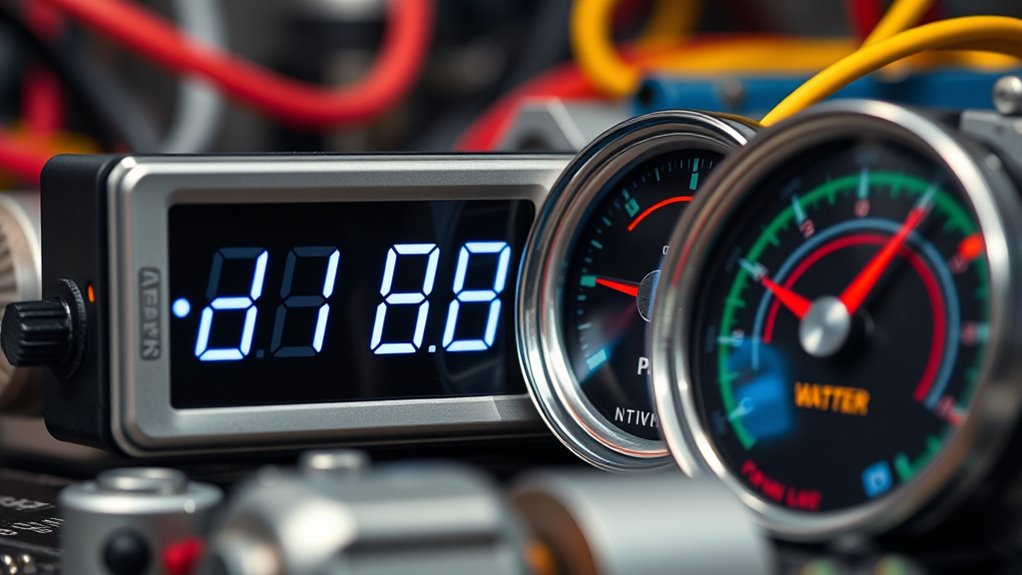
Have you ever wondered how much energy your home or device consumes? Understanding that can help you save money, reduce your carbon footprint, and optimize your energy use. Power meters are essential tools in this process, providing detailed measurements of electricity consumption. Today’s power meters come in various types, each offering different levels of accuracy and features that suit diverse needs. With the rise of smart grid technology, these devices are becoming even more integrated into our energy systems, allowing for real-time monitoring and better management of renewable energy sources. This integration helps ensure that energy is used efficiently and sustainably, making it easier for you to track how much energy you’re using and where you can cut back. Digital power meters are among the most common today. They use electronic components to measure electricity flow precisely and display data on a screen. These meters are highly accurate, easy to read, and often include features like data logging and remote access. They can connect to your home’s network, allowing you to monitor your energy consumption via smartphone apps or online portals. This connectivity is especially useful if you’re integrating renewable energy sources such as solar panels or wind turbines into your home. A smart grid system can communicate with these digital meters to optimize energy distribution, reduce waste, and ensure that renewable energy is used efficiently. As a result, you’re empowered to make smarter choices about when and how you use electricity, ultimately saving money and supporting sustainability. Incorporating maintenance practices such as regular calibration and software updates can help maintain the accuracy and longevity of your power meters. Analog meters, on the other hand, are older and rely on spinning dials to indicate energy consumption. While they’re less precise than digital meters, they still provide a general idea of usage. These meters are simple, durable, and don’t require a power supply to operate, making them reliable in many situations. However, their accuracy can be affected by wear and tear over time, and reading them can be less convenient, especially if you want detailed data or want to track your usage over days or months. For those interested in a straightforward, no-frills approach, analog meters can suffice, but for detailed insights and integration with renewable energy systems, digital or smart meters are the better choice. Smart meters are the latest evolution, combining the benefits of digital technology with advanced features like real-time data, remote monitoring, and integration into smart grids. They can instantly relay your consumption data to utility companies and allow you to see your usage patterns through apps. This level of detail helps you identify high-energy appliances, optimize your energy use, and even shift consumption to times when renewable energy is plentiful. Smart meters also contribute to a more resilient and sustainable grid, as they facilitate better management of renewable energy sources and reduce overall waste. Whether you’re looking to cut costs, support green energy, or simply gain more control over your electricity usage, investing in a high-accuracy power meter—preferably a smart one—can make a significant difference.
As an affiliate, we earn on qualifying purchases.
Frequently Asked Questions
How Do Environmental Factors Affect Power Meter Accuracy?
Environmental influences, like temperature, humidity, and vibration, can critically affect your power meter’s accuracy. These factors cause calibration challenges, as sensors may drift or become less precise under changing conditions. To maintain accuracy, you should regularly calibrate your device, especially if it’s exposed to harsh environments. Monitoring environmental conditions helps guarantee your power readings remain reliable, preventing measurement errors that could impact your performance or analysis.
Can I Upgrade My Existing Power Meter to a More Accurate Model?
Yes, you can upgrade your existing power meter to a more accurate model. First, check your current power meter compatibility with the new model to make certain it fits your bike or setup. Then, follow the upgrade procedures specified by the manufacturer, which usually involve removing the old meter and installing the new one securely. This upgrade can improve measurement precision and overall performance.
What Maintenance Is Required to Keep a Power Meter Precise?
Think of your power meter as a finely tuned orchestra needing regular tuning. You keep it in harmony with simple calibration procedures, ensuring it hits the right notes. Don’t forget to check battery maintenance—replace or recharge batteries before they fade, so the meter’s pulse remains true. Regularly inspecting connections and cleaning contacts keeps signals clear and accurate, letting your power readings stay precise, like a melody that never misses a beat.
How Do Digital and Analog Power Meters Compare in Reliability?
Digital power meters generally offer higher digital reliability, meaning they provide consistent readings over time and are less affected by environmental factors. Conversely, analog meters excel in analog consistency, maintaining reliable performance without digital glitches. You’ll find digital meters more precise for detailed measurements, while analog meters can be more dependable in rough conditions. Your choice depends on whether you prioritize digital reliability or analog consistency for your specific needs.
Are There Industry Standards for Power Meter Calibration?
Yes, there are industry standards for power meter calibration. You should follow specific calibration procedures to guarantee accuracy, such as using traceable reference standards and performing regular checks. Industry compliance is essential, so you need to adhere to standards set by organizations like IEEE or IEC. Regular calibration maintains reliability, minimizes errors, and ensures your power meters meet regulatory requirements, ultimately supporting precise measurements and safe operation.
Conclusion
In the end, choosing the right power meter depends on your needs and accuracy preferences. Whether you opt for traditional analog or modern digital models, you’ll find options that suit your budget and skill level. Just remember, even in the age of smartphones and smart homes, a reliable power meter can be your trusty sidekick—like a trusty compass guiding you through the digital wilderness. Stay informed, measure wisely, and power up your cycling or home energy game!
NFL season / tailgating Picks
team gear
As an affiliate, we earn on qualifying purchases.