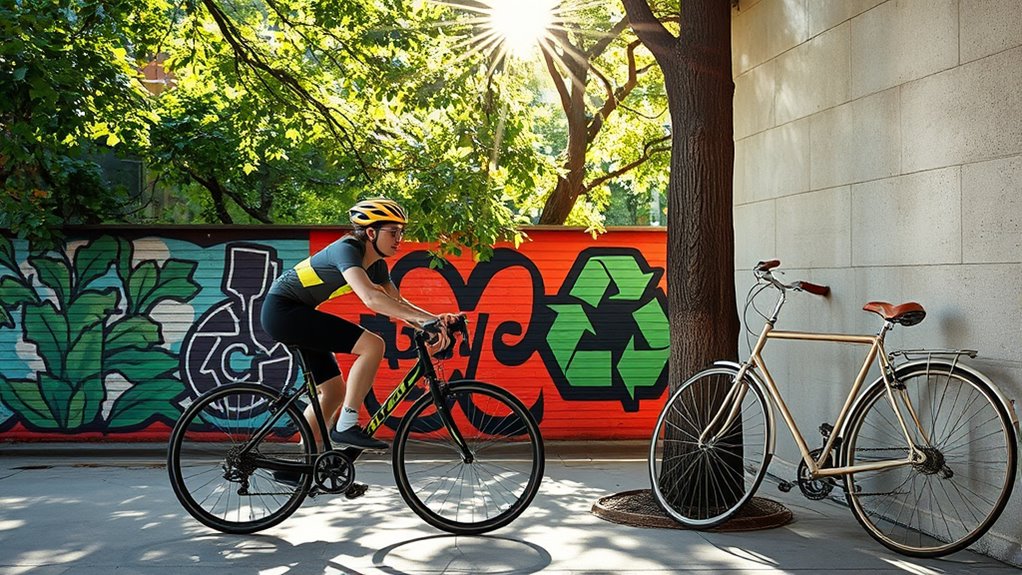

Sustainable cycling helps you minimize your environmental impact through everyday actions. You can reduce waste by choosing eco-friendly gear made from recycled or organic materials, and extend your bike’s life with regular, eco-conscious maintenance. Reusing parts and recycling bike components keeps resources in circulation and prevents waste. Opting for city programs and durable accessories promotes active, eco-friendly transportation. Keep exploring to discover more ways you can make your cycling habits even greener and more sustainable.
Key Takeaways
- Opt for eco-friendly cycling gear made from recycled or biodegradable materials to minimize environmental impact.
- Maintain bikes regularly using sustainable lubricants to extend lifespan and reduce waste.
- Utilize bike sharing programs to promote shared, low-impact transportation options.
- Choose durable, multi-purpose accessories to avoid unnecessary waste and promote mindful consumption.
- Support community recycling and donation initiatives for bike parts to encourage reuse and circular economy practices.

Have you ever contemplated how cycling can be a powerful step toward a more sustainable future? One of the most effective ways to embrace this is through urban bike sharing programs. These initiatives allow you to access bikes conveniently around the city, reducing the need for personal vehicle ownership. By choosing shared bikes, you cut down on emissions, ease traffic congestion, and promote a healthier environment. Urban bike sharing also encourages people to cycle more often, making active transportation an integral part of city life. Plus, it’s a practical way to integrate eco-conscious habits into your daily routine without the hassle of maintenance or storage.
Urban bike sharing promotes eco-friendly city living and encourages active, sustainable transportation habits.
When you opt for cycling as a primary mode of transport, it’s essential to consider eco friendly cycling gear. From biodegradable lubricants to sustainable clothing, the gear you select can greatly lessen your environmental footprint. Look for products made from recycled or organic materials, and avoid single-use plastics whenever possible. Lightweight, durable gear not only enhances your riding experience but also supports a circular economy—meaning it can be reused or recycled at the end of its life. Investing in eco friendly cycling gear creates a ripple effect, inspiring others to make conscious choices and fostering a community committed to sustainability.
In addition to gear choices, maintaining your bike properly can extend its lifespan and prevent waste. Regular tune-ups, using eco-friendly lubricants, and repairing parts instead of replacing entire components align with the principles of reduce and reuse. When your bike parts do reach the end of their life, seek out recycling options or donate usable components to community repair programs. This approach ensures that resources stay within the cycle of reuse and recycling, minimizing landfill waste. Additionally, adopting sustainable maintenance practices can further enhance your bike’s longevity and environmental benefits.
Furthermore, embracing a minimalist mindset about cycling accessories can also promote sustainability. Avoid cluttering your space with unnecessary gadgets or fashionable gear that won’t last. Instead, choose versatile, high-quality items that serve multiple purposes and stand the test of time. By making mindful purchases and caring for your equipment, you help decrease waste and support a more sustainable cycling culture.
As an affiliate, we earn on qualifying purchases.
Frequently Asked Questions
How Can I Find Affordable Recycled Cycling Gear?
You can find affordable recycled cycling gear by checking out secondhand shops and gear swaps in your area. These places often sell gently used or pre-owned equipment at lower prices, helping you save money while being eco-friendly. Keep an eye on local community events or online groups dedicated to gear swaps, where cyclists trade or sell gear they’ve outgrown or no longer need. This way, you get quality gear without breaking the bank.
What Are the Best Eco-Friendly Cycling Routes?
Imagine your ride as a gentle brushstroke across a living masterpiece. For the best eco-friendly cycling routes, seek out scenic green paths and eco routing options that weave through lush parks and quiet countryside. These routes offer a harmonious blend of nature and adventure, letting you pedal softly on eco-conscious trails. Embrace routes that prioritize sustainability, and each journey becomes a tribute to the planet’s vibrant beauty.
How Do I Dispose of Old Bike Parts Responsibly?
When you need to dispose of old bike parts responsibly, start by taking them to local recycling centers that accept metal and plastic components. If you’re doing a bike repair, consider donating usable parts to community bike programs or repair shops. Avoid throwing parts in regular trash, as recycling helps conserve resources and reduces waste. Always check with your local authorities for specific recycling guidelines for bike parts in your area.
Are There Any Certifications for Sustainable Cycling Products?
Think of eco labels as the GPS guiding your bike choices toward greener paths. Yes, there are certifications for sustainable cycling products. They follow strict certification processes, ensuring products meet eco label standards. Look for labels like Fair Trade, OEKO-TEX, or bluesign, which verify eco-friendliness and ethical practices. These certifications help you ride with confidence, knowing your gear supports sustainability and reduces environmental impact.
How Can Communities Promote Cycling Sustainability?
You can promote cycling sustainability by encouraging community bike sharing programs and creating urban green spaces. Support local initiatives that make bikes accessible to everyone, reducing reliance on cars. Advocate for expanded green areas that make cycling safer and more enjoyable. Organize events and campaigns that raise awareness about sustainable cycling benefits. By fostering these efforts, you help build a community where cycling is a convenient, eco-friendly choice for all residents.
Conclusion
You might think cycling isn’t enough to make a difference, but every ride counts. By choosing to bike instead of drive, you help reduce pollution and waste. Reusing parts and recycling old gear keeps your cycling sustainable. So, don’t worry if you can’t do everything perfectly—every small step adds up. Just hop on your bike, enjoy the journey, and know you’re making a positive impact on our planet. Together, we can create a greener future.