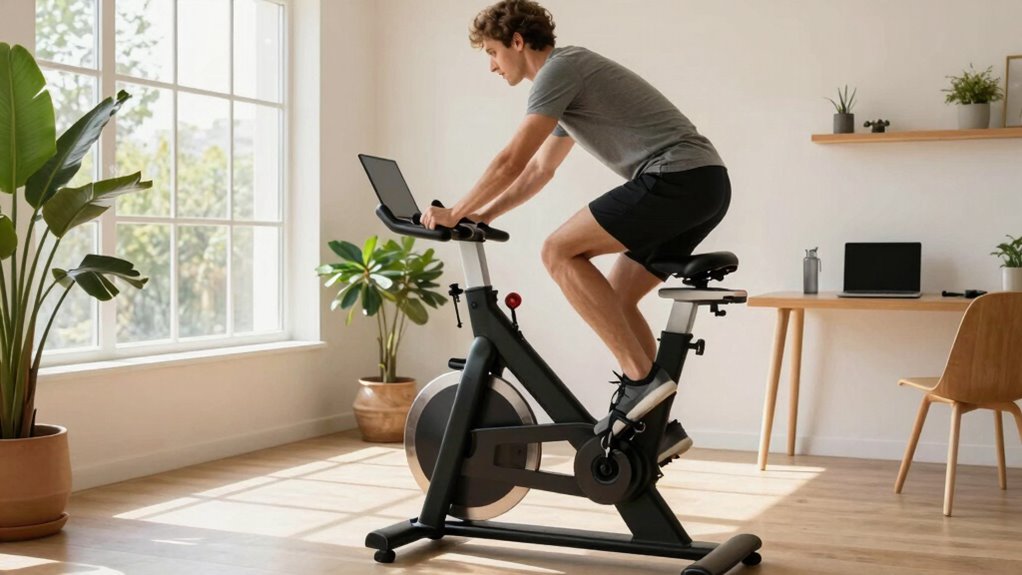

To use riding as active recovery from desk work, keep your pace light and comfortable, avoiding high-intensity efforts. Stick to steady, easy cadences on smooth or stationary bikes for about 20 to 30 minutes. Focus on gentle movement that promotes blood flow, reduces muscle stiffness, and supports natural healing. Always listen to your body and adjust accordingly. If you want to find out more about optimizing your recovery routine, there’s more to discover here.

Get sports gear delivered free with Prime
- Fast, free delivery on millions of items
- Prime Video, Amazon Music and more included
- Member-only deals all year
Key Takeaways
- Keep riding at a light, comfortable pace to promote circulation without overexertion.
- Choose flat, smooth routes or stationary bikes for low-impact recovery sessions.
- Limit sessions to 20-30 minutes, focusing on steady, mindful movement.
- Avoid high-intensity intervals to support natural muscle repair and prevent fatigue.
- Use riding regularly to enhance flexibility, reduce stiffness, and counteract effects of prolonged sitting.

Have you ever considered that riding can be more than just a workout—it can also be an effective way to recover? When you spend hours sitting at a desk, your muscles get stiff, your circulation slows down, and your overall energy dips. Incorporating riding into your routine allows you to activate recovery techniques that help your body bounce back without overexertion. Cycling benefits extend beyond fitness; they include improving blood flow, reducing muscle tension, and boosting mental clarity—all essential for counteracting the effects of long desk hours.
Cycling aids recovery by improving blood flow, reducing tension, and boosting mental clarity after long desk hours.
To use riding as active recovery, keep your pace light and comfortable. You don’t need to push yourself into high-intensity intervals. Instead, focus on maintaining a steady, easy cadence that encourages movement without stressing your muscles. This approach helps facilitate lymphatic drainage and blood circulation, which are crucial recovery techniques. As you pedal gently, you’re promoting the delivery of oxygen and nutrients to fatigued muscles, accelerating the healing process and reducing soreness. Incorporating active recovery techniques like riding can optimize your body’s ability to repair itself efficiently. Engaging in gentle exercise is key to supporting your recovery without risking setbacks. Additionally, consistent activity plays a vital role in maintaining mobility and preventing stiffness over time. Maintaining a balanced activity level ensures your muscles and joints stay healthy and adaptable for everyday movement.
Choosing the right environment can make all the difference. Opt for smooth, flat paths or stationary bikes if outdoor riding isn’t feasible. The key is consistency—short rides of 20 to 30 minutes can significantly enhance your recovery. During these sessions, pay attention to your body’s signals—if you feel tightness easing or mental fatigue lifting, you’re on the right track. Active recovery isn’t about pushing your limits; it’s about facilitating your body’s natural repair processes. Incorporating low-impact exercise like riding can help prevent overexertion while still providing the benefits of movement. Remember, consistent, mindful activity supports your overall wellbeing and can improve your resilience to prolonged sitting.
Products Worth Considering

Garmin vívoactive 5 GPS Smartwatch, 42 mm, Black

Therabody Mini 3rd Generation Massage Gun – Travel Essential (Black)

YETI Tundra 45 Rotomolded Hard Cooler
As an affiliate, we earn on qualifying purchases.
Frequently Asked Questions
What Type of Bike Is Best for Active Recovery?
A hybrid bike is your best choice for active recovery, offering a comfortable, versatile ride perfect for gentle cycling. It’s easy to maintain with regular bike maintenance, ensuring smooth rides. Plus, you can customize it with cycling accessories like padded seats or ergonomic grips for added comfort. This type of bike helps you stay active without overexerting, making it ideal for recovery days after desk work.
How Long Should Each Riding Session Last?
You should aim for riding sessions lasting 20 to 30 minutes, like a gentle breeze guiding you along a peaceful trail. During your ride, focus on post-ride stretching to loosen muscles and improve flexibility. Keep hydrated with water or electrolyte drinks, sipping steadily as you go. This balance helps your body recover without overexertion, making each session a invigorating, revitalizing journey from your desk to better well-being.
Is Riding Suitable for All Fitness Levels?
Riding is suitable for all fitness levels, but you should prioritize cycling safety by wearing a helmet and following traffic rules. Start slowly if you’re a beginner, gradually increasing intensity. Keep your bike well-maintained to prevent breakdowns, which can be dangerous. Whether you’re new or experienced, listen to your body and adjust your pace. Consistent riding can boost recovery without overexertion, making it an excellent active recovery option.
How Often Should I Incorporate Riding Into My Routine?
You should aim to incorporate riding into your routine about two to three times a week, like gentle waves smoothing rough edges. Cycling benefits include improved circulation and reduced muscle tension, making it ideal for active recovery. Follow recovery tips such as keeping intensity moderate and listening to your body. This steady rhythm helps you bounce back faster from desk work, turning pedaling into a soothing balm for your muscles.
Are There Specific Riding Techniques to Maximize Recovery?
To maximize recovery, focus on maintaining a relaxed riding posture with gentle, smooth movements. Keep your shoulders relaxed and avoid tensing up. Incorporate deep breathing techniques, inhaling through your nose and exhaling slowly to promote relaxation and oxygen flow. These strategies help reduce muscle tension, improve circulation, and enhance recovery, making your riding sessions more effective as active recovery from desk work.
Conclusion
Riding transforms your workday into a gentle dance with the open air, turning fatigue into freedom. Just as a river carves its path through the landscape, riding helps you carve out space for renewal amidst your busy routine. Embrace this active recovery, letting the breeze whisper encouragement as your muscles awaken and your mind finds clarity. With each pedal stroke, you’re not just moving forward — you’re rediscovering the joy of feeling alive beyond the desk.