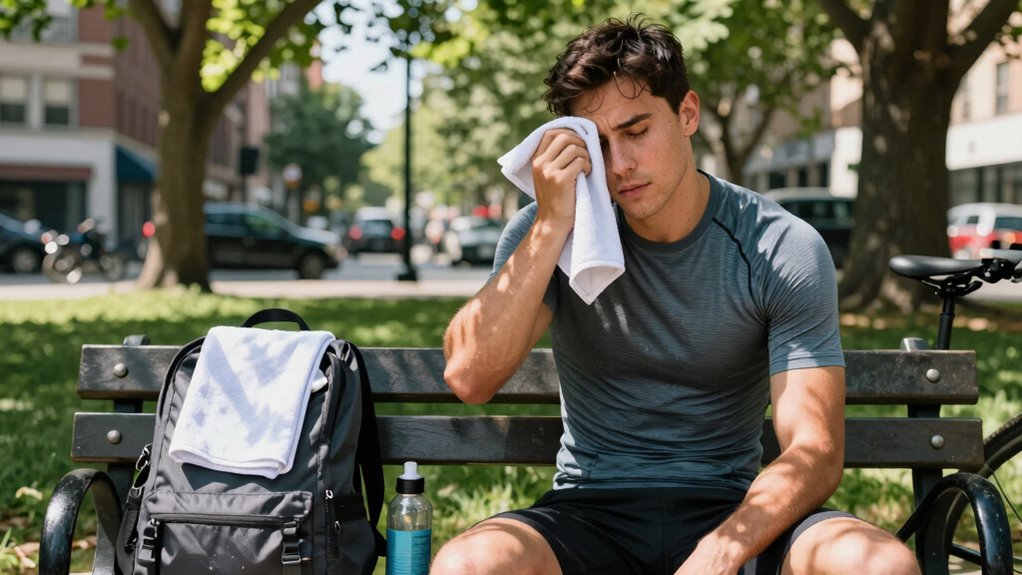
After your bike commute, change into fresh clothes and cool down with gentle stretching to ease muscle tension. Take a cool shower to lower your core temperature and refresh your skin. Hydrate steadily with water or electrolyte drinks to replace fluids lost during riding. Incorporate light activity like walking or foam rolling to boost circulation and reduce soreness. Staying comfortable and refreshed is simple—continue exploring the best ways to optimize your post-ride routine for lasting freshness.

Get sports gear delivered free with Prime
- Fast, free delivery on millions of items
- Prime Video, Amazon Music and more included
- Member-only deals all year
Key Takeaways
- Change into clean, dry clothes immediately after your ride to prevent lingering sweat and odor.
- Take a cool shower to lower body temperature and refresh your skin.
- Hydrate steadily with water or electrolyte drinks to replenish fluids lost during cycling.
- Stretch and perform light movement to reduce muscle tension and promote circulation.
- Consume a balanced snack or meal to support recovery and restore energy levels.

After a bike commute, feeling fresh and energized can sometimes feel like a challenge, especially if you’ve been riding in the heat or traffic. The key to bouncing back quickly lies in your approach to cycling gear and hydration tips. First, make sure your cycling gear is comfortable and appropriate for your ride. Breathable, moisture-wicking clothing can help keep sweat at bay and prevent chafing. Proper cycling shoes that fit well also reduce fatigue and discomfort, making your post-ride recovery easier. If you carry a backpack or panniers, pack essentials like a quick-drying towel and a change of clothes to refresh yourself when you arrive home.
Once you’re off the bike, your immediate focus should be on rehydration. Drinking water is essential to replenish fluids lost through sweat, but consider adding electrolyte drinks if your ride was intense or particularly hot. These help restore indispensable salts and minerals, preventing cramps and fatigue. Keep a water bottle within arm’s reach during your commute, and sip steadily afterward rather than gulping large amounts all at once. Hydration tips also include avoiding caffeinated or sugary beverages, which can dehydrate you further. Additionally, using proper hydration techniques can optimize your recovery process. Incorporating hydration strategies that suit your activity level can further enhance your recovery. Maintaining consistent hydration habits before, during, and after your ride is also crucial for optimal recovery.
Prioritize steady sipping of water and electrolyte drinks to efficiently rehydrate after your ride.
Next, take a few minutes to cool down properly. Stretch your legs, back, and shoulders gently to release tension and reduce muscle stiffness. A cool shower is indispensable—it helps lower your core temperature, washes away sweat, and refreshes your skin. Use lukewarm or cool water rather than hot, as hot water can strip moisture from your skin and leave you feeling more tired. Incorporating post-ride recovery methods such as foam rolling or massage can also help alleviate muscle soreness and improve circulation. If your schedule allows, consider a quick post-ride walk or light stretching routine to boost circulation and help your body recover faster.
Nutrition plays a role too. Eating a balanced snack or meal with protein, healthy fats, and carbs replenishes your energy stores and aids muscle recovery. Think along the lines of yogurt with fruit, a handful of nuts, or a whole-grain sandwich. Avoid processed or greasy foods that can leave you sluggish. Paying attention to nutritional timing can also make a difference in how quickly you recover and feel energized afterward.
Finally, establish a comfortable post-ride routine. Change out of your cycling gear promptly and into fresh clothes. Maintaining good hygiene and comfort will help you feel more awake and ready to tackle your day or relax afterward. Incorporate these practical tips—using the right cycling gear, staying on top of hydration, and taking care of your body—to stay fresh and energized after every bike commute.
moisture-wicking cycling clothes
As an affiliate, we earn on qualifying purchases.
As an affiliate, we earn on qualifying purchases.
Frequently Asked Questions
What Clothing Should I Wear for Optimal Freshness?
You should wear moisture-wicking fabrics and breathable layers for maximum freshness. These materials help draw sweat away from your skin, keeping you dry and comfortable after your ride. Opt for a lightweight, breathable jacket or jersey that allows air circulation. Avoid heavy or cotton clothing, which traps moisture. Changing into clean, moisture-wicking clothes quickly after your commute helps prevent odor and keeps you feeling fresh throughout the day.
Can Specific Foods Help Me Recover Faster?
Yes, certain foods can help you recover faster. Focus on hydration strategies by drinking water or electrolyte drinks to replenish lost fluids. Incorporate nutrient timing by eating a balanced meal with carbs and protein within 30 minutes post-ride to boost muscle repair and replenish glycogen. Foods like bananas, yogurt, or a protein smoothie are excellent choices. These strategies help reduce fatigue and speed up your recovery process.
How Long Should I Wait Before Showering After Commuting?
You should wait about 5 to 10 minutes before showering after commuting. This allows your body to cool down and sweat naturally, aiding hydration techniques and skin recovery. During this time, hydrate with water and consider a gentle skincare routine, like cleansing your face, to remove sweat and dirt. Rushing into a shower too quickly can cause skin irritation, so giving yourself a short wait helps you stay fresh and comfortable.
Are There Any Post-Ride Exercises to Stay Energized?
After your bike ride, do some light stretching routines to help your muscles recover and stay energized. Incorporate hydration tips by drinking water or a sports drink to replenish lost fluids and boost your energy levels. These post-ride exercises and hydration practices help prevent stiffness, reduce fatigue, and keep you feeling fresh for the rest of your day. Don’t skip these steps—they’re essential for a quick, revitalizing recovery.
What Are the Best Portable Deodorants for Cyclists?
You should choose a portable deodorant that effectively fights body odor and suits your needs. Look for solid, spray, or roll-on deodorant types, with quick-drying formulas for convenience. Opt for travel-sized options or those with secure caps to prevent leaks. These deodorants keep you feeling fresh after your ride, ensuring you stay confident throughout the day. Always reapply as needed, especially after intense cycling sessions.
Conclusion
Staying invigorated after your bike commute is all about quick routines and smart choices. Remember, a recent study shows that cycling boosts your brainpower by up to 15%, so you’re not just staying fresh—you’re also sharpening your mind. Keep a revitalizing spray or wipes handy, change into clean clothes, and hydrate well. With these simple tips, you’ll arrive at your destination feeling energized, confident, and ready to take on whatever’s next. Stay fresh, stay unstoppable!
Fall Picks
fall essentials
As an affiliate, we earn on qualifying purchases.