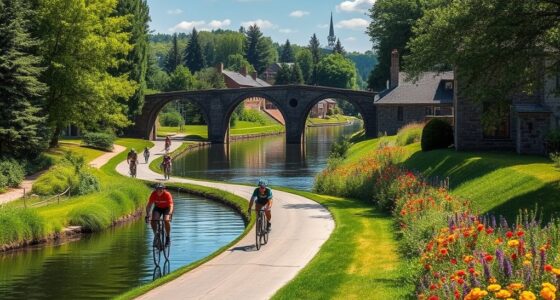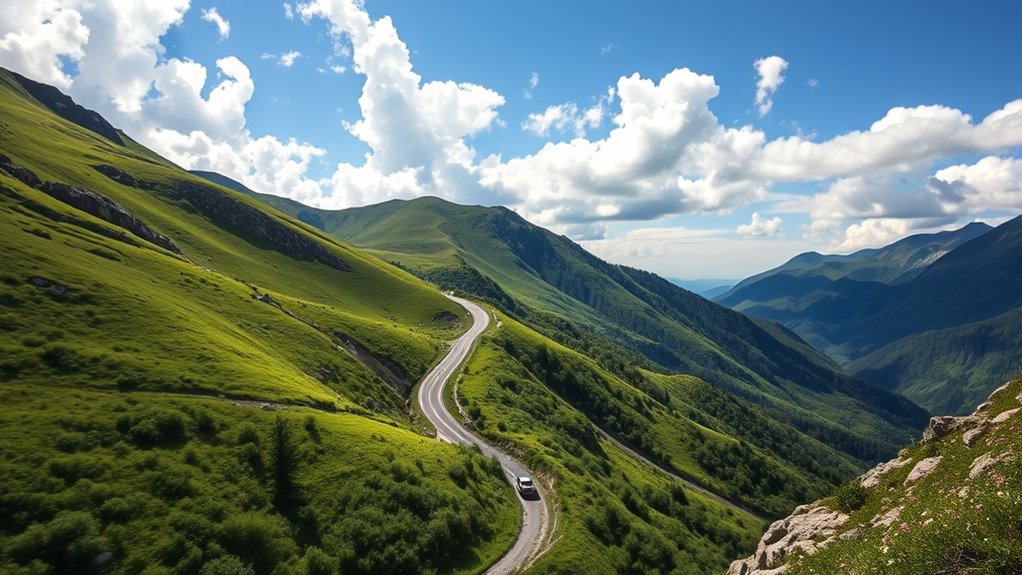

To prepare for big hills on your trip, focus on selecting the right gear and pacing yourself steadily. Shift into lower gears early to maintain momentum and avoid burnout, and use tools like trekking poles if needed. Stay hydrated, fuel your body properly, and keep a relaxed posture to conserve energy. Break the climb into segments and stay mentally focused by visualizing milestones. Mastering these strategies will help turn intimidating hills into manageable challenges—keep going to learn more.
Key Takeaways
- Select appropriate gear and shift early to maintain momentum and prevent burnout.
- Pace yourself with a steady effort, breaking the climb into manageable segments.
- Stay hydrated and fuel properly to support energy levels during the ascent.
- Use psychological strategies like visualization and milestone focus to stay motivated.
- Keep relaxed posture and use tools like trekking poles for stability and energy conservation.
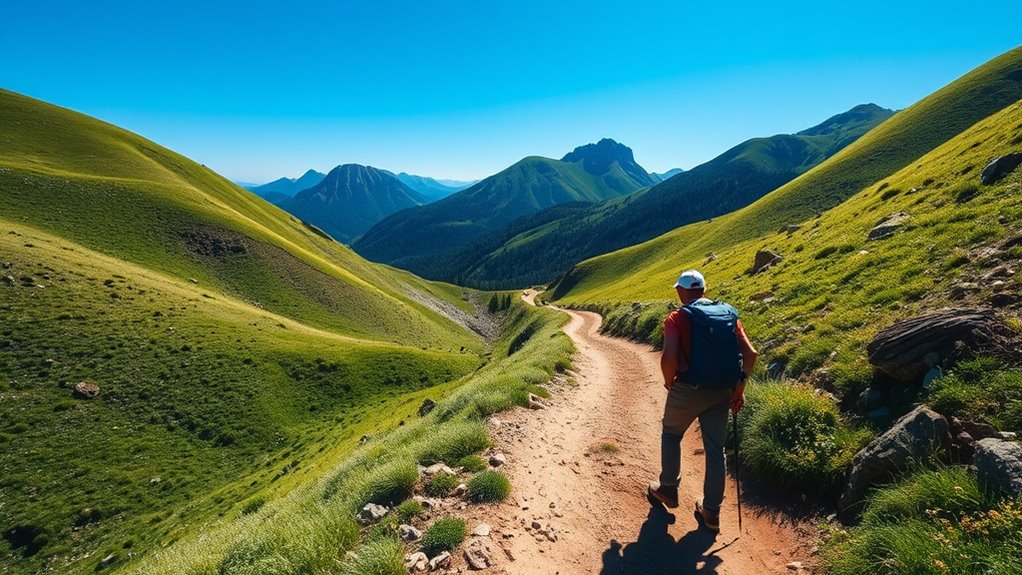
Are you ready to conquer those towering hills ahead? Facing big hills can be intimidating, but with some thoughtful preparation, you can make the climb manageable and even enjoyable. The key lies in your gear selection and pacing strategies. Choosing the right gear before you hit the incline allows you to maintain momentum without exhausting yourself. If you’re riding a bike, shifting into a lower gear early on helps you keep a steady cadence without overexerting your legs. It’s tempting to stay in a higher gear, but that often leads to burnout halfway up. Instead, anticipate the steep sections and switch to a gear that feels comfortable—one that lets you pedal smoothly and maintain control. For walking or running, consider the right footwear and any additional gear like trekking poles, which can help distribute effort and improve stability during tough ascents.
Your pacing strategies are equally essential. When approaching a big hill, it’s natural to want to surge upward quickly, but that can quickly drain your energy. Instead, start your climb at a sustainable pace—something you can maintain for the entire duration. Think of it as a steady effort rather than a sprint; this allows your muscles to work efficiently and reduces fatigue. As you ascend, listen to your body—if you feel yourself slowing down or gasping for breath, ease up a little. On a bike, this means maintaining a consistent cadence rather than constantly shifting gears. On foot, it’s about finding a rhythm that feels manageable and sticking with it, even if it means taking short, deliberate steps. If the hill is particularly long or steep, break it into segments mentally. Focus on reaching the next landmark or mile marker rather than obsessing over the entire climb. This psychological trick can make the ascent seem less intimidating and help you keep your energy reserves.
Don’t forget to stay hydrated and fuel your body properly before tackling the hill. Proper nutrition and hydration keep your muscles functioning at their best and prevent fatigue from sneaking in prematurely. Also, keep your posture upright and relaxed—tension only saps energy. When you reach the summit, take a moment to catch your breath, enjoy the view, and celebrate your effort. Proper gear selection and pacing strategies are your best tools for conquering big hills. With the right mindset and preparation, those intimidating inclines become just another part of your adventure, not an obstacle. Security systems can also provide peace of mind during your outdoor activities, ensuring your home is protected while you’re on your trek. So, gear up, pace yourself, and get ready to enjoy the challenge.

100% Carbon Fiber Trekking Poles by USA Brand – Ultra Strong Lightweight Collapsible Hiking Poles with Cork and EVA Foam Grips & Quick Adjustable Flip Locks
- Lightweight Carbon Fiber Material: Made of 3k 100% carbon fiber, 7.6 oz each
- Ergonomic Cork and EVA Foam Grips: Moisture-wicking cork grips with EVA extension
- Comfortable Neoprene Hand Straps: Padded straps to prevent chafing
As an affiliate, we earn on qualifying purchases.
As an affiliate, we earn on qualifying purchases.
Frequently Asked Questions
What Is the Best Time of Year to Visit Big Hills?
You should visit Big Hills in the spring or fall when the seasonal weather is mild and comfortable. During these times, you’ll enjoy greater wildlife sightings as animals are more active and visible. Summer can be hot and crowded, while winter might bring colder temperatures and snow. Planning your trip during the shoulder seasons guarantees better weather, more wildlife, and a more enjoyable experience exploring the scenic hills.
Are There Any Safety Tips for Climbing Steep Inclines?
Climbing steep inclines is like stepping onto a roller coaster, so stay alert. Always wear proper safety equipment, including sturdy shoes and a helmet, to protect yourself. Check weather conditions beforehand—wet or windy days can turn the hill into a slip ‘n slide. Take your time, stay hydrated, and keep a steady pace. If unsure, don’t hesitate to turn back; safety should always come first.
What Gear Is Essential for Hiking Big Hills?
You’ll want sturdy hiking footwear to keep your feet supported and prevent slips on steep terrain. A well-packed backpack with essentials like water, snacks, a map, and a first aid kit is vital. Consider lightweight, moisture-wicking clothing and trekking poles for stability. Don’t forget sun protection and extra layers for changing weather. With the right gear, you’ll confidently conquer big hills and enjoy your hike safely.
Can Beginners Handle Challenging Hill Terrains?
As a beginner, you can handle challenging hill terrains if you start slow and build your skills gradually. Mountain biking and trail running are great ways to develop endurance and confidence on steep slopes. Focus on proper technique, stay aware of your limits, and use gear like good shoes and hydration. With practice and patience, you’ll find yourself conquering those big hills and enjoying the adventure.
Are There Guided Tours Available for Big Hills?
Yes, guided tour options for big hills are available. You can join hiking trail guides who specialize in challenging terrain, ensuring you get expert advice and support. These guides often lead groups through the most scenic and difficult sections, making your experience safer and more enjoyable. Look for reputable tour companies that offer guided hikes, and you’ll find knowledgeable guides ready to help you conquer those big hills confidently.
Conclusion
So, as you gear up for those imposing hills, remember that persistence and preparation are your best allies. Keep your gears well-tuned, pace yourself, and don’t forget to enjoy the journey—each incline is a chapter in your adventure. With a bit of grit and the wisdom of old explorers, you’ll conquer those peaks like a true modern-day pioneer. After all, as the Bard said, “The road to success is always under construction.” Happy riding!