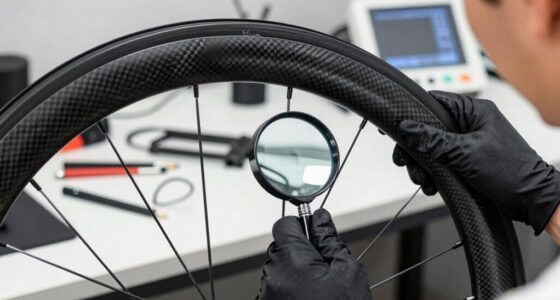
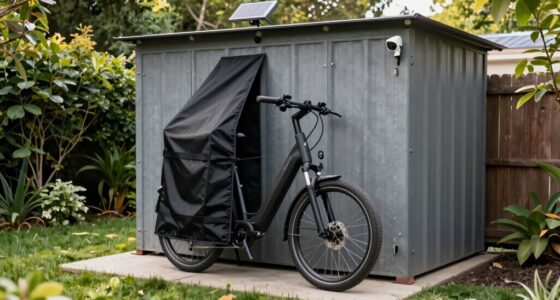
To prevent rust when storing your bike in a garage, start by thoroughly cleaning and drying it to remove dirt and moisture. Organize your space with wall hooks or racks to keep the bike off the ground and minimize contact with damp surfaces. Control humidity by using silica gel packs or a dehumidifier, and always cover the bike with a breathable cover. For more tips on protecting your bike from rust, keep exploring how to optimize your garage storage.
Key Takeaways
- Clean and thoroughly dry your bike before storage to remove dirt, mud, and moisture that cause rust.
- Use wall-mounted racks or ceiling hoists to keep the bike off the ground and minimize contact with damp surfaces.
- Control humidity with silica gel packs or dehumidifiers, and ensure proper ventilation in the garage.
- Apply rust-inhibitor sprays and corrosion-resistant lubricants to metal parts for added protection.
- Regularly inspect your bike during storage, reapply protective coatings, and address any early signs of rust promptly.

Storing your bike properly in a garage helps protect it from damage and keeps your space organized. To achieve that, you need to think about both bike cleaning and garage organization. Regular bike cleaning is essential before storing your bike long-term. Dirt, mud, and sweat can cause rust and corrosion over time, especially if moisture gets trapped. Take a few minutes to wipe down your bike after each ride, paying close attention to the chain, gears, and other metal parts. Use a gentle cleaner and a soft cloth or sponge to remove grime, then dry everything thoroughly. This simple step prevents dirt buildup that could accelerate rusting and keeps your bike looking fresh.
Garage organization plays a crucial role in protecting your bike and maintaining a clutter-free space. When your garage is well-organized, you reduce the chances of accidental damage or falls that could harm your bike. Invest in sturdy hooks, wall-mounted racks, or ceiling hoists to store your bike off the ground. Hanging your bike vertically or horizontally not only saves space but also minimizes contact with potentially damaging surfaces. Keep your tools, cleaning supplies, and other garage items neatly arranged so they don’t clutter the area around your bike. When everything has its place, you’re less likely to trip over things or accidentally knock your bike over, which can cause scratches or dents.
A good garage organization system also involves controlling humidity and moisture levels. Use silica gel packs or a dehumidifier to reduce dampness, preventing rust from forming on metal components. When storing your bike, make sure it’s dry and clean; avoid leaving it in damp corners or near sources of water. Cover your bike with a breathable cover if you won’t be using it for a while. This helps keep dust, dirt, and moisture away, further protecting it from rust.
Additionally, consider the environment inside your garage. If it’s prone to temperature swings or high humidity, take extra precautions, like applying a rust-inhibitor spray or using corrosion-resistant lubricants on moving parts. Regularly check on your bike, especially if you store it for extended periods, to catch any early signs of rust or dirt buildup. This proactive approach ensures your bike stays in top condition and is ready to ride whenever you want.

monTEK Swivel Bike Wall Mount, Bike Hangers for Garage, Space-Saving Vertical Bike Rack, Sturdy Bike Storage Rack Holds Up to 66lbs, Easy to Install, 4 Pack
【Strong, Safe & Secure】 monTEK bike wall mount is made of heavy-duty solid steel are able to hang…
As an affiliate, we earn on qualifying purchases.
As an affiliate, we earn on qualifying purchases.
Frequently Asked Questions
What Types of Bikes Are Most Prone to Rusting?
You’ll find that bikes with steel frames are most prone to rusting, especially if they lack proper metal treatments. To prevent this, store your bike in a dry, well-ventilated area, ideally inside a storage container with moisture control. Regularly applying rust inhibitors and keeping the chain and metal parts lubricated also helps. This way, you protect your bike from corrosion and keep it in great shape for years to come.
Can Climate Change Affect Bike Storage Strategies?
Ever wonder if climate change impacts your bike storage plans? It definitely can. As temperatures and humidity levels fluctuate unpredictably, you’ll need to adapt your climate control strategies to prevent rust and damage. Incorporating climate adaptation techniques reduces environmental impact and preserves your bike. You might consider dehumidifiers or better ventilation, ensuring your storage space stays dry regardless of shifting weather patterns. Staying proactive protects your bike and minimizes long-term environmental consequences.
Is It Better to Store Bikes Indoors or Outdoors?
Storing your bike indoors is better because it’s protected from the elements and reduces rust risk. Use a bike rack inside your garage to keep your bike off the floor and prevent damage. Keep indoor humidity low, as excess moisture accelerates rust formation. By doing so, you preserve your bike’s condition, ensuring it stays in top shape longer. Indoor storage ultimately provides a safer, more controlled environment for your bike.
How Often Should I Inspect My Bike for Rust?
You should inspect your bike for rust every few weeks, especially if it’s stored in a humid garage. Studies show that corrosion can develop in just 10 days without proper care. Regular bike maintenance and rust prevention techniques, like applying a protective coating and keeping it dry, help catch early rust. Frequent inspections guarantee you maintain your bike’s condition, preventing costly repairs and extending its lifespan.
Are There Eco-Friendly Rust Prevention Options?
Yes, there are eco-friendly rust prevention options you can use. You might consider eco-friendly coatings that are safe for the environment while protecting your bike. Natural rust inhibitors, like certain plant-based oils or waxes, also work effectively without harmful chemicals. These options help prevent rust and keep your bike in good condition, all while being kind to the planet. Regular application guarantees your bike stays protected over time.
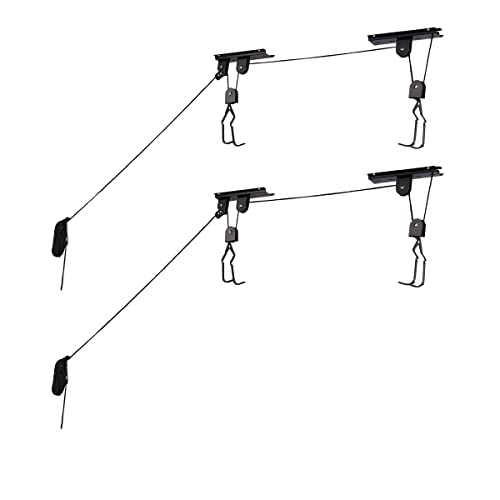
RAD Sportz Bicycle Hoist 2-Pack Quality Garage Storage Bike Lift with 100 lb Capacity Even Works as Ladder Lift Premium Quality
►RUBBER COATED HOOKS – Hooks are designed with a protective rubber coating to protect your bike from scratches.
As an affiliate, we earn on qualifying purchases.
As an affiliate, we earn on qualifying purchases.
Conclusion
Storing your bike properly means more than just avoiding rust; it protects your memories and freedom on two wheels. Imagine the joy of riding your bike anytime without worrying about corrosion, contrasted with the disappointment of finding it rusted and unusable. Taking simple steps now keeps your bike pristine and ready for adventures. Don’t let neglect steal your joy—store it wisely, and keep the spirit of exploration alive in your garage.

Puroma Bike Cover for 1/2/3 Bikes, 210D Waterproof Outdoor Storage Bicycle Covers Rain Sun UV Dust Wind Proof with Lock Hole for Mountain Road Electric Bike
High Durability Fabric: Puroma bike cover made from the 210D fabric combined with a hydrophobic coating, PU waterproof…
As an affiliate, we earn on qualifying purchases.
As an affiliate, we earn on qualifying purchases.
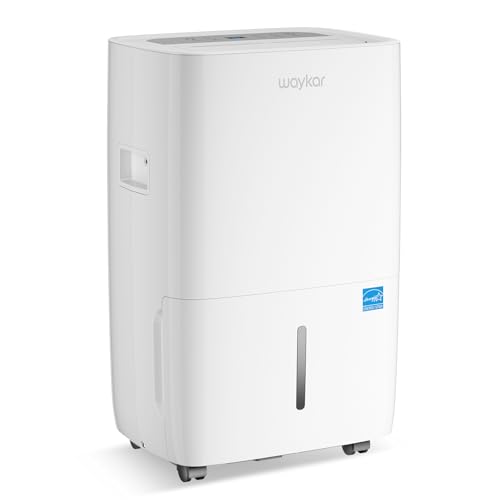
Waykar 80 Pints Energy Star Dehumidifier for Spaces up to 5,000 Sq. Ft at Home, in Basements and Large Rooms with Drain Hose and 1.14 Gallons Water Tank
【80 Pint Capacity for Up to 5,000 Sq.Ft Spaces】Quickly removes excess moisture from basements, bathrooms, bedrooms, RVs, and…
As an affiliate, we earn on qualifying purchases.
As an affiliate, we earn on qualifying purchases.