The right mountain bike hydration pack balances three things that constantly pull against each other: enough water for your ride length, enough storage for tools and layers, and a fit that stays stable through rough descents without cooking your back. My best overall pick is the CamelBak M.U.L.E. 12, which nails that balance with a well-shaped 12-liter storage layout, excellent stability, and a proven reservoir system. Riders who want to ditch the sweaty back entirely should look at the Osprey Savu waist pack, while budget-conscious buyers get surprisingly strong performance from the Unigear Hydration Pack. The biggest tradeoff in this category is capacity versus comfort: bigger packs like the Teton Oasis carry more but bounce and heat up more on technical climbs. Read on for the full breakdown of all 14 packs and who each one suits best.

Get sports gear delivered free with Prime
- Fast, free delivery on millions of items
- Prime Video, Amazon Music and more included
- Member-only deals all year
Complete the kit


Key Takeaways
- Dedicated biking packs (Osprey Raptor 10, CamelBak M.U.L.E. 12) clearly outperformed general-purpose hiking hydration packs on stability, with tapered profiles and hip-belt load transfer that kept contents from shifting during descents.
- Waist-pack designs like the Osprey Savu solved the sweaty-back problem but capped capacity around 2 liters of water, making them viable only for shorter rides or riders willing to stash bottles on the frame.
- Sub-$40 budget packs (Unigear, Everfun, NOOLA) delivered acceptable bladders and storage but cut corners on back ventilation, hip belt padding, and bite-valve quality, differences that show up on rides over two hours.
- Bladder quality varied more than pack quality across the lineup: leaky bite valves and awkward hose routing on cheap packs caused more complaints than any fit issue, which is why reservoir design factored heavily into rankings.
- Minimalist 6-liter packs worked well for lift-assisted and short trail rides but forced hard choices between tools, layers, and water, so they ranked lower as do-it-all picks despite their comfort advantage.
| Lightweight Hydration Backpack with 2L Water Bladder for Running and Hiking |  | Best Ultralight Pick | Material: 100% Nylon | Total Capacity: 12 L | Water Bladder Volume: 2 L, BPA-free | VIEW LATEST PRICE | See Our Full Breakdown |
| Lightweight Hydration Backpack with 2L Water Bladder for Running and Hiking |  | Best Budget Starter Pack | Material: 100% Nylon | Total Capacity: 12 L | Water Bladder Capacity: 2 L, BPA-free PEVA | VIEW LATEST PRICE | See Our Full Breakdown |
| Everfun Hydration Backpack 18L with Water Bladder 2L/3L for Hiking, Biking, Running, and Festivals |  | Best Big-Capacity Option | Capacity: 18 L | Water Bladder Capacity: 2 L/70 oz (3 L compatible) | Material: High-density nylon, PEVA | VIEW LATEST PRICE | See Our Full Breakdown |
| Unigear Hydration Pack Backpack with 2L Water Bladder for Hiking & Cycling | 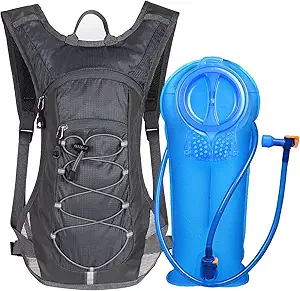 | Best for Stability at Speed | Material: 100% Nylon, splash-resistant | Size: 16.5 x 8 x 6.0 inches | Water Capacity: 2 liters, BPA-free | VIEW LATEST PRICE | See Our Full Breakdown |
| Small Mountain Biking Backpack Lightweight 6L Daypack for MTB, Hiking, Skiing, Snowboarding |  | Best Minimalist Frame Pack | Dimensions: 18 x 8.6 x 2 inches | Weight: 1.1 lbs | Capacity: 6 liters | VIEW LATEST PRICE | See Our Full Breakdown |
| Osprey Berm Biking Backpack with Hydraulics Reservoir |  | Best Lightweight Full-Featured Pack | Reservoir Capacity: 2.5L Hydraulics | Weight: 0.97 lb / 440 g | Dimensions: 15.4 x 7.5 x 5.5 in / 39 x 19 x 14 cm | VIEW LATEST PRICE | See Our Full Breakdown |
| Teton Oasis/Trailrunner Hydration Backpack |  | Best Value for Storage-Hungry Riders | Water Capacity: 2L or 3L bladder | Storage Capacity: 18L or 22L | Rain Cover: Sewn-in | VIEW LATEST PRICE | See Our Full Breakdown |
| Osprey Savu Biking Waist Pack |  | Best for Riders Who Hate Backpacks | Design: Lumbar-style bike waist pack | Bottle Carry: Single or double stretch mesh pockets (bottles not included) | Organization: Zippered main compartment with internal organization and key clip | VIEW LATEST PRICE | See Our Full Breakdown |
| CamelBak Hydrobak Hydration Reservoir Bike Pack |  | Best for Short Rides and Commutes | Brand: CamelBak | Capacity: 50oz (1.5L) | Reservoir Type: Crux | VIEW LATEST PRICE | See Our Full Breakdown |
| MARCHWAY Tactical Molle Hydration Pack with 3L TPU Water Bladder |  | Best for Maximum Water and Rugged Abuse | Material: 1000D water-repellent nylon | Water Capacity: 3L TPU bladder | Dimensions: 19.5 x 8.7 x 2.6 in | VIEW LATEST PRICE | See Our Full Breakdown |
| Osprey Raptor 10L Men’s Mountain Bike Hydration Pack, Gray OS |  | Best for All-Day Trail Riding | Capacity: 10L | Reservoir Capacity: 2.5L | Item Dimensions: 18.9H x 9.8W x 9.1D in | VIEW LATEST PRICE | See Our Full Breakdown |
| NOOLA Hydration Backpack with 3L Water Bladder, Tactical Pack for Hiking |  | Best Budget Max-Hydration Option | Material: 900D nylon | Hydration Capacity: 3L BPA-free TPU bladder | Number of Pockets: 9 | VIEW LATEST PRICE | See Our Full Breakdown |
| CamelBak M.U.L.E. 12 Mountain Bike Hydration Pack |  | Best Overall | Capacity: 12 liters | Reservoir Size: 100 oz | Back Panel: Air Support ventilation | VIEW LATEST PRICE | See Our Full Breakdown |
| CamelBak Classic Bike Hydration Pack |  | Best for Minimalist Riders | Reservoir Capacity: 85 oz Crux | Back Panel: Breathable air mesh | Harness: Vented, stability-focused | VIEW LATEST PRICE | See Our Full Breakdown |
| mountain bike hydration pack | Material |
|---|---|
| Lightweight Hydration Backpack | 100% Nylon |
| Lightweight Hydration Backpack | 100% Nylon |
| Everfun Hydration Backpack 18L | High-density nylon, PEVA |
| Unigear Hydration Pack Backpac | 100% Nylon, splash-resistant |
| Small Mountain Biking Backpack | — |
| Osprey Berm Biking Backpack wi | 50% recycled EVA |
| Teton Oasis/Trailrunner Hydrat | High-density foam, breathable mesh |
| Osprey Savu Biking Waist Pack | 50% recycled EVA foam |
| CamelBak Hydrobak Hydration Re | Durable fabric |
| MARCHWAY Tactical Molle Hydrat | 1000D water-repellent nylon |
| Osprey Raptor 10L Men’s Mounta | — |
| NOOLA Hydration Backpack with | 900D nylon |
| CamelBak M.U.L.E. 12 Mountain | — |
| CamelBak Classic Bike Hydratio | — |
More Details on Our Top Picks
Lightweight Hydration Backpack with 2L Water Bladder for Running and Hiking
At 8.5 oz total, this is the lightest pack in the entire lineup — lighter even than the CamelBak Classic, and less than half the weight of the Everfun 18L. That featherweight build makes it the right choice for riders who count grams on fast, punchy singletrack where a bulky pack throws off balance. The 2L BPA-free bladder is leakproof with a fast-flowing hose, so you’re not fighting for water mid-climb. Compared with the similar Unigear pack, this one wins on weight but gives up splash resistance — the nylon here is waterproof-coated rather than fully weatherproof. The tradeoff is capacity: 12L disappears fast once you carry a tube, pump, and layers. If you ride all day, the Everfun 18L or CamelBak M.U.L.E. 12 will serve you better.
Pros:- Featherweight 8.5 oz build barely registers on your back
- Leakproof 2L bladder with fast-flowing hose
- Breathable mesh back keeps sweat down on hot climbs
- Multiple compartments despite the small footprint
Cons:- Limited 12L capacity restricts gear for longer trips
- No hydration bladder cover included
- Strap adjustability may not suit all body types
Best for: Weight-conscious riders and runners who want minimal bulk on short to mid-length rides
Not ideal for: All-day adventurers who need to carry tools, layers, and food — 12L fills up fast
- Material:100% Nylon
- Total Capacity:12 L
- Water Bladder Volume:2 L, BPA-free
- Weight:8.5 oz
- Adjustability:Shoulder straps to 34 inches; chest strap 2.4–7.9 inches
- Warranty:1 year
Our verdict“Buy this if grams matter more than gear capacity; skip it if you pack for a full day on the trail.”
Lightweight Hydration Backpack with 2L Water Bladder for Running and Hiking
This pack is nearly identical to its sibling (B09TRBTFG4) in weight and capacity, but the food-grade PEVA bladder and slightly wider strap range (19–34 inches) make it the friendlier entry point for newer riders. Compared with the Unigear, you get similar performance at a lower typical price, though the Unigear edges it on weather resistance. The air mesh back panel does respectable work on climbs as long as the fit is dialed — cinch it too loose and ventilation suffers. Where it falls short against pricier options like the Osprey Raptor 10 is structure and organization: pockets are basic, and there’s no dedicated tool storage or helmet carry. For a first hydration pack, that’s an acceptable compromise. For riders already committed to long MTB days, it will feel limiting within a season.
Pros:- Excellent value with bladder included
- Lightweight 8.5 oz design comfortable for hours
- Wide strap adjustability fits a range of torso sizes
- Food-grade PEVA bladder is taste-free
Cons:- Basic pocket layout with no dedicated tool or helmet storage
- Breathability depends heavily on getting the fit right
- Too small for full-day gear loads
Best for: Beginners testing whether a hydration pack suits their riding style without a big spend
Not ideal for: Experienced riders who want structured tool organization and all-weather durability
- Material:100% Nylon
- Total Capacity:12 L
- Water Bladder Capacity:2 L, BPA-free PEVA
- Weight:8.5 oz
- Adjustability:Shoulder straps 19–34 inches
- Back Material:Air mesh
Our verdict“A low-risk first purchase for new trail riders — just plan to upgrade if you get serious.”
Everfun Hydration Backpack 18L with Water Bladder 2L/3L for Hiking, Biking, Running, and Festivals
When the ride turns into an all-day mission, this is the pack that keeps up. With 18L of storage, helmet carry, and an insulated bladder sleeve that keeps water cold for up to six hours, it outclasses the compact Unigear and both 12L featherweights for range. The included rain cover is a feature even the pricier CamelBak M.U.L.E. 12 doesn’t bundle in, which matters for mountain weather that turns fast. The tradeoffs are real, though: at 1.74 lbs it’s the heaviest pack in this batch, and when fully loaded the weight distribution gets noticeably rear-heavy — the Teton Oasis with its larger framesheet handles big loads more comfortably. Bladder and tube cleaning is also a regular chore if you don’t empty it after every ride. Still, for epic days, nothing else here carries this much.
Pros:- Spacious 18L capacity with helmet storage and multiple pockets
- Insulated compartment keeps water cold up to 6 hours
- Sewn-in-style rain cover for all-weather protection
- Reflective strips add low-light visibility
Cons:- Heaviest pack in this batch at 1.74 lbs
- Rear-heavy weight distribution when fully loaded
- Bladder and tube require frequent cleaning
Best for: All-day riders and bikepackers who need layers, food, tools, and a helmet alongside their water
Not ideal for: Minimalist riders on short loops — the bulk and weight work against you
- Capacity:18 L
- Water Bladder Capacity:2 L/70 oz (3 L compatible)
- Material:High-density nylon, PEVA
- Weight:1.74 lbs
- Dimensions:18.5″ x 10.5″ x 6″
- Insulation:Keeps liquids cold up to 6 hours
- Extras:Rain cover, reflective strips, adjustable straps
Our verdict“The pick for full-day adventures where gear capacity matters more than gram-counting.”
Unigear Hydration Pack Backpack with 2L Water Bladder for Hiking & Cycling
This Unigear earns its spot through fit discipline: shoulder, chest, and waist straps lock the pack down so it doesn’t bounce or sway on descents — a stability advantage over the budget 12L packs, which rely on shoulder and chest straps alone. The splash-resistant nylon is also a step up in weather protection compared with the two lightweight picks above, though it still won’t shrug off a proper downpour like the Everfun with its rain cover. Its slim 16.5-inch profile minimizes wind drag, which matters if you ride fast open trails. The compromises are organizational: the front pocket barely fits a phone and a bar, and there’s no helmet carry or tool-specific storage like you’d find on the Osprey Raptor 10. It’s a focused, no-frills design — stable hydration first, cargo second.
Pros:- Three-point strap system eliminates bounce on rough descents
- Slim profile reduces wind drag at speed
- Splash-resistant nylon protects gear in drizzle
- Replaceable 2L BPA-free bladder included
Cons:- Front pocket is too small for meaningful storage
- Only splash-resistant — not suited to heavy rain
- Single size may not fit all torsos comfortably
Best for: Descending-focused riders who want a bounce-free, low-profile pack for fast trails
Not ideal for: Riders in wet climates or those who carry lots of gear — light rain resistance and small pockets limit it
- Material:100% Nylon, splash-resistant
- Size:16.5 x 8 x 6.0 inches
- Water Capacity:2 liters, BPA-free
- Weight:1.1 lbs
- Included:Backpack, 2L bladder
- Straps:Shoulder, chest, and waist
Our verdict“Choose this over the budget picks if stability on descents matters more than storage space.”
Small Mountain Biking Backpack Lightweight 6L Daypack for MTB, Hiking, Skiing, Snowboarding
The most stripped-down option in the lineup, this 6L slim-profile pack sits flat against your back like a vest — closer to the Osprey Savu waist pack in philosophy than to the Everfun’s cargo-hauling approach. It’s built for riders who want water and a bare minimum of essentials, with reflective strips adding safety for evening commuters or night rides. The big catch: no bladder is included, so factor that cost in when comparing against the Unigear or budget picks, which bundle one. Unlike every other pack here, it also crosses seasons neatly — the low-profile design works under a ski jacket or snowboarding shell. Capacity is genuinely minimal, and the unspecified material makes durability a question mark compared with the named nylon builds elsewhere in this roundup. As a second, minimalist pack, though, it’s compelling.
Pros:- Slim 2-inch profile wears like a vest, not a backpack
- Reflective strips improve night-ride visibility
- Works across MTB, skiing, and snowboarding
- Hydration compartment fits a standard 2L reservoir
Cons:- Water reservoir sold separately
- 6L capacity is bare-minimum for anything beyond short rides
- Material construction is unspecified, raising durability questions
Best for: Minimalist riders, commuters, and multi-sport users who already own a bladder and want a barely-there pack
Not ideal for: Anyone buying their first hydration setup — no bladder included means extra cost and research
- Dimensions:18 x 8.6 x 2 inches
- Weight:1.1 lbs
- Capacity:6 liters
- Hydration Bladder Capacity:2.0 L/70 oz (not included)
- Extras:Reflective strips, headphone outlet, adjustable straps
Our verdict“A niche pick for riders who already own a bladder and want the smallest possible footprint on their back.”
Osprey Berm Biking Backpack with Hydraulics Reservoir
At under one pound, the Berm carves out a niche between stripped-down options like the CamelBak Hydrobak and heavier haulers like the Osprey Raptor 10. Where the Hydrobak gives you water and little else, the Berm adds a genuine storage layout and a 2.5L Hydraulics reservoir without the weight penalty — that extra liter of capacity matters on rides stretching past two hours.
The breathable backpanel and adjustable harness translate to fewer pressure points on long climbs, and the blinker light attachment plus reflective details are thoughtful safety touches for dusk rides. The tradeoff is honest: this is a gear-light design, so riders carrying pads, tools, and layers will feel the squeeze compared to the Raptor 10. Compared with the MARCHWAY tactical pack, the Berm is far more comfortable on fast singletrack but far less rugged.
Pros:- Featherlight at 0.97 lb, barely noticeable on climbs
- 2.5L Hydraulics reservoir balances capacity with pack size
- Breathable backpanel and adjustable harness prevent hot spots
- Reflective details and blinker attachment for low-light visibility
Cons:- Storage capacity is tight for longer or gear-heavy rides
- Light for the blinker attachment is sold separately
Best for: Cross-country and trail riders who want all-day comfort and solid hydration capacity without hauling a big backpack
Not ideal for: All-mountain or enduro riders carrying knee pads, tools, and layers — the storage volume runs out quickly
- Reservoir Capacity:2.5L Hydraulics
- Weight:0.97 lb / 440 g
- Dimensions:15.4 x 7.5 x 5.5 in / 39 x 19 x 14 cm
- Material:50% recycled EVA
- Fit:Unisex
- Extras:Reflective details, blinker light attachment
Our verdict“Buy the Berm if you want the comfort of a full hydration pack at nearly waist-pack weight; skip it if your rides demand serious cargo space.”
Teton Oasis/Trailrunner Hydration Backpack
The Teton undercuts premium rivals on price while offering 18L or 22L of organized storage — nearly double the cargo room of the CamelBak M.U.L.E. 12. That makes it the pick when budget and capacity both matter, whether you’re hauling layers, food, or bike tools.
The sewn-in rain cover is a standout feature at this price; even the pricier Osprey Raptor 10 doesn’t include one, and anyone caught in an afternoon squall understands why that matters. The insulated bladder pocket keeps water drinkably cool for hours, beating uninsulated packs like the Unigear 2L. The compromises are real, though: the harness lacks the refined bike-specific fit of Osprey’s offerings, so expect some fine-tuning to stop bounce on descents. It’s also a hiking-first design, which shows in its longer torso profile.
Pros:- Exceptional storage volume for the price in 18L or 22L sizes
- Sewn-in rain cover protects gear that rivals leave exposed
- Insulated bladder pocket keeps water cold for hours
- Weather-guarded zippers and bungee system for external gear
Cons:- Fit requires noticeable adjustment to minimize bounce while riding
- Bladder capacity is modest relative to the pack’s size for very long days
Best for: Budget-conscious riders and hikers who need maximum storage and weather protection for the money
Not ideal for: Aggressive downhill riders — the generic harness bounces and the hiking-oriented shape isn’t bike-specific
- Water Capacity:2L or 3L bladder
- Storage Capacity:18L or 22L
- Rain Cover:Sewn-in
- Material:High-density foam, breathable mesh
- Features:Insulated bladder pocket, weather-guarded zippers, bungee cord system, adjustable fit
Our verdict“This is the value play if you want Osprey-level cargo space at a budget price and can live with a less refined harness.”
Osprey Savu Biking Waist Pack
The Savu takes a different approach than every other pick here: it moves hydration and cargo to your hips, eliminating back sweat entirely. For hot-climate riders or anyone who finds backpacks claustrophobic on technical climbs, that alone justifies the design — no pack in the lineup competes on this front.
Compared with the CamelBak Hydrobak, the Savu actually carries comparable essentials in its zippered compartment and hipbelt pockets while keeping your back free, though you’ll need to buy bottles separately since there’s no reservoir included. The AirScape backpanel and side compression straps keep the load locked down on rough descents where generic fanny packs would bounce. The tradeoff is raw capacity: it can’t match the 2.5L-plus-storage combo of the Osprey Berm, so all-day epics are out. It also leans heavily bike-specific, making it awkward as an everyday sling.
Pros:- Zero back sweat — the only ventilated-by-default option here
- Stable bike-specific hipbelt with compression straps stays put on descents
- Multiple organized pockets including two hipbelt pockets and key clip
- Bottle carry is flexible with single or dual stretch mesh pockets
Cons:- Bottles sold separately, adding to the true cost
- Total capacity is limited compared to backpack-style rivals
Best for: Hot-weather trail riders and short-to-medium ride fans who prioritize ventilation and freedom of movement over capacity
Not ideal for: All-day riders or bikepackers who need more than bottles and a few pockets can carry
- Design:Lumbar-style bike waist pack
- Bottle Carry:Single or double stretch mesh pockets (bottles not included)
- Organization:Zippered main compartment with internal organization and key clip
- Pockets:Two hipbelt pockets, front zippered pocket
- Backpanel:AirScape mesh-covered ridged foam with airflow channel
- Fit:One size, unisex
- Material:50% recycled EVA foam
Our verdict“Get the Savu if sweaty-back season ruins backpacks for you — just budget for bottles and keep epic rides to something bigger.”
CamelBak Hydrobak Hydration Reservoir Bike Pack
The Hydrobak is the minimalist endpoint of this lineup: a 50oz Crux reservoir, one zippered pocket, and nothing else. Where the Osprey Berm adds storage and the Teton adds rain covers and cargo, the Hydrobak deliberately refuses — and that restraint is its strength for riders who only need water and keys.
What you get for the simplicity is quality where it counts. The Crux reservoir refills fast via its ergonomic handle and delivers noticeably better flow than generic bladders found in budget packs like the Unigear 2L. The breathable mesh back and ventilated harness keep even a minimalist pack from becoming a sweat trap. CamelBak’s Got Your Bak lifetime warranty also outclasses the guarantee situation on most rivals here. The obvious limitation: past about ninety minutes, 1.5L of water and one pocket stop being enough, and you’ll wish you’d bought the Berm or M.U.L.E. 12 instead.
Pros:- Genuinely minimal footprint that disappears on your back
- Crux reservoir with ergonomic handle for fast, easy refills
- Breathable mesh back panel and ventilated harness
- Got Your Bak lifetime warranty backs the investment
Cons:- Storage is essentially one small pocket
- Reservoir capacity is the smallest in this roundup
Best for: Commuters, lunch-loop riders, and training-session cyclists who want reliable hydration with near-zero weight and bulk
Not ideal for: Anyone riding beyond a couple of hours — 1.5L of water and one pocket won’t cut it
- Brand:CamelBak
- Capacity:50oz (1.5L)
- Reservoir Type:Crux
- Material:Durable fabric
- Included Components:Hydration pack, reservoir
- Model Number:1122001000P
- Warranty:Got Your Bak Lifetime Warranty
Our verdict“The Hydrobak is the right call when your ride is short and your packing list is shorter — everyone else should size up.”
MARCHWAY Tactical Molle Hydration Pack with 3L TPU Water Bladder
When the priority is carrying the most water possible in bombproof construction, the MARCHWAY wins outright — its 3L bladder matches or beats everything here, and the 1000D water-repellent nylon shrugs off abuse that would shred lighter packs like the Teton or Everfun. This is the pack for sketchy weather, overgrown trails, and multi-sport use.
The MOLLE webbing sets it apart from every bike-specific rival: you can bolt on pouches, tool rolls, or a first-aid kit, making it more adaptable than the fixed-layout Osprey Raptor 10. But that tactical DNA cuts both ways. The pack is bulkier and heavier-feeling than minimalist riders will accept, and it lacks the bike-specific harness and ventilation refinements that make Osprey’s packs comfortable at speed. Like any big-bladder pack, the TPU reservoir demands regular cleaning or you’ll taste it. It’s a utility vehicle among sports cars.
Pros:- 3L TPU bladder offers the largest hydration capacity in this lineup
- 1000D water-repellent nylon survives abuse that destroys lighter packs
- MOLLE webbing allows unlimited modular customization
- Adjustable straps with airflow features keep the fit comfortable
Cons:- Bulkier and less bike-refined than purpose-built packs like the Osprey Berm
- Bladder requires frequent cleaning to avoid taste and buildup
Best for: Riders and multi-sport adventurers who need maximum water capacity and rugged, expandable storage in harsh conditions
Not ideal for: Weight-obsessed XC riders and racers — the tactical build is bulkier and hotter than bike-specific packs
- Material:1000D water-repellent nylon
- Water Capacity:3L TPU bladder
- Dimensions:19.5 x 8.7 x 2.6 in
- Modular System:MOLLE webbing for attachments
- Fit:Adjustable straps
- Intended Use:Hiking, cycling, hunting, outdoor
Our verdict“Pick the MARCHWAY when water volume and durability outrank comfort and weight — bike-specific rivals do the rest better.”
Osprey Raptor 10L Men’s Mountain Bike Hydration Pack, Gray OS
For riders who measure outings in hours rather than loops, this option stands out for its bike-specific harness and hipbelt, which lock the load against your back so nothing bounces over rock gardens. Compared with the CamelBak Classic, the Raptor trades away a small amount of simplicity for genuine organizational depth — tool pockets, a blinker attachment, and structured compartments mean you can carry a layer, spare tube, and snacks without a tangle. The 2.5L reservoir sits between the Classic’s 85oz and the M.U.L.E. 12’s 100oz, which is enough for most half-day missions. The honest tradeoff: 10L fills fast if you pack for changing weather, and at 2.09 lbs empty it’s noticeably heavier than minimalist alternatives like the Osprey Savu waist pack.
Pros:- Bike-specific harness and hipbelt keep the pack stable on technical descents
- 2.5L reservoir included, sized right for half-day rides
- Multiple organizational pockets prevent the everything-in-one-pit problem
- Osprey’s build quality and fit reputation holds up over seasons of abuse
Cons:- 10L capacity fills quickly if you carry layers, tools, and food together
- 2.09 lb empty weight is heavier than minimalist or waist-pack alternatives
Best for: Trail riders who regularly spend 3-5 hours in the saddle and need secure load stabilization plus organized gear storage
Not ideal for: Weight-obsessed enduro riders or those who prefer riding with just a water bottle — the empty weight and structure will feel like overkill
- Capacity:10L
- Reservoir Capacity:2.5L
- Item Dimensions:18.9H x 9.8W x 9.1D in
- Item Weight:2.09 lb
- Harness:Bike-specific harness with hipbelt
- Organization:Multiple gear and tool pockets
Our verdict“The pick for long trail days where a locked-down, well-organized load matters more than shaving ounces.”
NOOLA Hydration Backpack with 3L Water Bladder, Tactical Pack for Hiking
If carrying the most water for the least money is the goal, this model makes the most sense. The 3L BPA-free TPU bladder out-hydrates the Osprey Raptor’s 2.5L and CamelBak Classic’s 85oz, and the 900D nylon shell with MOLLE webbing lets you bolt on extra pouches when a ride turns into a bikepacking-adjacent adventure. Nine pockets rival the storage of pricier packs — the Everfun 18L carries more, but not at this price or with this level of external attachment. The compromises are real, though: it’s a tactical design adapted to biking, not purpose-built for it, so expect a less refined on-bike fit than the Raptor or M.U.L.E. 12, and no listed weight makes pre-purchase planning guesswork.
Pros:- 3L bladder capacity is the largest in this roundup segment
- 900D nylon construction is genuinely tough for the price
- MOLLE compatibility allows expanding storage for long trips
- Nine pockets keep tools, food, and layers separated
Cons:- Not bike-specific — harness design prioritizes general outdoor use over pedaling stability
- No published weight makes it hard to compare against lighter purpose-built packs
Best for: Budget-minded riders and multi-sport users who want maximum water capacity and rugged storage without paying premium brand prices
Not ideal for: Performance mountain bikers who prioritize a bounce-free, bike-specific fit — a tactical harness won’t match the Raptor’s stability at speed
- Material:900D nylon
- Hydration Capacity:3L BPA-free TPU bladder
- Number of Pockets:9
- MOLLE Compatible:Yes
- Color:Black
- Included:Water bladder
Our verdict“A value-first choice for riders who’d rather have more water and storage than a refined bike-specific fit.”
CamelBak M.U.L.E. 12 Mountain Bike Hydration Pack
This is the pack I’d point most mountain bikers toward first, because it balances the three things that actually matter on a ride: water, storage, and not noticing it’s there. The 100oz reservoir with quick-disconnect is the most usable hydration system in this lineup — refilling mid-ride without unthreading the hose is a small thing that pays off constantly. The Air Support back panel keeps sweat manageable on climbs, and magnetic tube management means the bite valve is always where your hand expects it. Compared with the Osprey Raptor 10, the M.U.L.E. offers a bit more total capacity and arguably smarter tool organization, while the NOOLA beats it on raw water volume but can’t match the dialed fit. It’s overkill for an hour-long spin, which is the main reason to look smaller.
Pros:- 100oz reservoir with quick-connect system is the easiest to refill on the move
- Air Support ventilation keeps the back noticeably cooler on sustained climbs
- Purpose-built tool organization and overflow pocket for trail essentials
- Magnetic tube anchor keeps the hose secure yet instantly reachable
Cons:- Too much pack for short or lift-served rides
- Premium CamelBak pricing compared with budget options like the NOOLA
Best for: Serious mountain bikers who want a single pack that handles everything from two-hour trail sessions to full-day epics
Not ideal for: Short-ride riders or lift-access bikers who barely need water — the 12L frame will feel bulky and hot for minimal benefit
- Capacity:12 liters
- Reservoir Size:100 oz
- Back Panel:Air Support ventilation
- Tube Management:Magnetic
- Storage:Tool organization plus overflow pocket
- Includes:Hydration reservoir, pack
Our verdict“The best-balanced pick for riders who want one pack that does everything well rather than excelling at a single metric.”
CamelBak Classic Bike Hydration Pack
Where the M.U.L.E. 12 is a rolling toolbox, the Classic strips everything back to water, a zippered pocket, and nothing that flops around. The 85oz Crux reservoir delivers 20% more water per sip than older CamelBak bladders, which matters more than raw capacity on rides where you’re sipping constantly, and the breathable mesh back panel and ventilated harness make it the least sweaty option here. Against the lightweight 2L running-and-hiking packs elsewhere in this roundup, the Classic wins on reservoir quality and drinking efficiency. The catch is storage: a single zippered pocket means no dedicated tool organization, no layers, no real lunch — it’s a hydration device first and a pack second. Riders who outgrow it will end up wanting the M.U.L.E. or Raptor anyway.
Pros:- 85oz Crux reservoir delivers high flow with more water per sip
- Minimal, ventilated design stays cool and barely noticeable
- Reflective accents add low-light visibility on road connectors
- Simple to load, clean, and use with almost no fiddling
Cons:- Storage is limited to a single zippered pocket — no tool or layer capacity
- Less versatile than multi-compartment rivals if your rides get longer
Best for: Riders doing 1-2 hour loops who mainly need water, a phone, and keys without pack bulk or back sweat
Not ideal for: All-day riders — one small pocket can’t hold tools, layers, and food, and 85oz won’t stretch to a full day in summer heat
- Reservoir Capacity:85 oz Crux
- Back Panel:Breathable air mesh
- Harness:Vented, stability-focused
- Storage:Zippered essentials pocket
- Visibility:Reflective accents
- Best Use:Cycling
Our verdict“The right choice if your rides are short enough that water is the only thing worth carrying on your back.”

How We Picked
I evaluated each pack against the factors that actually determine whether it works on a mountain bike, not a sidewalk. Stability on technical terrain came first: a pack that bounces over chatter or swings on steep climbs is failing at its core job, so I favored tapered profiles, functional hip belts, and load compression. Bladder and hose design mattered nearly as much, since leaky valves, hard-to-fill reservoirs, and hoses that won’t stay put ruin otherwise good packs. I also weighed storage organization, because a mountain biker carries a tube, pump or CO2, multitool, layer, and snacks, and a pack with one undivided cavity turns every repair into an excavation.
Beyond that, I considered ventilation, since back sweat is the most common complaint in this category; value, comparing bladder quality and durability against price rather than just picking the cheapest; and versatility, noting which packs pull double duty for hiking or skiing versus which are single-minded trail tools. Packs designed specifically for mountain biking generally ranked above general hiking hydration packs because their fit systems and load paths are built for a bent-over riding posture. Where two packs were close on performance, price and warranty coverage broke the tie.
Factors to Consider When Choosing Mountain Bike Hydration Packs
Before settling on a specific pack, it helps to understand the broader decisions that shape this purchase. The wrong size or style of hydration pack can make even a great product feel miserable on the trail, and the most common mistakes happen before anyone reads a single review.
Match Capacity to Ride Length, Not Ambition
The most common mistake I see is buying a big pack for rides that never happen. A 2-liter reservoir covers roughly 90 minutes to two hours of moderate pedaling in mild weather, and hot conditions or big climbs can push that up by half. Oversized packs invite you to carry weight you don’t need, and every extra liter of water adds over two pounds bouncing on your spine. Conversely, skimping on capacity for all-day rides means rationing water, which affects judgment and recovery more than most riders expect. A useful rule: size the reservoir to your longest regular ride plus a small buffer, and let storage capacity follow the same logic. Riders who genuinely need more range are often better served by a smaller pack paired with a bottle on the frame.
Back Ventilation: The Complaint Nobody Predicts
Ask riders six months into a hydration pack what bothers them most, and sweaty backs top the list ahead of fit or weight. Packs with suspended mesh back panels channel air between the pack and your spine, while flat-panel packs trap heat and soak your jersey on every climb. This is where waist packs and minimalist designs have surged: they trade capacity for a dry back, which many riders decide is worth it. If you ride in hot climates or do a lot of climbing, ventilation should rank alongside capacity in your decision. If you mostly ride in cool weather or lift-served terrain, a flat-back pack’s simpler, lower-profile design matters less. Trying a pack on with weight in it, and checking whether the back panel contacts you everywhere or just at pads, tells you more than any spec sheet.
Reservoir Quality Is Half the Product
Buyers tend to evaluate the pack and treat the bladder as a given, but the reservoir determines day-to-day satisfaction. Look for a wide-mouth opening that fits under a faucet and accepts ice, a shut-off bite valve so your hose doesn’t drip into the pack on rough descents, and materials that don’t hold flavors after a summer of sports drinks. Quick-disconnect hose fittings let you refill without threading the whole hose out of the pack, a small feature that pays off constantly. Cheap bladders also tend to develop seam leaks at the fill port after repeated stuffing, so check replacement availability before buying. Remember that reservoirs wear out faster than packs, so a great pack with a mediocre bladder means an upgrade purchase within a year or two.
Fit Systems and the Riding Posture Problem
Hiking packs and biking packs fit differently because your body position differs: a rider is bent forward, which shifts where a pack’s weight naturally sits and changes how shoulder straps need to be cut. Sternum straps and padded hip belts do the real work of stopping bounce on descents, and packs missing either one will shift exactly when you don’t want movement. Women and smaller-framed riders should check torso-length adjustability, since unisex packs often assume a longer back. Also pay attention to strap placement relative to body armor, a collision point many buyers forget until the first ride in a full-face helmet and chest protector. A properly fitted pack should disappear on flats and stay quiet on drops, and no amount of clever storage compensates for a pack that swings.
Storage Layout Beats Storage Volume
Two packs with identical liter counts can feel completely different depending on organization. Mountain bikers need quick access to a tube and multitool for trailside repairs, and a dedicated tool pocket means the difference between a two-minute fix and unpacking everything on a wet hillside. Look for separated compartments, external stash pockets for a shell layer, and hose routing that doesn’t block a side pocket. Organized pockets also protect your bladder from punctures against sharp tools, a failure mode that ends rides abruptly. Volume matters less than whether the volume is usable, which is why some smaller dedicated biking packs outperform larger general-purpose ones in practice.
When to Pay More, and When Not To
Premium packs from Osprey and CamelBak cost two to four times what budget options do, and the money buys real things: better back panels, more durable fabrics, refined fit systems, and strong warranties with replacement parts available for years. That investment makes sense if you ride weekly or depend on the pack bikepacking. For occasional riders or those testing whether they even like hydration packs, a sub-$40 option covers the fundamentals, and the money saved can go toward a better reservoir later. The trap to avoid is buying mid-priced general-purpose packs that combine the downsides of both ends: hiking-oriented fits and mediocre bladders at near-premium prices. Decide honestly how often you’ll ride with it, and the right price tier usually becomes obvious.
Frequently Asked Questions
Is a hydration waist pack better than a backpack for mountain biking?
Waist packs like the Osprey Savu keep your back dry, protect your spine in a fall since there’s nothing on it, and stay cooler on climbs, which is why many enduro riders have switched. The tradeoffs are real though: most waist packs max out around 2 liters of water versus 3 in backpacks, cargo capacity is limited to a tube, tool, and snack, and on long or hot rides the capacity ceiling becomes a genuine constraint rather than a preference. Heavier loads also sit on your hips without shoulder support, which some riders find fatiguing after three or more hours. If your rides are under two hours or you run a frame bottle, a waist pack is arguably the better tool; for all-day rides or bikepacking, a backpack still wins. Some riders carry a waist pack on short laps and a backpack on big days rather than forcing one option to do everything.
How much water do I actually need for a mountain bike ride?
A practical starting point is roughly half a liter to a full liter per hour of riding, adjusting up for heat, altitude, climbing, and effort intensity. That means a 2-liter reservoir covers most 2-hour trail rides in mild weather, while hot summer days or 4-hour epics justify a 3-liter bladder plus a frame bottle. Remember that thirst lags behind actual dehydration, so on technical rides where you’re not sipping often, capacity buffer matters more than willpower. Carrying too much has costs too: each extra liter adds over two pounds that raise your center of gravity and contribute to back fatigue. The riders who get this right size water to their typical ride, not their occasional biggest one, and keep a bottle in the car for backup rather than hauling it up every climb.
Can I use a hiking hydration pack for mountain biking?
You can, and plenty of riders do, especially with the budget hiking packs in this roundup like the Everfun or Teton Oasis. The differences show up on technical terrain: hiking packs are cut for an upright posture, so when you lean over the bars, the shoulder straps and load path sit wrong, which causes bounce and shoulder pressure on descents. Hiking packs also tend to be wider and taller, catching on branches and shifting your center of gravity backward on steep climbs. That said, for flowy singletrack, gravel-adjacent trails, or riders who mostly pedal fire roads, a hiking pack works fine and often carries more gear for the money. If your riding includes jumps, drops, or sustained technical descending, a biking-specific pack earns its price quickly. Also check whether the bladder hose is long enough for a bent riding position, a surprisingly common shortcoming in hiking packs.
How do I keep the bladder from tasting like plastic or moldy?
The key is drying, not just rinsing. After every ride, empty the reservoir, rinse with warm water, and store it open so air circulates, either hung with a hanger or propped open with utensils in the freezer, which also inhibits bacterial growth. Skip sugary drinks in the bladder entirely or commit to scrubbing with baking soda immediately after, because residue feeds mold in the hose and valve crevices. For plastic taste, a soak in baking soda solution overnight usually resolves it on new bladders. Replace the bite valve annually or whenever it discolors, since it’s the part that touches your mouth and is hardest to clean. A little maintenance discipline here is the difference between a reservoir that lasts a season and one that lasts five years.
What should I carry in my hydration pack on a mountain bike ride?
The non-negotiables are a spare tube matched to your wheel size (or plugs and a patch kit for tubeless), a mini-pump or CO2 inflator, a multitool with a chain breaker, tire levers, and a quick link for chain repairs. Add a folded windproof layer or light shell depending on weather, a small first-aid item, your phone, and snacks for anything over 90 minutes. If your pack has organization, put tools in the lowest, most accessible pocket so a flat doesn’t turn into unpacking everything on a slope. Riders going farther from the trailhead should add a headlamp, spare battery, and knowledge of the route, since hydration packs are also your survival kit if something goes wrong. Keep sharp tools separated from the bladder, since a punctured reservoir from a loose multitool is a classic ride-ender.
Conclusion
For most riders, the CamelBak M.U.L.E. 12 is the best overall choice: it carries a full day’s water and tools, stays quiet on rough descents, and its reservoir system is the most refined in the lineup. If value is the priority, the Unigear Hydration Pack delivers a solid bladder and adequate organization at a fraction of premium pricing, a smart entry point for occasional riders. On the premium end, the Osprey Raptor 10 justifies its price with the best fit system and back panel here, making it the pick for frequent riders and anyone who logs long days in the saddle. Beginners should start with the CamelBak Hydrobak or Classic, which keep capacity modest and complexity low while you figure out what you actually carry. For specific needs: the Osprey Savu waist pack suits hot-climate riders and enduro laps, the Everfun 18L and Teton Oasis cover bikepackers and multi-sport users who need serious cargo space, and the 6L minimalist daypack fits lift days and short attacks where less is more. Whatever you choose, match capacity to your real rides rather than your aspirational ones, and prioritize a bladder you’ll happily maintain.