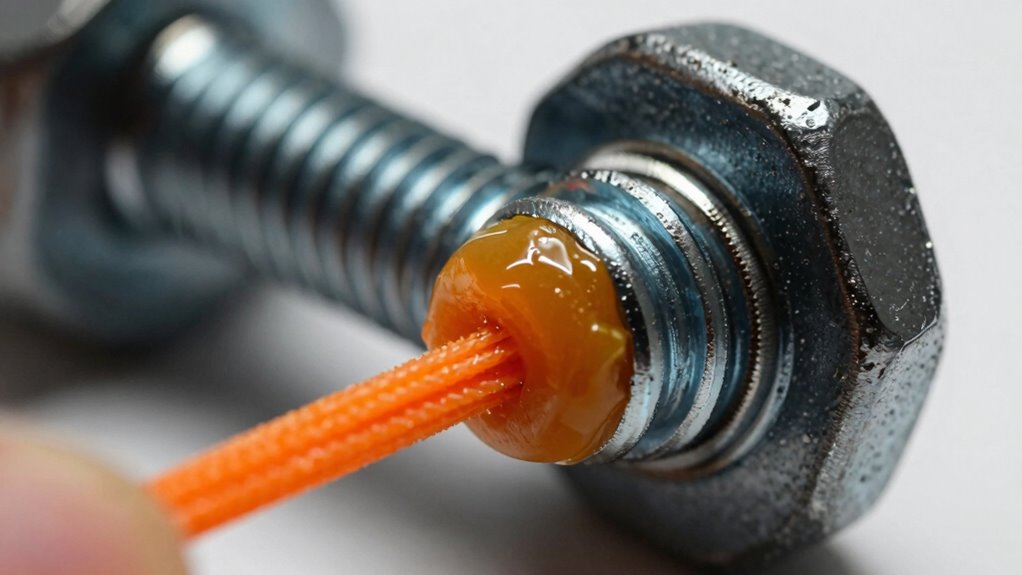

To keep bolts from loosening again, start by cleaning the threads thoroughly. Apply a suitable thread locking adhesive to prevent vibrations from causing them to undo. Tighten the bolts to the manufacturer’s recommended torque, using the right tools for precision. Consistently follow proper tightening sequences and guarantee proper thread engagement. Combining these techniques creates a strong bond and reduces the chance of bolts coming loose. Keep going to discover more effective tips to maintain secure fastenings.
Key Takeaways
- Apply a suitable thread locking adhesive before tightening bolts to prevent loosening from vibrations.
- Use the correct torque specifications to ensure proper load distribution and secure fitting.
- Clean threads thoroughly to ensure optimal bonding and prevent contamination.
- Follow proper tightening sequences to evenly distribute tension and avoid uneven loosening.
- Regularly inspect and retighten bolts as part of maintenance to maintain security over time.
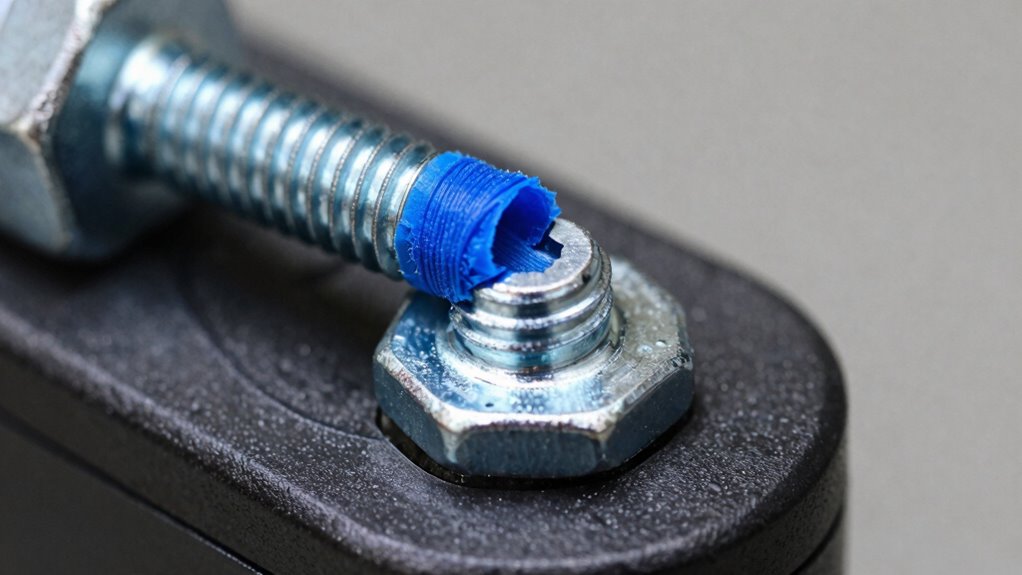
Loose bolts can be a persistent problem, but luckily, there’s a simple solution that prevents them from coming back. The key lies in proper thread locking and accurate torque tightening. When bolts loosen over time, it’s often because they weren’t secured with the right technique or materials. By understanding how to properly lock threads and applying the correct torque, you can ensure your bolts stay tight and reliable, reducing maintenance and preventing potential safety hazards.
Thread locking is a straightforward method that helps keep bolts from loosening due to vibrations or thermal expansion. You can use a thread locking adhesive or thread locker compound on the bolt threads before tightening. This liquid or semi-solid adhesive fills the microscopic gaps between the threads, creating a bond that resists loosening without requiring additional tools. When applied correctly, thread locking compounds provide a reliable barrier against vibration-induced loosening. Just remember to choose the right type—some are designed for high strength, while others allow for future disassembly if needed.
Thread locking compounds fill gaps and prevent loosening from vibrations or thermal expansion.
Torque tightening is equally important. Using a torque wrench ensures you tighten bolts to the manufacturer’s specified torque value. Over-tightening can strip threads or damage components, while under-tightening leaves bolts vulnerable to loosening. By applying the correct torque, you evenly distribute the load and create a secure connection that’s less likely to come loose over time. When tightening, always follow the recommended sequence and torque specifications, especially on critical assemblies like machinery or vehicle components. This precision helps maintain the integrity of the joint and prevents uneven stress that could lead to loosening.
Combining thread locking with proper torque tightening offers the best defense against loose bolts. Start by cleaning the bolt and thread surfaces to remove dirt, grease, or old thread locker. Apply a suitable thread locking compound to the threads and then tighten the bolt to the specified torque. This dual approach ensures the bolt is both physically secured and chemically bonded, greatly reducing the chances of loosening due to vibrations or thermal cycles.
Additionally, understanding the importance of proper thread engagement can further ensure your bolts stay tight over time. In short, preventing loose bolts is simple when you use the right tools and techniques. Proper thread locking and meticulous torque tightening work together to keep your bolts secure, saving you time and effort in maintenance while keeping your equipment safe and reliable. Take the time to do it right, and loose bolts will become a problem of the past.
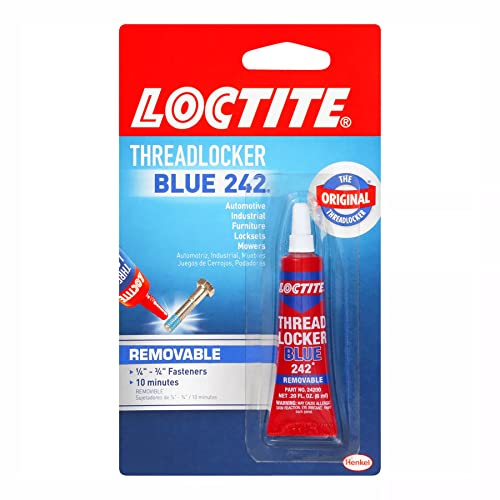
Loctite Threadlocker Blue 242 – Removable Thread Lock Glue for Nuts, Bolts, & Fasteners, Medium Strength Screw Glue to Prevent Loosening & Corrosion – 6 ml, 1 Pack
- Lock and Seal Fasteners: Prevents loosening from vibration
- Rust and Corrosion Protection: Protects against rust and leaks
- Removable with Hand Tools: Easily removable when needed
As an affiliate, we earn on qualifying purchases.
As an affiliate, we earn on qualifying purchases.
Frequently Asked Questions
Can Loose Bolts Cause Safety Hazards?
Loose bolts can definitely cause safety hazards, especially if they aren’t detected early. You should perform regular bolt inspection to catch any looseness before it leads to equipment failure or accidents. Adhering to strict safety protocols is essential, as it guarantees bolts stay tight and secure. Neglecting this can result in equipment breakdowns or injuries, so stay vigilant and maintain proper tightening procedures to keep everyone safe.
Are There Specific Tools Recommended for Tightening Bolts?
You should use torque wrenches to tighten bolts precisely to the recommended specifications, preventing over-tightening or under-tightening. Additionally, applying thread lockers can help keep bolts secure and prevent them from loosening over time. These tools and products work together to guarantee bolts stay tight, reducing safety hazards and maintenance needs. Always follow manufacturer instructions for proper use to achieve the best results.
How Often Should I Check for Loose Bolts?
Imagine your machinery as a lively dance, with bolts swaying in rhythm. You should check for loose bolts during your maintenance schedule, ideally every month or after heavy use. Inspection frequency depends on the equipment’s workload and environment. Regularly tightening bolts prevents unexpected loosening, keeping everything running smoothly. Don’t wait for signs of trouble—staying proactive guarantees your machinery stays secure, safe, and efficient.
Do Different Materials Require Different Tightening Methods?
Yes, different materials do require different tightening techniques because of material compatibility. For instance, metal bolts in metal parts need torque specifications suited for metals, while plastic components need gentler tightening to avoid cracking. Using the correct tightening techniques guarantees a secure fit without damaging the material. Always check manufacturer guidelines for specific recommendations, and consider the material’s properties to prevent loosening or damage over time.
Can Weather Affect Bolt Loosening Over Time?
Yes, weather can affect bolt loosening over time. Corrosion effects weaken bolt threads and fastener materials, making them more prone to loosening. Temperature fluctuations cause metal expansion and contraction, which can reduce the tension in bolts and lead to loosening. To prevent this, consider using corrosion-resistant fasteners and applying thread-locking compounds. Regular inspections and maintenance help guarantee bolts stay tight despite weather-related challenges.
Conclusion
Now that you know the foolproof way to keep bolts tight forever, you can forget about them coming loose like mischievous little rebels. Imagine your bolts as loyal soldiers standing firm, never wavering, no matter how wild the vibrations or chaos around them. Say goodbye to the nightmare of rattling, falling apart machinery, and hello to peace of mind that lasts for years. With this simple trick, you’ve turned your bolts into unstoppable champions—nothing will ever loosen them again!