
To choose a comfortable saddle for upright riding, start by prioritizing support and ensuring it fits your bike’s frame. Look for a saddle that aligns well with your riding style, and check compatibility with your bike’s specifications. Adjust the height, tilt, and fore-aft position for maximum comfort and efficiency, experimenting with small changes. Regularly maintain and fine-tune your saddle as your body or riding habits change. Keep exploring these tips for a better, pain-free ride.

Get sports gear delivered free with Prime
- Fast, free delivery on millions of items
- Prime Video, Amazon Music and more included
- Member-only deals all year
Key Takeaways
- Prioritize a wide, cushioned saddle designed for upright riding comfort and support.
- Ensure saddle compatibility with your bike’s frame, rails, and seat post specifications.
- Select a saddle with appropriate padding based on ride duration and personal preference.
- Adjust saddle height, tilt, and fore-aft position for optimal comfort and efficient posture.
- Regularly inspect and maintain saddle components to sustain comfort and proper fit over time.
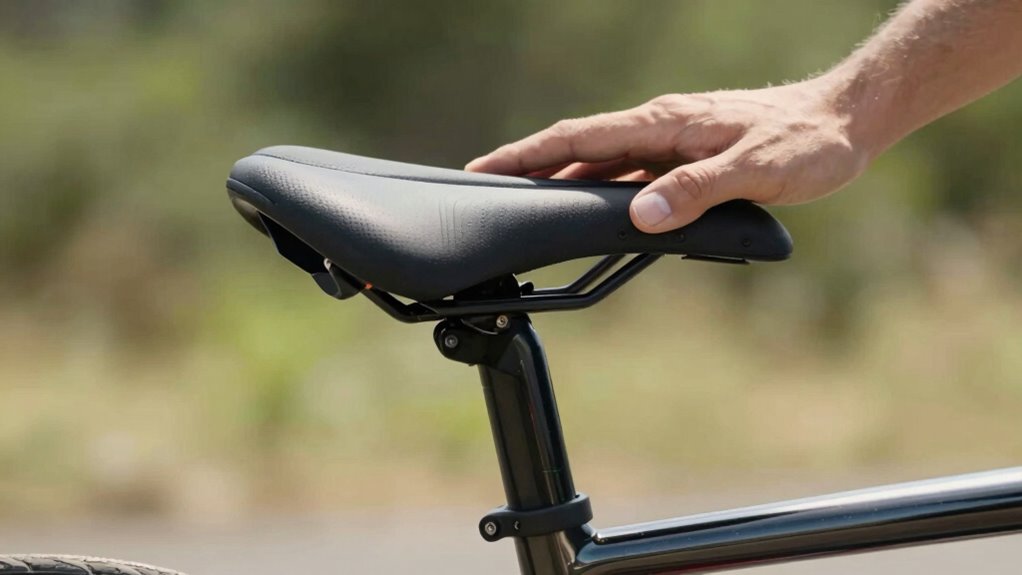
When selecting a saddle for upright riding, it’s essential to prioritize comfort and proper support to guarantee an enjoyable and pain-free experience. The right saddle can make all the difference, especially since your riding position is more relaxed and upright. To find the best fit, you need to consider bike frame compatibility, ensuring your saddle suits your bike’s geometry and your riding style. Different bikes have varying seat tube angles, saddle rails, and seat post diameters, so double-check the specifications before making a purchase. A saddle that’s incompatible with your frame can lead to discomfort and inefficient riding, so take measurements or consult your bike’s manual if needed.
Once you have the right saddle, saddle adjustment techniques become crucial. Properly adjusting your saddle height, tilt, and fore-aft position helps you achieve optimal comfort and efficiency. Start by setting the saddle height so that when you sit on it, your leg is almost fully extended at the bottom of the pedal stroke, with a slight bend in the knee. This position reduces strain on your knees and ensures smooth pedaling. Next, adjust the saddle tilt so it’s level or slightly nose-down, depending on your comfort. Too much tilt can cause pressure on sensitive areas, while too little can lead to sliding forward. The fore-aft adjustment involves moving the saddle horizontally to align the saddle nose directly over the pedal axle, helping you maintain a comfortable knee position and proper weight distribution. Experiment with small adjustments in each area, riding briefly after each change to gauge comfort. Additionally, choosing the appropriate saddle padding can further enhance riding comfort, especially during longer rides. Regularly inspecting the saddle’s compatibility with your bike’s frame can also prevent potential issues during longer rides.
Saddle adjustment techniques also include fine-tuning the seat’s position while riding. Pay attention to how your hips and pelvis feel; if you notice excessive rocking or discomfort, tweak the saddle’s tilt or position slightly. Remember, the goal is to distribute your weight evenly across the sit bones, preventing unnecessary pressure on soft tissues. Understanding how adjustments affect your riding posture can help you make more precise modifications over time. Don’t forget to periodically check your saddle’s tightness, as loose rails or bolts can cause instability and discomfort during longer rides. Over time, your body may change, so regularly reassess and adjust the saddle to keep your riding experience comfortable. Incorporating proper maintenance routines can help prolong the lifespan of your saddle and ensure consistent comfort on every ride.
As an affiliate, we earn on qualifying purchases.
Frequently Asked Questions
How Often Should I Replace My Saddle?
You should replace your saddle when you notice persistent discomfort, saddle padding deterioration, or changes in your bike fit that affect comfort. Regularly check for signs of wear and make sure your saddle still provides proper support. Typically, if you ride frequently, consider replacing it every 1-2 years to maintain peak comfort and performance. Don’t ignore discomfort, as a well-fitted saddle with adequate padding is key for enjoyable, pain-free upright riding.
Can I Customize My Saddle for Better Comfort?
Yes, you can customize your saddle for better comfort by adding extra saddle padding to enhance cushioning where needed. Additionally, look for saddles with an ergonomic design that promotes proper posture and reduces pressure points. You might also consider adjustable features or custom fits to better suit your body shape. These modifications help guarantee your saddle feels comfortable and supportive during upright riding sessions.
What Materials Are Best for Long-Term Durability?
For long-term durability, leather saddles are excellent if you commit to regular leather maintenance, which keeps them strong and supple over time. Synthetic saddles, on the other hand, offer impressive synthetic durability, resisting weather and wear without much upkeep. Your choice depends on your maintenance willingness and riding conditions. Both materials can last long if properly cared for, ensuring comfort and performance for years to come.
How Does Saddle Width Affect Comfort?
Think of saddle width as the hug your bike gives you—too narrow, and it pinches; too wide, and it feels bulky. A wider saddle with ample padding and perfect seat contouring offers better weight distribution, reducing pressure points and increasing comfort. When selecting, guarantee the saddle matches your sit bones’ width for ideal support, making every ride feel like a gentle embrace rather than a squeeze.
Is a More Expensive Saddle Always Better?
A more expensive saddle isn’t always better, but it often offers better saddle aesthetics and durability. You should consider brand reputation, as trusted brands tend to produce higher-quality saddles that fit comfortably. While higher price can indicate better craftsmanship, focus on finding a saddle that suits your riding style and body shape first. Remember, the most important thing is comfort and fit, not just price or looks.
Conclusion
Remember, finding the perfect saddle is like discovering a hidden gem in a bustling marketplace—you’ll know it when it feels just right. Trust your instincts and don’t rush the process; comfort is paramount. Think of it as your trusty steed’s saddle from a bygone era—built for long rides and lasting bonds. Keep experimenting and stay patient, for in the end, a well-chosen saddle will make every ride feel like a noble quest, not a burden.
Columbus Day / Indigenous Peoples' Day Picks
long weekend sales
As an affiliate, we earn on qualifying purchases.