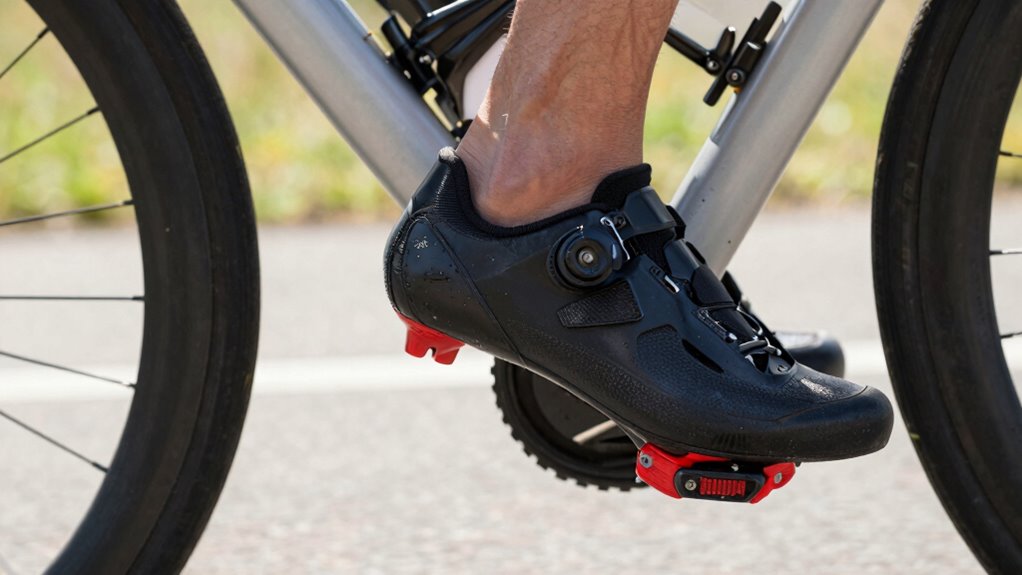
To prevent knee pain with clipless pedals, make certain your cleats are properly aligned and your pedal tension is set just right. Adjust the cleats so your feet sit comfortably over the pedal axles, promoting natural knee movement and even force distribution. Also, fine-tune the tension screw so clipping in and out feels secure but not effortful. Getting these settings right can boost comfort and control; keep going to discover more tips for a smoother ride.
Key Takeaways
- Ensure cleats are aligned so your foot sits naturally over the pedal axle to prevent knee strain.
- Adjust cleat position to match your foot’s natural angle, reducing lateral knee movements.
- Use proper tools or professional fitting to set cleats accurately for optimal knee tracking.
- Maintain correct pedal tension to avoid excessive effort or unintentional release that could cause knee pain.
- Regularly check and fine-tune cleat and pedal setup to sustain comfort and prevent knee discomfort during rides.
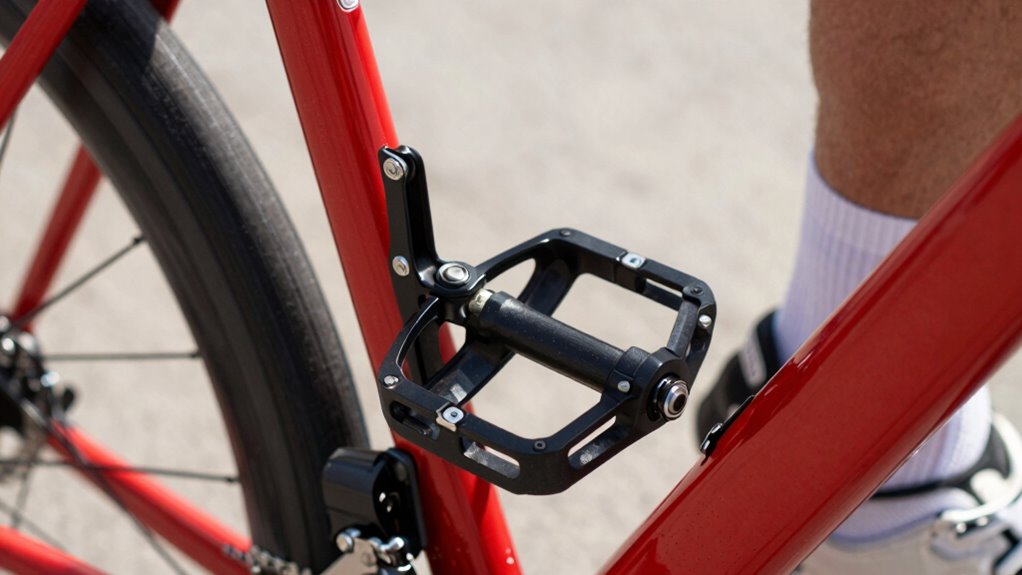
Clipless pedals revolutionized cycling by allowing riders to securely attach their shoes to the pedals, providing better control and power transfer. But to truly benefit from this system and avoid discomfort or knee pain, you need to pay close attention to how your cleats are set up. Two critical factors in this setup are pedal tension and cleat alignment. Properly adjusting these can make a significant difference in how your knees feel during and after rides.
First, consider pedal tension. This controls how much effort it takes to clip in and out of the pedals. If the tension is too high, you’ll struggle to disengage quickly, which can lead to awkward movements or sudden pulls that strain your knees. Conversely, if it’s too low, you might clip out unintentionally, causing instability and inefficient pedaling. Adjust the tension to a level that feels secure but still allows for easy disengagement when needed. Many clipless pedal systems have a tension adjustment screw—use it to fine-tune the resistance until clipping in and out feels natural and controlled. Proper pedal tension reduces unnecessary knee twists or jolts, especially during quick stops or technical sections.
Next, focus on cleat alignment. Incorrect alignment is a common culprit behind knee pain. Your cleats should be positioned so that your foot sits comfortably over the pedal axle, with your knee tracking directly over the pedal during each stroke. You want to avoid your toes pointing inward or outward, as this can put undue stress on your knee joint. When installing or adjusting your cleats, take your time to find a neutral position that matches your natural foot orientation. Many cyclists find it helpful to use a cleat alignment tool or to get a professional bike fit. Proper cleat alignment ensures your knee moves smoothly through the pedal stroke, minimizing lateral movement and strain. It also helps distribute force evenly across your knee joint, decreasing the likelihood of pain and injury over time. Additionally, understanding the role of proper setup can enhance comfort and efficiency on your rides.

RRSKIT Cleat Adjustment Tool, SPD Cleat Tool, Pedal Cleat Fitting Tool, Cycling Cleat Alignment Tool,Suitable for Shimano SPD SL (for SPD)
- Material: High-quality, durable construction
- Compatibility: Fits Shimano SPD SL cleats
- Precision: Ensures accurate cleat positioning
As an affiliate, we earn on qualifying purchases.
As an affiliate, we earn on qualifying purchases.
Frequently Asked Questions
How Tight Should Clipless Pedal Straps Be?
You should tighten your clipless pedal straps just enough to secure your foot comfortably without restricting movement. Proper foot placement ensures efficient power transfer and reduces knee strain. Adjust pedal tension so you can clip in and out smoothly, preventing sudden releases that might cause knee pain. Check regularly, especially if riding long distances, as loose straps can cause instability, while too tight ones may lead to discomfort or injury.
Can Clipless Pedals Improve Cycling Efficiency?
Yes, clipless pedals can improve your cycling efficiency. They allow you to maximize pedal efficiency by maintaining consistent power transfer throughout your pedal stroke. Proper cleat alignment guarantees your knees stay in a healthy position and helps you generate more power with less fatigue. When you set your cleats correctly, you’ll notice smoother pedaling, better control, and less strain, making your rides more effective and comfortable.
Are Clipless Pedals Suitable for Beginners?
Yes, clipless pedals are suitable for beginners when you prioritize safety and proper setup. They offer better control, improve efficiency, and help maintain proper pedaling technique. To guarantee clipless pedals compatibility, start with beginner cycling tips like practicing clipping in and out, adjusting cleats for comfort, and gradually increasing your confidence. With patience and correct adjustments, you’ll enjoy the benefits and ride safely from the start.
How Do I Choose the Right Cleat Position?
To choose the right cleat position, start by aligning your ankle with your knee and saddle height. You want your cleats positioned so your knee stays directly above the pedal when you’re pedaling. Adjust the cleats slightly outward or inward as needed to maintain proper ankle alignment, which helps prevent knee pain. Test your setup on a ride, and make small tweaks until your knees feel comfortable and aligned with each pedal stroke.
What Are Common Mistakes When Setting Cleats?
Setting cleats is like tuning a musical instrument—you want perfect harmony. Common mistakes include misaligning cleat position and neglecting proper foot positioning. Poor cleat alignment can cause knee pain and inefficient pedaling, while incorrect foot positioning throws off balance. Always double-check that your cleats are aligned with your foot’s natural angle and that your foot sits comfortably on the pedal. This guarantees smoother riding and less discomfort.
Conclusion
By setting your cleats just right, you’ll feel your knees glide smoothly like a gentle breeze over open fields. Imagine cycling effortlessly, every pedal stroke perfectly aligned, giving you freedom and comfort with each turn of the crank. When your cleats are properly positioned, you’ll enjoy the ride without knee pain holding you back. So take the time to fine-tune your setup—you’ll soon be gliding with ease, enthusiastic to explore every twist and turn ahead.