
TL;DR
In 2026, the traditional cost advantage of building your own AI workstation has shifted. Prebuilts often save time, reduce risk, and offer validated thermals, making them a smarter choice for many. The decision now hinges on customization needs and long-term control.
Imagine pulling a sleek, powerful AI workstation out of the box, ready to run your models in minutes. Or, picture spending months sourcing parts, assembling, and tuning a machine that’s perfectly tailored to your workflow. The question isn’t just about cost anymore — it’s about speed, support, and control in a market turned upside down by 2026’s component crunch.
This guide will show you how to weigh building versus buying in today’s landscape. You’ll learn why prebuilt systems might now be a smarter choice, especially with the latest shortages and price hikes, but also when going the DIY route makes sense. Whether you’re a hobbyist, a startup, or an enterprise, understanding this shift helps you make smarter decisions for your AI projects.
Build vs buy
an AI workstation.
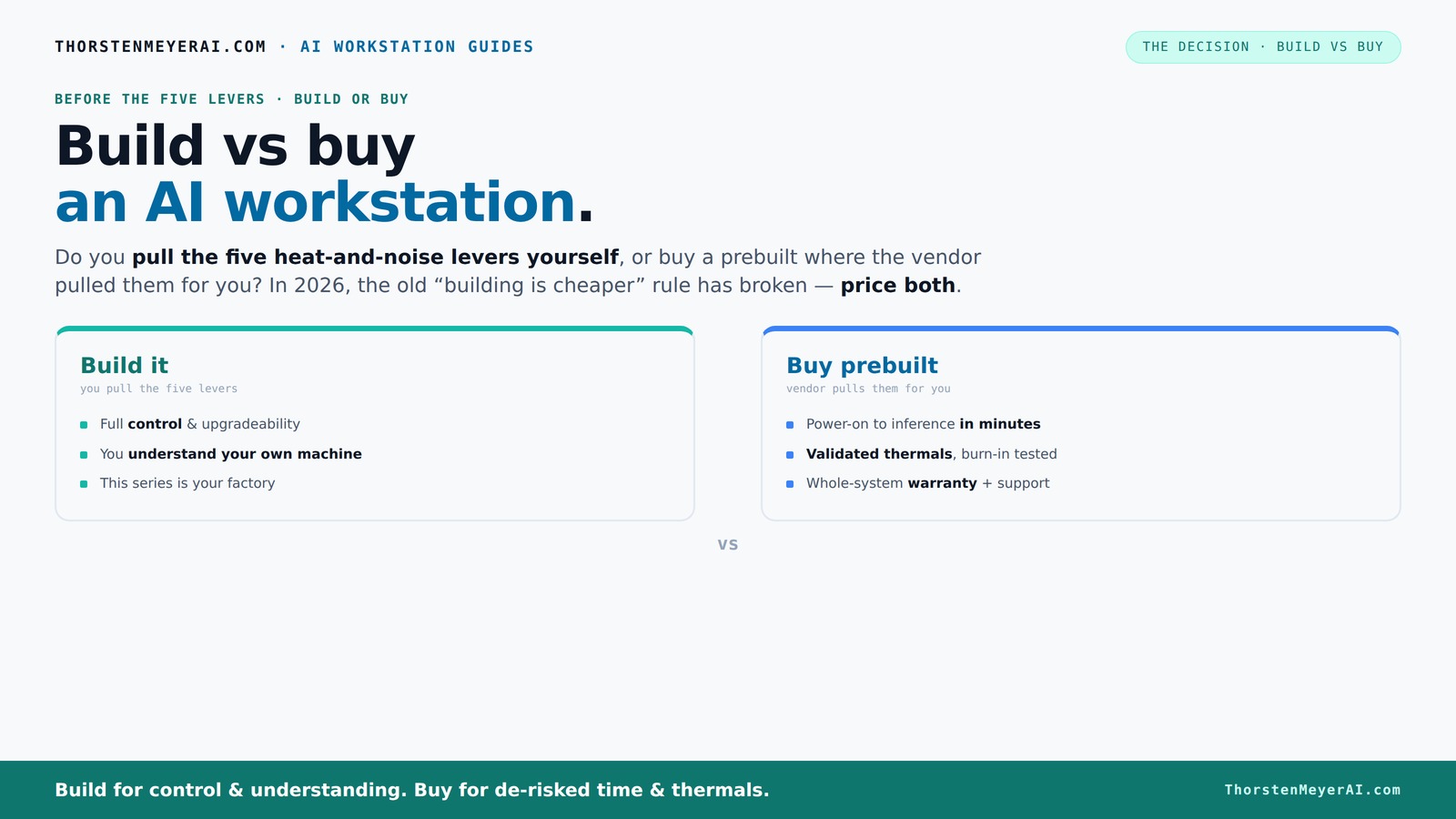
The real question behind this whole series: do you pull the five heat-and-noise levers yourself, or buy a prebuilt where the vendor pulled them for you? And in 2026, the old “building is cheaper” rule has broken. Match your situation in Part 3.
Key Takeaways
- Component shortages in 2026 have made prebuilt AI workstations often more cost-effective than DIY builds.
- Prebuilts save time, offer validated thermals, and include support, making them ideal for quick deployment and reliability.
- Building from scratch offers full control over components and cooling but requires time, expertise, and ongoing maintenance.
- Hybrid strategies—buy the base, customize the workflow—are increasingly the smart choice for many teams.
- Always compare current prices and consider your workload, support needs, and upgrade plans before deciding.

Corsair AI Workstation 300 Desktop PC – AMD Ryzen AI Max 385 CPU – AMD Radeon 8050S iGPU (Up to 48GBs vRAM) – 64GB LPDDR5X 8000MHz Memory – 1TB M.2 SSD – Black
AI-Optimized Compact Workstation: Experience AI performance out of the box with the compact 4.4L form factor, built for...
As an affiliate, we earn on qualifying purchases.
As an affiliate, we earn on qualifying purchases.
Why 2026 flips the script on build vs buy costs
For years, building your own AI workstation was the clear money-saver. But in 2026, things change. GPU, RAM, and SSD prices have soared due to shortages and high demand, pushing DIY costs above prebuilt options. A typical DIY rig that once cost around $1,000 now easily hits $1,250 or more, thanks to inflated component prices.
Meanwhile, big vendors bought components early, leveraging bulk discounts. They now offer prebuilt systems at prices that can beat piecing together parts — sometimes by hundreds of dollars. This shift isn’t just about immediate costs; it reflects a new reality where supply chain stability and component availability influence the total cost of ownership. The increased expense of sourcing individual parts means DIY builds may no longer be the budget-friendly choice they once were, especially when factoring in time spent troubleshooting and assembling.
This shift means your choice isn't just about saving money — it’s about saving time, reducing risk, and gaining reliability. Opting for a prebuilt can mitigate the uncertainties of component shortages, ensuring your system arrives ready to perform without delays or compatibility issues. In essence, the tradeoff is between the potential savings of DIY versus the predictability and support of prebuilt systems, which can be critical in professional or time-sensitive environments.
Corsair AI Workstation 300 Desktop PC – AMD Ryzen AI Max 385 CPU – AMD Radeon 8050S iGPU (Up to 48GBs vRAM) – 64GB LPDDR5X 8000MHz Memory – 1TB M.2 SSD – Black
AI-Optimized Compact Workstation: Experience AI performance out of the box with the compact 4.4L form factor, built for...
As an affiliate, we earn on qualifying purchases.
As an affiliate, we earn on qualifying purchases.
Who pulls the heat and noise levers? Build or buy?
Making a high-power AI workstation run cool and quiet is a delicate balancing act that involves multiple design choices. For more insights, see our guide on build vs buy a prebuilt AI workstation. When you buy a prebuilt, the manufacturer has already optimized these parameters—selecting the right cooling solutions, airflow configurations, and fan curves to achieve a balance between thermal performance and acoustic levels. They run extensive testing, often burn-in tests, to ensure thermals and noise levels meet specified standards, which reduces your risk of overheating or excessive noise during operation.
Some vendors, like Lambda or BIZON, go further by integrating advanced cooling solutions such as water-cooling systems, which are designed to handle high thermal loads more efficiently. These systems are tested under heavy workloads and validated for long-term stability, which means they can sustain performance without thermal throttling or noise spikes. This validation process is crucial because thermal and acoustic performance directly impact system reliability and user comfort—overheating can cause hardware throttling or failure, and loud systems can be distracting or disruptive in shared workspaces.
If you build your own, you’re the one pulling the levers. You choose the cooling methods—air or water cooling—and tune fans manually. You might undervolt the GPU to reduce heat output, select quieter fans, or design custom airflow paths. While this offers the potential for a highly optimized, silent system, it requires a deep understanding of thermal dynamics and ongoing maintenance. The tradeoff is that DIY solutions can be more variable in performance and may need regular adjustments to maintain optimal noise and thermal levels, especially as hardware ages or workloads change.

Sentinel Threadripper PRO 9995WX 96-Core Workstation PC RTX 5090, 384GB RAM, 4TB Gen5 SSD+12TB HDD, W11P (High Performance Desktop for Gen AI, AR, ML, CAD, Deep Learning, 3D Modeling, Rendering)
[CPU] AMD Ryzen Threadripper PRO 9995WX (96 Cores, 192 Threads, 2.5 GHz Base Clock Speed up to 5.4...
As an affiliate, we earn on qualifying purchases.
As an affiliate, we earn on qualifying purchases.
Defining Your Needs: When to Opt for Building or Buying
Before making your decision, it's crucial to assess your specific requirements. You might find it helpful to explore our article on build vs buy a prebuilt AI workstation. For instance, if you need a system quickly to meet project deadlines or want a reliable, tested setup without the hassle of assembly, prebuilt systems are often the best choice. They offer immediate deployment, support, and proven thermal performance, which reduces downtime and troubleshooting.
Conversely, if your workflow demands specialized hardware configurations, custom cooling solutions, or you want to optimize every component for maximum performance, building your own workstation might be advantageous. This approach allows full control over hardware choices, enabling you to tailor the system precisely to your needs. However, it requires time, technical expertise, and ongoing maintenance.
Hybrid approaches are also gaining popularity—buy a preconfigured base system and customize certain components or software settings. This strategy combines the reliability and support of prebuilt with the flexibility of customization, offering a balanced path for many users.
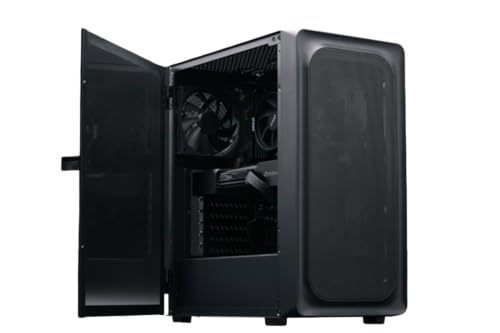
BoxGPT AI Workstation, RTX PRO 6000 Blackwell, 96GB VRAM, Ryzen 9900X, 128GB DDR5, 2TB NVMe. Local LLM Server, No Cloud. Coding Agent Ready, Pre-configured Ollama, OpenWebUI, ComfyUI
MASSIVE 96GB VRAM AI POWERHOUSE: Run the largest local LLMs, multi-modal AI models, and complex ComfyUI image pipelines...
As an affiliate, we earn on qualifying purchases.
As an affiliate, we earn on qualifying purchases.
Applying the Knowledge: Making the Right Choice
With all these considerations in mind, the next step is applying your knowledge to your specific situation. If rapid deployment, minimal hassle, and support are your priorities, a prebuilt system is likely the best fit. It reduces risk, offers validated thermals, and is generally more reliable in the long run.
If you have the skills, time, and desire for a tailored setup, building your own system can provide maximum customization and potential performance gains. Just keep in mind the hidden costs—time spent troubleshooting, maintaining, and upgrading can add up.
Ultimately, your choice should align with your project timeline, budget, technical expertise, and long-term goals. For more advice, visit Wave and Wind for outdoor tech gear insights. In 2026, the landscape favors prebuilt systems for most, but understanding your specific needs will help you make the most informed decision.
Frequently Asked Questions
Is it cheaper to build or buy an AI workstation in 2026?
With component prices spiking due to shortages, prebuilt systems often cost as much or less than building yourself. Always compare current prices, as the traditional rule that DIY is cheaper no longer holds true in 2026. Moreover, consider the hidden costs of time, troubleshooting, and potential delays associated with sourcing and assembling parts—these can substantially increase the overall effort and expense of DIY builds, making prebuilt options more attractive for those prioritizing reliability and speed.Which option offers better performance for the money?
Prebuilts from reputable vendors are often validated for thermal performance and stability, giving you reliable, consistent performance at a competitive price. Building can match or exceed this if you dedicate time to meticulous component selection and fine-tuning, but it requires expertise and ongoing maintenance. The key tradeoff is between the convenience and assurance of pre-validated systems versus the potential for marginal gains through custom tuning—gains that may not justify the extra effort for most users.How much time does buying save compared to building?
Prebuilt systems typically arrive ready to deploy within days to a few weeks, significantly reducing lead time. In contrast, building from parts can take many weeks or even months, considering sourcing, assembly, and testing. This time difference can be critical when project deadlines are tight or when rapid deployment is necessary—especially in professional environments where delays can impact productivity or competitiveness.When does building your own AI workstation make sense?
If you need a highly customized setup—such as specific hardware configurations, advanced cooling, or integration with existing systems—building allows full control. It’s also valuable for those who want to learn about hardware and optimize performance for particular workloads. Additionally, if you already possess the tools, skills, and workspace, the incremental cost savings and the educational value can outweigh the convenience of prebuilt options. However, be aware that this approach demands time, effort, and ongoing maintenance, especially as hardware evolves or fails.What hidden costs should I watch for with a custom build?
Expect to spend extra on troubleshooting, ongoing maintenance, and potential upgrades. Compatibility issues may arise due to the current component shortages, leading to delays or the need for substitutions. Additionally, the time invested in testing, tuning, and ensuring stability can be substantial. These hidden costs can erode the initial savings of building and should be factored into your decision-making process, especially if your project timeline or budget is tight.Conclusion
In 2026, the choice between build and buy isn’t just about cost. It’s about speed, support, and control. For most users, a well-chosen prebuilt system offers a reliable, ready-to-go solution that beats DIY on risk and convenience.
But if you’re a hobbyist or need a deeply customized setup, building your own rig can still be rewarding. The key is knowing your needs and balancing effort against benefit. Either way, the landscape has shifted — smart decision-making now requires current market insight, not just tradition.