
Complete the kit




Get sports gear delivered free with Prime
- Fast, free delivery on millions of items
- Prime Video, Amazon Music and more included
- Member-only deals all year
Key Takeaways
- Chargers with UL or ETL certification are significantly safer than uncertified models, reducing the risk of thermal runaway in lithium-ion batteries.
- A 3A charger cuts charging time by nearly one-third compared to a 2A model but requires a battery rated to handle the higher current.
- Interchangeable plug kits (5-in-1 or 7-in-1) offer universal compatibility but often have looser connections than dedicated, single-plug chargers.
- Build quality varies widely; premium chargers use higher-grade capacitors and better heat dissipation, extending the lifespan of both the charger and the bike battery.
- Voltage accuracy is critical; a charger outputting even slightly above 54.6V can permanently damage a 48V lithium-ion battery pack.


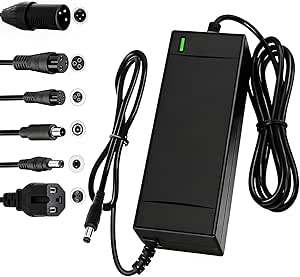


| e-bike charger | Input voltage | Output Voltage | Output Current | Dimensions |
|---|---|---|---|---|
| 48V Electric Bike Charger | 110 V | — | — | 7 × 3 × 4 in |
| Hyleton 48V E-Bike Battery Cha | 100–240 V | — | — | — |
| Pinkind 54.6V 2A 7-in-1 Charge | — | — | — | 6 × 2 × 4 in |
| Hexwatt 54.6V 2A Charger for 4 | 120 V | — | — | 2.72 × 5.96 × 1.85 in |
| SGS Certified 54.6V 2A Fast El | — | — | — | 1.5 × 2.5 × 6.6 in |
| 54.6V 2A Charger for 48V Lithi | 100–240V AC | 54.6 volts | 2 A | 1.7 × 1.8 × 4.8 inches |
| 54.6V 2A Charger for 48V Elect | — | 54.6V | 2A | — |
| 54.6V 2A Universal 7-in-1 Char | — | — | — | — |
| 54.6V 3A Universal 7-in-1 Char | 100–240 V AC | 54.6 V | 3 A | — |
| Fancy Buying 7-in-1 54.6V 2A C | 100–120V | 54.6V | 2A | — |
| Suptopone 54.6V 2A Electric Bi | 100–240V | 54.6V | 2A | — |
| 54.6V 2A Electric Bike Charger | 100–120V | 54.6V | 2A | 6.5 × 1.5 × 2.5 inches |
| EVAPLUS 54.6V Safe Charger for | 100-240V AC | 54.6V | 1.5A – 2A (depending on load) | — |
| Hyleton 54.6V 3A Charger for 4 | 110V | 54.6V | 3A | 6.8 × 3.3 × 1.7 inches |
| ETL-Certified 48V Lithium Batt | 100–240V | 54.6V | 2A | 5.5 × 2 × 3 inches |
More Details on Our Top Picks
48V Electric Bike Charger, 54.6V 2A, with 5 Interchangeable Plugs
I’d choose this charger as a portable spare for a rider who wants several connector options without carrying a heavier charger. Its five interchangeable plugs cover multiple connector styles, while the 15.04-ounce weight makes it easier to pack than the 1.1-pound SGS Certified 54.6V 2A Fast Electric Bicycle Charger. Built-in protections against over-voltage, over-current, short circuits, and overheating add useful safeguards for a travel or backup charger. The tradeoff is a narrower adapter set than the Pinkind 54.6V 2A 7-in-1 Charger, and the plug still has to match the battery. It is specifically for 13S 48V lithium batteries, so I’d skip it for other battery chemistries or voltages. Its listed UL specification is another point of differentiation, but it does not remove the need to verify connector fit.
Pros:- Five interchangeable plugs support several connector types.
- Lightweight at 15.04 ounces for a charger intended for travel or backup.
- Protection against over-voltage, over-current, short circuits, and overheating.
- UL specification is listed in the product data.
Cons:- Limited to compatible 13S 48V lithium batteries.
- Connector compatibility depends on the battery matching one of the included plugs.
- Five plugs offer fewer adapter options than the Pinkind 7-in-1 model.
Best for: Riders with a compatible 13S 48V lithium battery who want a lightweight spare for travel or home backup.
Not ideal for: Owners of batteries outside the 13S 48V lithium format, or riders whose connector is not covered by the five included plugs.
- Battery compatibility:13S 48V lithium batteries
- Output:54.6 V, 2 A
- Input voltage:110 V
- Interchangeable plugs:5
- Compatible devices:Electric bikes, scooters, one-wheel boards, and Rad Power Bikes
- Dimensions:7 × 3 × 4 in
- Weight:15.04 oz
- Specification listed:UL
Our verdict“Pick this as a lightweight spare if your 13S 48V battery and connector match its specifications.”
Hyleton 48V E-Bike Battery Charger, 54.6V 2A
The Hyleton is a sensible pick for riders who value straightforward charge monitoring over a large adapter assortment. Its LED changes from red while charging to green when plugged in or fully charged, and the charger automatically shuts off or trickle-charges once the battery is full. Compared with the five-plug 48V Electric Bike Charger in this roundup, Hyleton provides three specified connector types rather than five, but it adds a 100–240V input range and a storage bag. Its protections cover overvoltage, overcurrent, short circuits, and overheating, and its casing is described as V0-rated flame-retardant. The limits are firm: it is for compatible 48V lithium-ion e-bike batteries, not LiFePO4, lead-acid, other voltages, or scooters. I’d verify both chemistry and connector before buying; a battery unused for more than 12 months may not charge.
Pros:- Three specified connector types cover several compatible e-bike connections.
- Red and green LED indicators make charging status easy to read.
- Automatic shutoff or trickle charging is specified for a full battery.
- 100–240V input and included storage bag suit travel and storage.
Cons:- Works only with compatible 48V lithium-ion e-bike batteries.
- Not compatible with LiFePO4, lead-acid, other battery voltages, or listed non-e-bike vehicles.
- Three connector types give less adapter variety than the Pinkind and Hexwatt options.
Best for: E-bike owners with a compatible 48V lithium-ion battery who want visible charging status and a charger suited to different mains voltages.
Not ideal for: Owners of LiFePO4 or lead-acid batteries, non-48V packs, scooters, or batteries that have been unused for more than 12 months.
- Compatible battery:48V lithium-ion e-bike batteries
- Output:54.6 V, 2 A
- Input voltage:100–240 V
- Connector types:DC 5.5 × 2.5/2.1 mm, 12 mm 3-pin aviation, 18 mm 3-pin XLR
- Safety features:Overvoltage, overcurrent, short-circuit, and overheating protection
- Indicator:Green when plugged in or fully charged; red while charging
- Housing:V0-rated flame-retardant casing
- Included accessory:Velvet storage bag
Our verdict“Choose Hyleton if your 48V lithium-ion e-bike matches one of its three plugs and you want clear charge-status signals.”
Pinkind 54.6V 2A 7-in-1 Charger for 48V Lithium-Ion E-Bike and Scooter Batteries
Pinkind stands out when the main buying hurdle is finding a matching plug. Its six adapters plus the 5.5 × 2.1 mm DC connection cover a broad range of listed connector styles, including mini and standard 3-prong, RCA, XLR, and IEC. That gives it more connector choice than Hyleton’s three-connector charger, though it does not charge faster: both are rated at 54.6V and 2A. ETL certification and protections for overvoltage, overcurrent, short circuits, overheating, and overcharge add a reassuring safety feature set, while red and green indicators show charging progress. The tradeoff is strict battery matching: this is for 48V 13S lithium-ion packs, not lead-acid batteries or other formats. I’d check the battery label and connector dimensions before choosing it; extra adapters do not make an incompatible battery suitable.
Pros:- Six adapters plus a DC connection provide broad connector selection.
- ETL-certified, with multiple electrical and temperature protections.
- Red and green indicators show charging and full-charge status.
- 100–240V input supports a range of mains voltages.
Cons:- Compatible only with 48V 13S lithium-ion battery packs.
- Not suitable for lead-acid batteries.
- At 2A, it offers no higher-current charging advantage over comparable 2A options.
Best for: Owners of compatible 48V 13S lithium-ion e-bike or scooter batteries whose connector may require one of several adapter styles.
Not ideal for: Riders with lead-acid batteries, a different battery voltage or chemistry, or anyone seeking a higher-current charger than 2A.
- Compatible batteries:48V 13S lithium-ion only
- Output:54.6 V, 2 A
- Input:100–240 V, 50/60 Hz
- Connectors:5.5 × 2.1 mm DC plus adapters for 5.5 × 2.5 mm DC, 9 mm mini 3-prong, 12 mm standard 3-prong, 8 mm RCA, 3-pin XLR, and IEC
- Safety certification:ETL
- Protection features:Overvoltage, overcurrent, short circuit, overheating, and overcharge protection
- Indicators:Red while charging; green when fully charged
- Dimensions:6 × 2 × 4 in
Our verdict“Choose Pinkind when connector flexibility matters most and your battery is confirmed to be a compatible 48V 13S lithium-ion pack.”
Hexwatt 54.6V 2A Charger for 48V Lithium-Ion E-Bike and Scooter Batteries
Hexwatt is the build-focused choice in this group: its aluminum housing, cooling fan, and replaceable fuse set it apart from the lighter, simpler chargers such as the 48V Electric Bike Charger with five plugs. Seven interchangeable connectors also give it more plug options than that model, while automatic shutoff and red/green status LEDs make charge completion easier to track. Its listed safety testing references CSA and UL standards, but those details do not make it universally compatible. Hexwatt requires a 54.6V charge for a 48V 13S lithium-ion/NMC battery; it explicitly excludes LiFePO4, lead-acid, and 52V, 60V, or 72V batteries. At 0.66 kg, it is heavier than the lightweight backup pick. I’d favor it for a stationary charging spot, not a minimalist travel kit.
Pros:- Aluminum housing, cooling fan, and replaceable fuse distinguish its construction.
- Seven interchangeable connectors support a range of compatible devices.
- Automatic shutoff and LED indicators show charging status.
- Protection against overvoltage, overcurrent, overheating, and short circuits.
Cons:- Limited to compatible 48V 13S lithium-ion/NMC batteries requiring 54.6V charging.
- Explicitly incompatible with LiFePO4, lead-acid, 52V, 60V, and 72V batteries.
- At 0.66 kg, it is heavier than the 48V Electric Bike Charger with five plugs.
Best for: Riders with a compatible 48V 13S lithium-ion/NMC e-bike or scooter battery who prefer a metal housing, cooling fan, and replaceable fuse.
Not ideal for: Owners of LiFePO4, lead-acid, 52V, 60V, or 72V batteries, or riders prioritizing the lightest charger for travel.
- Battery compatibility:48V 13S lithium-ion/NMC
- Output:54.6 V, 2 A
- Input voltage:120 V
- Connectors:7 interchangeable connectors
- Protection:Overvoltage, overcurrent, overheating, and short-circuit protection
- Charging status:Red while charging; green when fully charged or not connected
- Dimensions:2.72 × 5.96 × 1.85 in
- Weight and housing:0.66 kg; aluminum
- Safety testing:Tested to listed CSA C22.2 No. 62368-1 and UL 62368-1 standards
Our verdict“Pick Hexwatt for a more substantial, feature-rich charging setup only if your battery voltage, chemistry, connector, and polarity all match.”
SGS Certified 54.6V 2A Fast Electric Bicycle Charger for 48V Ebike Battery
This charger is easiest to shortlist when your bike is among the named compatible models: the supplied list includes Ecotric City/Beach, Lectric XP 2.0/3.0, and Evercross H5/H7, alongside other 48V 13S lithium e-bikes. Its seven-plug adapter set matches the connector breadth of Hexwatt and exceeds the five-plug 48V Electric Bike Charger, while the 100–240V input suits different mains supplies. Safety features include over-voltage, over-current, short-circuit, and temperature protection, plus LED indicators and automatic shutoff. The practical drawback is its single charging port, so it cannot charge multiple devices at once. It is also listed at 1.1 pounds, making it a less compelling travel spare than the 15.04-ounce five-plug option. As with the rest of this group, plug choice cannot overcome a battery voltage or chemistry mismatch.
Pros:- Names several compatible e-bike lines, giving buyers a useful starting point for fit checks.
- Seven plugs cover multiple connector styles.
- 100–240V input supports different mains voltages.
- LED indicators, automatic shutoff, and several electrical and temperature safeguards are specified.
Cons:- Compatible only with 48V 13S lithium-ion batteries.
- One charging port does not support simultaneous charging of multiple devices.
- At 1.1 pounds, it is heavier than the five-plug 48V Electric Bike Charger.
Best for: Owners of listed Ecotric, Lectric XP 2.0/3.0, Evercross, or other confirmed 48V 13S lithium e-bikes who want a broad adapter set.
Not ideal for: Riders with batteries outside the 48V 13S lithium-ion format, or anyone who needs to charge more than one device at a time.
- Output:54.6 V, 2 A
- Input:100–240 V, 50/60 Hz
- Battery compatibility:48V 13S lithium e-bike batteries
- Connector set:7 plugs: 5.5 × 2.1 mm, 5.5 × 2.5 mm, mini 3-prong, standard 3-prong, RCA, XLR, and IEC
- Compatible models listed:Ecotric City/Beach, Lectric XP 2.0/3.0, Evercross H5/H7, and other 48V 13S lithium e-bikes
- Ports:1
- Dimensions:1.5 × 2.5 × 6.6 in
- Weight:1.1 lb
- Warranty:2 years
Our verdict“Choose this model if your named e-bike or confirmed 48V 13S battery matches and you want seven plug options, but not multiple charging ports.”
54.6V 2A Charger for 48V Lithium Batteries with 6 Interchangeable Plugs
This charger stands out for its six interchangeable connectors, making it a practical choice for households with multiple electric vehicles. Compared to the Fancy Buying 7-in-1, which relies on specific plug fits, this model’s aluminum alloy housing offers superior heat dissipation, a critical factor when charging multiple devices sequentially. The automatic trickle charging ensures batteries remain topped off without overcharging, a feature often missing in budget alternatives. However, its compatibility is strictly limited to 48V lithium-ion systems, so users with mixed fleets including 36V or 52V bikes will find it restrictive. While the input voltage spec lists 240V, the description confirms 100–240V support, offering decent international travel compatibility. This unit is best suited for riders who prioritize thermal management and versatility across similar 48V setups rather than raw charging speed.Pros:- Six interchangeable plugs cover a wide range of common 48V connectors
- Aluminum alloy housing improves heat dissipation during long charges
- Automatic trickle charging maintains battery health after full charge
Cons:- Strictly limited to 48V lithium-ion batteries, excluding other voltages
- Inconsistent voltage specification in listing creates minor confusion
Best for: Owners of multiple 48V lithium-ion e-bikes or scooters who need one charger for different connector types.
Not ideal for: Riders with mixed-voltage fleets (e.g., 36V or 52V) or those needing ultra-fast charging.
- Output Voltage:54.6 volts
- Output Current:2 A
- Input Voltage:100–240V AC
- Connectors:6 interchangeable plugs
- Safety Certification:SGS
- Dimensions:1.7 × 1.8 × 4.8 inches
- Protection Features:Over-voltage, over-current, short-circuit, over-temperature
Our verdict“Choose this for reliable, cool-running charging across a small fleet of 48V lithium-ion devices.”
54.6V 2A Charger for 48V Electric Bike Batteries
Safety is the primary differentiator here, backed by UL certification, a rigorous standard that many competitors, including the 54.6V 2A Charger with 6 Interchangeable Plugs, do not explicitly claim. This model includes reverse connection protection and a fuse, adding layers of defense against user error or electrical faults. The CC-CV charging mode ensures a stable and efficient charge curve for 48V lithium batteries, automatically stopping when full to prevent degradation. While it offers five connectors, which is slightly fewer than the seven provided by the BICMDO Universal Charger, the focus on certified safety components makes it a trustworthy option for daily commuters. The tradeoff is its incompatibility with lead-acid batteries, limiting its utility for older e-bike conversions. It is a solid, no-nonsense choice for those who value certified reliability over maximum connector variety.Pros:- UL certification provides verified safety standards
- Includes reverse connection protection and fuse for added security
- Automatically stops charging to prevent overcharging and battery damage
Cons:- Not compatible with lead-acid batteries, limiting older bike compatibility
- Fewer connectors (5) compared to 7-in-1 competitors
Best for: Daily commuters who prioritize UL-certified safety and reliable automatic shut-off features.
Not ideal for: Users with lead-acid battery systems or those needing maximum connector compatibility.
- Brand:Brokeir
- Certification:UL
- Output Voltage:54.6V
- Output Current:2A
- Charging Mode:CC-CV
- Connectors:5 universal connectors
- Safety Protections:Overvoltage, overcurrent, short circuit, overtemperature, reverse connection, fuse
Our verdict“A trustworthy, UL-certified option for riders who prioritize electrical safety and automatic protection.”
54.6V 2A Universal 7-in-1 Charger for 48V Lithium-Ion E-Bike and Scooter Batteries
This charger maximizes compatibility with seven specific connector types, including less common options like 3-Pin XLR and 8mm RCA. Compared to the Brokeir UL-certified charger, which focuses on safety certifications, this model prioritizes physical fit for a broader range of 48V 13S lithium-ion devices. The flame-retardant housing and cooling layers are designed to manage heat during extended use, though it lacks the explicit UL certification found in competitors. Its 18 AWG copper wire suggests robust current handling, but users must verify their battery is strictly 48V 13S, as this unit rejects all other voltages. This makes it an excellent backup charger for workshops or households with diverse, older-model e-bikes that use proprietary plugs. However, the narrow voltage tolerance means it is a specialist tool, not a general-purpose charger for mixed fleets.Pros:- Seven connector types cover a wide array of 48V 13S battery plugs
- Flame-retardant housing and cooling layers enhance durability and safety
- 18 AWG copper wire supports reliable current delivery
Cons:- Strictly limited to 48V 13S lithium-ion batteries, excluding other configs
- Lacks explicit UL certification compared to safety-focused rivals
Best for: Workshops or owners with diverse 48V 13S lithium-ion bikes requiring rare connector types like XLR or RCA.
Not ideal for: Users with 24V, 36V, 52V, or 60V batteries, or those prioritizing UL certification.
- Brand:BICMDO
- Output:54.6V, 2A
- Input:100–240V AC, 50/60Hz
- Battery Compatibility:48V 13S lithium-ion
- Connectors:5.5×2.1mm, 5.5×2.5mm DC, 9mm Mini 3-Prong, 12mm 3-Prong, 8mm RCA, 3-Pin XLR, 3-Prong Universal
- Wire Gauge:18 AWG copper
- Protection:Over-voltage, over-current, short-circuit
Our verdict“Ideal for fitting a wide variety of 48V 13S connectors, especially older or proprietary plug types.”
54.6V 3A Universal 7-in-1 Charger for 48V Lithium E-Bike and Scooter Batteries
This unit distinguishes itself with a 3A output, offering a 50% speed increase over the standard 2A models like the Fancy Buying 7-in-1. For riders with larger capacity 48V batteries, this translates to significantly reduced downtime, with a stated charge time of approximately six hours. The inclusion of LED status indicators and an automatic maintenance mode provides clear feedback, unlike the basic indicator lights on some competitors. It also carries both SGS and UL certifications, combining the safety rigor of the Brokeir charger with the connector versatility of the BICMDO model. The tradeoff is its slightly larger footprint and weight, making it less portable than compact 2A alternatives. This is the best choice for users who value time efficiency and verified safety, provided their battery can handle a 3A charge rate without overheating.Pros:- 3A output reduces charging time by up to 50% compared to 2A chargers
- Dual SGS and UL certifications ensure high safety standards
- LED indicators and maintenance mode provide clear charging status
Cons:- Bulkier and heavier than standard 2A compact chargers
- Requires battery compatibility with 3A charge rates to avoid damage
Best for: Riders with high-capacity 48V batteries who need faster charging and verified safety certifications.
Not ideal for: Users with small batteries that do not support 3A input, or those needing a highly portable charger.
- Output Voltage:54.6 V
- Output Current:3 A
- Input Voltage:100–240 V AC
- Connector Options:7 types (9 mm/12 mm 3-prong, XLR, RCA, DC, miniature)
- Certifications:SGS and UL
- Weight:16 oz
- Charging Indicators:Red for charging; green for fully charged/standby
Our verdict“The fastest and safest option for 48V riders who prioritize reduced charging time.”
Fancy Buying 7-in-1 54.6V 2A Charger for 48V 13S Li-ion Batteries
This charger features aviation aluminum plugs and a fire-resistant casing, emphasizing durability and heat management. Unlike the BICMDO 7-in-1, which relies on passive cooling layers, this model uses an active fan system, indicated by normal operational noise, to maintain lower temperatures during high-load charging. The 8.2 ft cable length offers greater flexibility in placement compared to shorter cords on competitors. However, the input voltage is limited to 100–120V, making it unsuitable for international travel or regions with 220–240V mains, a significant drawback compared to the wide-input 54.6V 3A Universal Charger. Additionally, the green indicator at startup may signal a fault, requiring users to monitor the unit closely. This is a robust choice for North American users who prioritize build quality and active thermal protection over global voltage compatibility.Pros:- Aviation aluminum plugs and fire-resistant casing enhance durability
- Active fan cooling system prevents overheating during long charges
- 8.2 ft cable provides flexible placement options
Cons:- Limited to 100–120V input, restricting international use
- Fan noise may be distracting in quiet environments
- Startup green light can indicate faults, requiring careful monitoring
Best for: North American users who need a durable, actively cooled charger with a long cable for fixed charging stations.
Not ideal for: International travelers or users in 220–240V regions due to 100–120V input limitation.
- Output Voltage:54.6V
- Output Current:2A
- Input Voltage:100–120V
- Compatible Batteries:48V 13S Li-ion
- Cable Length:8.2 ft
- Interchangeable Heads:7
- Safety Features:Overvoltage, overcurrent, temperature, short-circuit protection
- Casing:Fire-resistant
Our verdict“A durable, actively cooled option for North American users who prioritize build quality and cable length.”
Suptopone 54.6V 2A Electric Bike Charger with 5 Connector Types
This charger stands out for its trickle charging capability, making it a strong choice for riders who leave their bikes unused for long periods. Unlike the Hyleton 54.6V 3A Charger, which may fail to activate on deeply discharged packs, the Suptopone attempts to revive batteries via low-current trickle mode. It includes five connector types, covering most common e-bike ports, and features a cooling fan to manage heat during the six-hour charge cycle. However, the 2A output is standard speed, not fast. The primary tradeoff is its narrow compatibility: it is strictly for 48V lithium-ion packs. If you have a 36V or 52V bike, this unit is useless. It is a reliable, no-frills option for standard maintenance charging, provided your battery hasn’t been dead for over a year.
Pros:- Trickle charge mode helps revive slightly depleted batteries
- Five included connectors cover most common e-bike ports
- Built-in cooling fan prevents overheating during long charges
- Wide 100-240V input allows for travel use
Cons:- Slow 2A charge rate takes approximately 6 hours
- Incompatible with batteries left unused for over 12 months
- Strictly limited to 48V lithium-ion chemistry
Best for: Riders with standard 48V e-bikes who occasionally leave their bikes parked for weeks and need a charger that won’t panic at low voltage.
Not ideal for: Owners of 36V, 52V, or lead-acid battery systems, as well as those needing rapid top-ups before a ride.
- Output Voltage:54.6V
- Output Current:2A
- Input Voltage:100–240V
- Charge Time:Approx. 6 hours
- Compatible Battery:48V Lithium-Ion
- Connectors:5 types (DC, 3-prong, RCA, XLR)
- Safety Features:Overvoltage, overcurrent, short circuit, overheating
Our verdict“Choose this if you need a dependable charger that can handle slightly neglected batteries without complex troubleshooting.”
54.6V 2A Electric Bike Charger for 48V Lithium-Ion Batteries
If portability is your priority, this unit’s compact 6.5-inch footprint makes it easier to store in a pannier or backpack than bulkier alternatives like the ETL-Certified 48V Charger. It delivers the standard 54.6V at 2A, ensuring safe, moderate-speed charging for 48V 13S lithium-ion packs. The inclusion of six plug adapters provides decent versatility, though you must verify your specific connector size before buying. A key differentiator is its UL certification and flame-retardant V-0 rated enclosure, offering peace of mind for indoor charging. However, the input voltage is limited to 100–120V, meaning it won’t work in Europe or Asia without a transformer. This is a solid, safe choice for North American commuters who value a small brick over universal voltage support.
Pros:- Compact dimensions (6.5 × 1.5 × 2.5 in) save space
- UL certified with flame-retardant V-0 enclosure
- Includes six plug adapters for broad connector compatibility
- Automatic shut-off with clear LED status indicators
Cons:- Input voltage limited to 100–120V (not travel-friendly)
- Standard 2A speed requires several hours for full charge
- Only compatible with 48V 13S lithium-ion batteries
Best for: North American commuters who need a UL-certified, space-saving charger for daily home or office use.
Not ideal for: International travelers or those in 220-240V regions, as the 100-120V input limitation prevents global use.
- Output Voltage:54.6V
- Output Current:2A
- Input Voltage:100–120V
- Dimensions:6.5 × 1.5 × 2.5 inches
- Compatible Battery:48V 13S Lithium-Ion
- Connectors:6 adapters included
- Certification:UL Listed
- Safety Features:Over-voltage, over-current, short-circuit, temperature
Our verdict“A safe, compact option for US-based riders who prioritize a small footprint over international voltage compatibility.”
EVAPLUS 54.6V Safe Charger for 48V Lithium Batteries (UL Certified)
This charger is engineered for the global rider, featuring a wide 100-240V AC input that allows you to plug it in almost anywhere in the world without a converter. In contrast to the 54.6V 2A Electric Bike Charger (which is limited to 120V), the EVAPLUS offers true international versatility. It provides a steady 2A output, filling a standard 48V battery in roughly 4-6 hours. The UL certification and built-in protections against over-voltage and short circuits are standard here, but the real win is the reliability across different power grids. The downside is the limited connector set; it primarily supports DC barrel plugs (5.5mm). If your bike uses a specialized 3-pin or XLR connector, you may need an adapter not included in the box. It’s the go-to for frequent flyers with barrel-plug bikes.
Pros:- Global 100-240V input works worldwide without converters
- UL certified for safety and reliability
- Fast charging time of 4-6 hours for standard batteries
- LED indicators provide clear charge status
Cons:- Limited connector compatibility (mostly DC barrel plugs)
- Requires verification of plug size before purchase
- Only compatible with 48V lithium batteries
Best for: Travelers and international commuters who need a UL-certified charger that works on both 110V and 220V power grids.
Not ideal for: Bikes with proprietary 3-pin, XLR, or RCA connectors, as this model relies heavily on standard DC barrel plugs.
- Output Voltage:54.6V
- Output Current:1.5A – 2A (depending on load)
- Input Voltage:100-240V AC
- Wattage:81.9W
- Connector Type:DC 5.5mm x 2.5/2.1mm
- Certification:UL Certified
- Charge Time:4-6 hours
Our verdict“The safest bet for international travel, provided your e-bike uses a standard DC barrel connector.”
Hyleton 54.6V 3A Charger for 48V Lithium E-Bike Batteries
For riders tired of waiting, the 3A output of this Hyleton model cuts charge times significantly compared to the standard 2A units like the Suptopone 54.6V Charger. It pushes more current into 48V lithium-ion packs, getting you back on the road faster. The unit is UL, TUV, CE, and FCC certified, indicating rigorous safety testing for its higher amperage. It includes a robust set of four connector adapters (DC, Junlei, 3-pin, XLR), covering most major e-bike brands. However, this speed comes with constraints: it is strictly for 48V lithium-ion batteries and will not work with lead-acid or LiFePO4 packs. Additionally, if your battery has been dead for over a year, the protection circuits may block this higher-current charge. It’s the best choice for daily riders who need quick top-ups and have healthy, modern batteries.
Pros:- 3A output provides faster charging than standard 2A chargers
- Multiple safety certifications (UL, TUV, CE, FCC)
- Includes four versatile connector adapters
- Automatic trickle charging prevents overcharging
Cons:- Higher amperage may not activate on very old or dead batteries
- Strictly incompatible with non-lithium or non-48V batteries
- Larger physical size compared to compact 2A models
Best for: Daily commuters and heavy users who need to recharge their 48V lithium batteries quickly between rides.
Not ideal for: Owners of lead-acid, LiFePO4, or deeply discharged batteries that have been sitting unused for over 12 months.
- Output Voltage:54.6V
- Output Current:3A
- Input Voltage:110V
- Compatible Battery:48V Lithium-Ion
- Connectors:4 adapters (DC, Junlei, 3-pin, XLR)
- Certifications:UL, TUV, CE, FCC, RoHS
- Dimensions:6.8 × 3.3 × 1.7 inches
- Safety Features:Over-voltage, over-current, short-circuit, over-temperature
Our verdict“Choose this for speed and certification-backed safety, assuming your battery is healthy and compatible.”
ETL-Certified 48V Lithium Battery Charger, 54.6V 2A with 7 Interchangeable Plugs
This charger distinguishes itself with seven interchangeable plugs, offering the widest immediate compatibility among this group. While the Suptopone 54.6V Charger offers five, this ETL-certified unit includes rarer connectors like 9mm 3-pin and IEC plugs, making it a universal rescue tool for mixed fleets or obscure bike brands. The plugs are made from aviation aluminum, designed to resist oxidation and wear over time. It delivers a standard 2A current, so don’t expect the speed of the Hyleton 3A model. The tradeoff is size; with seven plugs and a robust housing, it is bulkier at 5.5 x 2 x 3 inches. It is ideal if you own multiple bikes with different ports or want to be prepared for any connector type, but it’s overkill if you only have one standard bike.
Pros:- Seven interchangeable plugs cover the widest range of connectors
- Aviation aluminum plugs resist rust and oxidation
- ETL certified with comprehensive electrical protections
- High-density wires ensure durable connection
Cons:- Bulkier than single-connector or 5-plug alternatives
- Standard 2A speed is average for the price point
- Only compatible with 48V (13S) lithium-ion batteries
Best for: Owners of multiple e-bikes with different connector types, or mechanics who need a universal charger for various brands.
Not ideal for: Single-bike owners with standard DC plugs who prefer a lightweight, minimalist charger.
- Output Voltage:54.6V
- Output Current:2A
- Input Voltage:100–240V
- Number of Connectors:7
- Compatible Battery:48V (13S) Lithium-Ion
- Certification:ETL
- Dimensions:5.5 × 2 × 3 inches
- Plug Material:Aviation Aluminum
Our verdict“The ultimate ‘do-it-all’ charger for varied connector types, though you pay for that versatility in bulk.”