When using hookless rims, you need to follow specific compatibility rules to stay safe and get the best performance. Check that your tires are designed for hookless rims, and always follow the manufacturer’s recommended tire pressures—overinflating or underinflating can cause blow-offs or rim damage. Make sure your rim material matches your tire type for proper seating and strength. Stay within these guidelines, and you’ll improve safety, ride quality, and wheel longevity; more details await you.
Key Takeaways
- Verify manufacturer guidelines for compatible tire types and pressure limits specific to hookless rims.
- Use tubeless-ready tires designed for hookless rims to ensure proper seating and safety.
- Maintain recommended tire pressures within specified ranges to prevent blow-offs or rim damage.
- Ensure tires are properly mounted to avoid dislodgement, especially with the absence of bead hooks.
- Consider rim material and construction to match with suitable tires for optimal performance and durability.

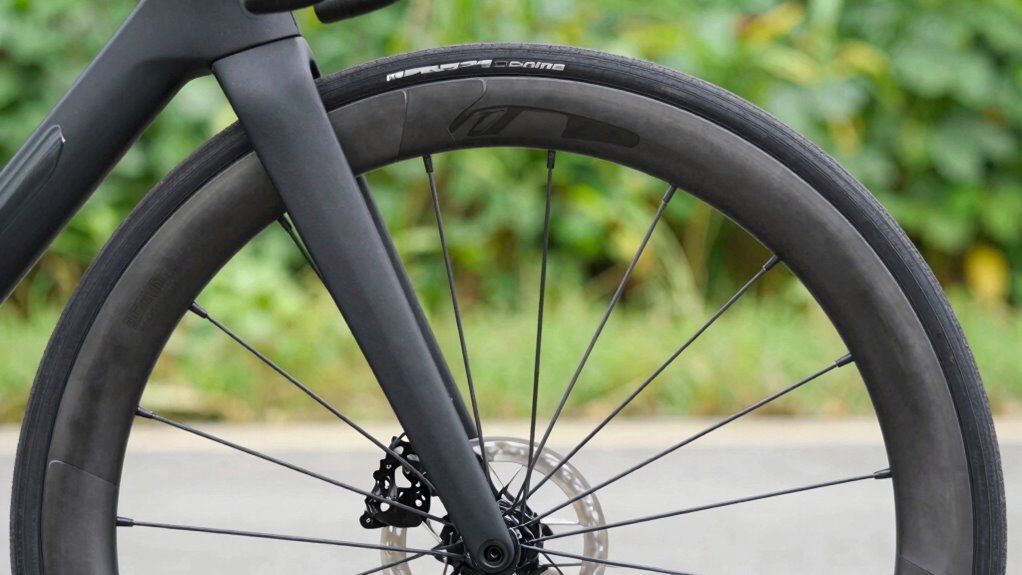
Have you ever wondered what makes hookless rims different from traditional ones? The key lies in their design and the way they interact with tires and components. Hookless rims don’t have the bead hooks that you find on conventional rims, which means the tire sits more flush against the rim. This design change affects several aspects of your riding experience, especially tire pressure and rim material. With hookless rims, you typically have to pay closer attention to recommended tire pressure ranges. Because they lack the hooks, the sidewalls of the tires need to be supported differently, and overinflating can cause the tire to blow off or damage the rim. On the other hand, underinflating can lead to poor handling or increased risk of pinch flats. Manufacturers often specify specific tire pressure limits for hookless rims, so it’s vital to follow those guidelines closely. Maintaining the right tire pressure not only guarantees safety but also maximizes performance and comfort during your ride. Additionally, understanding the rim material is crucial, as it impacts how well the tire stays seated and the overall durability of the wheel.
Frequently Asked Questions
Can I Convert Traditional Rims to Hookless Rims?
You can’t directly convert traditional rims to hookless rims because of rim compatibility issues. Hookless rims have a different bead profile, which affects tire pressure and sealing. If you try, you risk poor sealing, tire blowouts, or damage. Instead, choose rims designed as hookless or compatible with your tires. Always verify the rim’s specifications for pressure limits and compatibility to guarantee safe riding and peak performance.
Are Hookless Rims Suitable for All Tire Types?
Hookless rims aren’t suitable for all tire types. You need to check rim compatibility and tire pressure limits before riding. Some tires, especially traditional ones with bead hooks, may not fit securely on hookless rims, risking blowouts. Always verify tire compatibility with your rim’s specifications, and follow recommended tire pressures. This guarantees safety, peak performance, and prevents damage to your wheel or tire.
What Are the Best Rim Widths for Hookless Designs?
If you’re choosing rim widths for hookless designs, go with 25mm to 30mm for peak performance. For example, a rider using 28mm wide rims and maintaining proper tire pressure found better stability and comfort. Rim material influences strength; carbon rims often handle wider widths better, providing better support for wider tires. Narrower rims can cause pinch flats, while wider rims improve tire support and ride quality.
Do Hookless Rims Require Special Brake Pads?
Yes, hookless rims often require special brake pads. Regular rim brake pads might not grip properly, especially at higher tire pressures, due to rim compatibility issues. Using brake pads designed for hookless rims guarantees better braking performance and reduces wear. Always check your rim’s specifications and match your brake pads accordingly, especially when adjusting tire pressure, to maintain safety and ideal performance.
How Do Hookless Rims Impact Overall Wheel Weight?
You might think hookless rims are heavier, but they often reduce overall wheel weight because their simplified design eliminates hooks and extra materials. This setup can improve rim durability, allowing you to run lower tire pressure without risking damage. Less weight means faster acceleration, while enhanced durability offers peace of mind on rough terrain. So, hookless rims can make your ride lighter and more resilient, improving your overall cycling experience.
Conclusion
Now that you know the essential compatibility rules for hookless rims, you’re better equipped to make confident decisions. Ignoring these details can turn your ride into a nightmare—like trying to fit a square peg in a round hole. Remember, even small mismatches can cause big issues down the road. Stay informed, double-check specifications, and you’ll enjoy a smoother, safer ride that outperforms the competition—like a rocket blasting through the sky.