Choosing the right spoke count and lacing pattern affects your wheel’s strength, weight, and performance. More spokes spread load better, making your wheel more durable, especially if you ride rough terrain or are heavier. Fewer spokes reduce weight but may need stronger rims and proper tensioning. The lacing pattern, like three-cross or radial, also impacts load transfer and overall resilience. Keep exploring to discover how balancing these factors can optimize your wheel’s longevity and performance.
Key Takeaways
- Higher spoke counts distribute load more evenly, improving rim durability and resistance to impacts.
- Lacing patterns like three-cross enhance load transfer and wheel strength, especially under lateral forces.
- Fewer spokes reduce weight and improve acceleration but may require stronger rims and precise tensioning.
- Radial lacing is lighter but less durable, suitable for lighter riders or smoother terrains.
- Combining appropriate spoke count, pattern, and tension optimizes wheel longevity and performance.
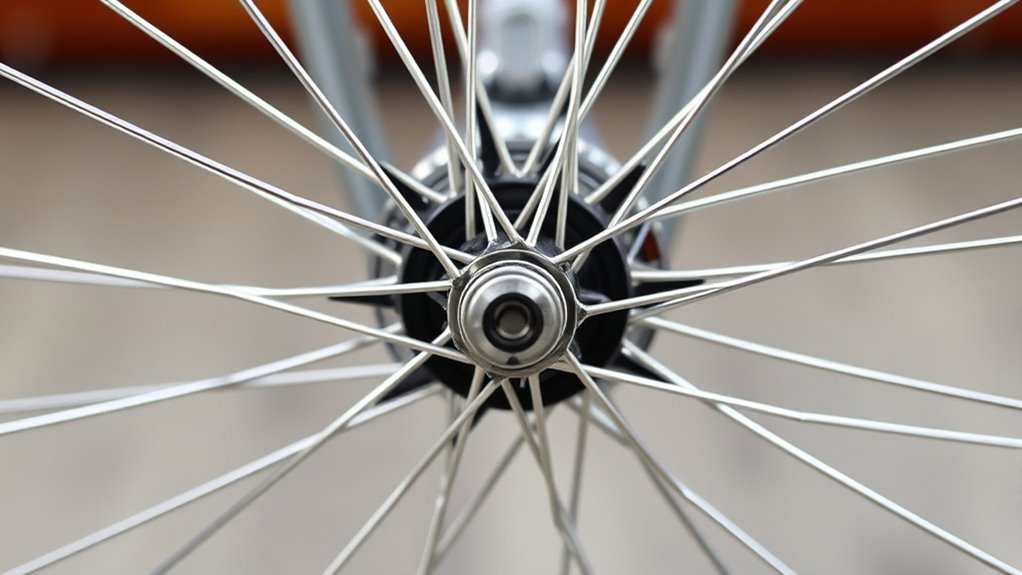
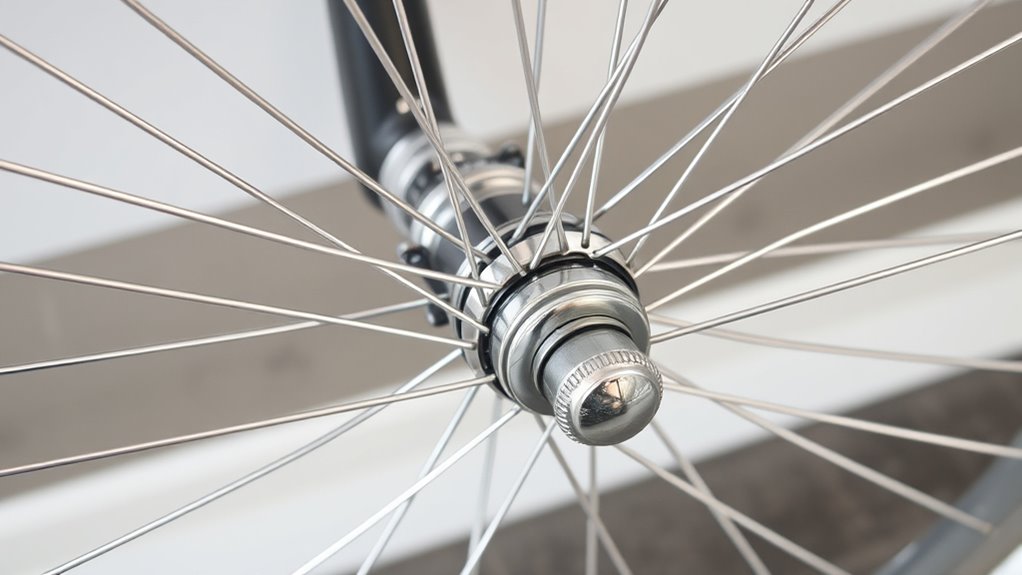
When choosing a wheel’s spoke count and lacing pattern, understanding how these elements affect strength, weight, and ride quality is essential. The number of spokes you select directly impacts rim durability, as more spokes distribute load more evenly, reducing stress on individual spokes and the rim itself. Conversely, fewer spokes can make your wheel lighter but might compromise durability, especially under heavy or repeated impacts. The lacing pattern also plays a crucial role; different patterns influence how forces are transferred across the wheel and how well the load is managed during rides. A well-chosen pattern enhances rim durability by maintaining consistent spoke tension, which is vital for preventing spoke breakage and rim deformation over time. Additionally, selecting appropriate spoke tension is vital; proper tension ensures each spoke carries an optimal load, promoting wheel stability and longevity. Spoke tension is another critical factor that ties into rim durability. Proper spoke tension ensures that each spoke carries an appropriate share of the load, creating a balanced and stable wheel. Too little tension causes spokes to slack, leading to wheel wobble and premature fatigue, while excessive tension can stress the rim and spokes, risking cracks or breakage. Maintaining optimal spoke tension is key to prolonging wheel life and ensuring consistent performance. When you regularly check and adjust spoke tension, you help preserve the rim’s integrity, especially in wheels with fewer spokes or those subjected to rough terrain. The choice of lacing pattern affects how evenly the tension is distributed across spokes. For example, a three-cross pattern tends to provide a stronger, more durable wheel because it offers better support against lateral forces, making the wheel more resilient under side loads. This pattern also helps maintain uniform spoke tension, which promotes rim durability by reducing stress concentrations. On the other hand, a radial pattern, which involves spokes running straight from hub to rim, is lighter and simpler but may not offer the same strength or durability, especially in high-stress situations. The pattern you choose should align with your riding style, weight, and terrain, as each influences how well the wheel holds up over time. Ultimately, balancing spoke count, lacing pattern, and tension is key to building a wheel that’s both durable and performance-oriented. Higher spoke counts and more supportive patterns boost rim durability but add weight. Fewer spokes save weight but require precise tensioning and stronger rims to prevent damage. By paying close attention to how these elements interact, you create a wheel that offers a smooth ride, longevity, and confidence — regardless of your riding conditions. Understanding wheel strength factors can help you make better decisions when customizing your bike’s wheels.
Frequently Asked Questions
How Does Spoke Count Affect Wheel Durability?
You’ll notice that a higher spoke count generally increases wheel durability because it distributes spoke tension more evenly, reducing stress on individual spokes. This also improves rim compatibility, making your wheel stronger and more resilient under load. However, too many spokes can add weight and complexity. Keep an eye on proper spoke tension to prevent uneven wear, ensuring your wheel stays durable and reliable over time.
Can Different Lacing Patterns Improve Wheel Strength?
Yes, different lacing patterns can improve wheel strength by optimizing spoke tension and distributing forces more evenly. When you choose a pattern that suits your riding style, it helps maintain proper tension across spokes and reduces stress on the hub flange. This results in a more durable wheel, less prone to breaking or warping. So, selecting the right lacing pattern enhances overall wheel resilience and performance.
What Is the Best Spoke Count for Lightweight Racing Wheels?
For lightweight racing wheels, you should opt for 20 to 24 spokes, balancing aero efficiency and strength. Fewer spokes reduce wind resistance, boosting speed, while maintaining enough spokes guarantees durability. This setup also enhances aesthetic appeal with a sleek, minimal look. You’ll notice improved performance without sacrificing style, making your ride faster and more visually striking. Just verify proper build quality to maximize these benefits.
Do Certain Lacing Patterns Reduce Wheel Flex?
Yes, certain lacing patterns can reduce wheel flex by improving spoke tension distribution and stiffness. For example, a cross-laced pattern provides better support, minimizing flex during rides. Using high-quality spoke material like stainless steel or carbon also enhances tension stability. When you choose a lacing pattern that evenly distributes tension and select durable spokes, your wheel becomes more rigid, providing a smoother, more responsive ride and better handling overall.
How Do Spoke Count and Lacing Influence Wheel Repairability?
Sure, because nothing says “easy repair” like a wheel with a ridiculous number of spokes or an intricate lacing pattern. More spokes and complex lacing make it harder to adjust spoke tension, which is vital for wheel truing. With fewer spokes, repairs are quicker and simpler, letting you straighten that wobbly wheel without a PhD in geometry. So, keep it simple for better repairability and smoother rides.
Conclusion
Understanding spoke count and lacing patterns helps you customize your bike for strength, weight, or ride feel. Did you know that most road bikes typically have 32 spokes, offering a good balance of durability and weight? Whether you choose a different pattern or spoke count, knowing these details empowers you to build or choose wheels that match your riding style. So, next time you upgrade, remember: the right lacing pattern can make all the difference.