
A rack ramp is worth having because it boosts safety, making loading and unloading smoother while reducing slip, trip, and fall risks. It also increases efficiency by speeding up operations and lowering worker fatigue. While the upfront cost varies, the long-term savings from fewer injuries, less equipment damage, and improved workflow make it a smart investment. Keep exploring to discover how the right rack ramp can transform your warehouse safety and productivity.
Key Takeaways
- Enhances safety by providing stable surfaces, reducing slips and fall risks during loading and unloading.
- Increases efficiency by enabling quicker, easier handling of heavy or bulky items.
- Offers long-term cost savings through reduced injury claims and equipment damage.
- Ensures compatibility with forklifts and hand trucks for smooth operations.
- Provides durable, reliable access solutions tailored to specific operational needs.
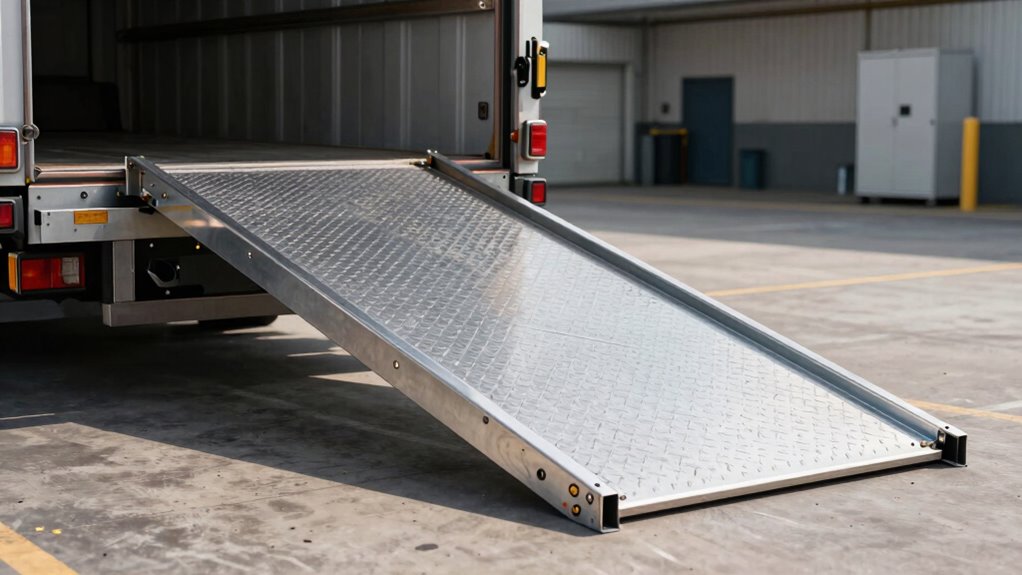
If you frequently load heavy or bulky items onto racks, rack ramps can make the process safer and more efficient. These ramps help you avoid awkward lifts and reduce the risk of injury, especially when dealing with large or awkwardly shaped loads. Safety concerns are a primary reason to contemplate investing in a rack ramp. Without one, you might rely on makeshift solutions like pallets or uneven surfaces, which can slip or shift unexpectedly, increasing the chances of accidents. A well-designed rack ramp provides a stable, smooth surface, allowing you to load and unload with confidence. It minimizes the risk of slips, trips, and falls, which are common hazards in warehouse or industrial environments. If safety is a priority for your operation, a rack ramp can be a worthwhile addition. Additionally, the proper equipment advice can help ensure you select the right ramp for your specific needs.
Rack ramps enhance safety and efficiency by providing stable surfaces for heavy loads, reducing injury risk.
However, you also need to think about the cost implications. The initial expense of purchasing or manufacturing a rack ramp can vary widely depending on the material, size, and complexity. Steel ramps tend to be more durable but also more expensive upfront, while aluminum or portable options might be more budget-friendly but less sturdy over time. You should evaluate whether the safety benefits and increased efficiency justify the expense. In many cases, the cost savings come from preventing injuries, reducing downtime, and increasing productivity. Fewer accidents mean fewer workers’ compensation claims and lower insurance premiums, which can offset the initial investment over time.
Beyond safety and cost, a rack ramp can enhance your workflow. Loading heavy items becomes quicker and more straightforward, especially when using forklifts or hand trucks. This reduces fatigue and minimizes the risk of damage to your goods. Additionally, having a dedicated ramp can extend the lifespan of your racks and loading equipment by distributing weight evenly, preventing undue stress on the structures. If your operation involves frequent loading and unloading, these benefits can notably boost your overall efficiency.
Ultimately, whether a rack ramp is worth having depends on your specific needs and circumstances. If safety concerns are top of mind and your operation involves regular heavy lifting, investing in a rack ramp makes sense. While it does come with cost considerations, the long-term gains in safety, productivity, and equipment longevity often outweigh the initial expense. For those prioritizing safe, efficient, and cost-effective loading processes, a rack ramp is a smart addition that can pay dividends over time.
As an affiliate, we earn on qualifying purchases.
Frequently Asked Questions
How Much Weight Can a Typical Rack Ramp Support?
A typical rack ramp supports a loading capacity ranging from 1,000 to 4,000 pounds, depending on its design and materials. You should always check the weight limits specified by the manufacturer to guarantee safety. When loading, distribute weight evenly across the ramp and avoid exceeding its maximum capacity. Properly rated ramps help prevent accidents and structural damage, making sure your loading process remains safe and efficient.
Are Rack Ramps Suitable for Outdoor Use?
Yes, rack ramps can be suitable for outdoor use if you prioritize proper planning. You should consider safety considerations like secure installation and weather resistance to withstand the elements. Choose racks made from durable, weatherproof materials like galvanized steel or treated wood. Regularly inspect for rust, corrosion, or damage, especially after storms or heavy rain. With the right precautions, outdoor rack ramps can safely support your loading needs outside.
What Materials Are Commonly Used for Rack Ramps?
You’ll find that common materials for rack ramps include steel, aluminum, and sometimes rubber. Steel is favored for its material durability and strength, making it ideal for heavy loads, while aluminum offers lighter weight and corrosion resistance. Manufacturing processes like welding and stamping guarantee these materials are sturdy and reliable. Your choice depends on your specific needs, but durability and proper manufacturing are key to selecting the best rack ramp material.
Can Rack Ramps Be Customized for Specific Vehicles?
They say, “the devil is in the details,” and that’s especially true with rack ramps. Yes, you can customize rack ramps for specific vehicles, ensuring perfect vehicle compatibility. You can also choose different materials to match your needs, whether for durability or weight. Customization allows you to tailor the ramp’s design to your vehicle’s dimensions and your usage, making loading safer and more efficient.
How Do Rack Ramps Compare in Cost to Other Loading Solutions?
Rack ramps are generally more affordable than other loading solutions, especially when you consider safety features and ease of maintenance. They often require minimal upkeep, saving you money over time. While initial costs vary, their durability and safety features make them a cost-effective choice. Compared to alternative options, rack ramps offer a good balance of affordability, safety, and low maintenance, making them a smart investment for efficient loading.
Conclusion
So, next time you’re pondering whether a rack ramp is worth it, remember: why settle for the thrill of risking your sanity and your bike’s beauty on a tiny, treacherous ramp? Embrace the chaos—or better yet, invest in one that actually works. After all, who needs smooth, safe loading when you can chase the adrenaline rush of dangling your bike mid-air? Trust us, your nerves—and your bike—will thank you.