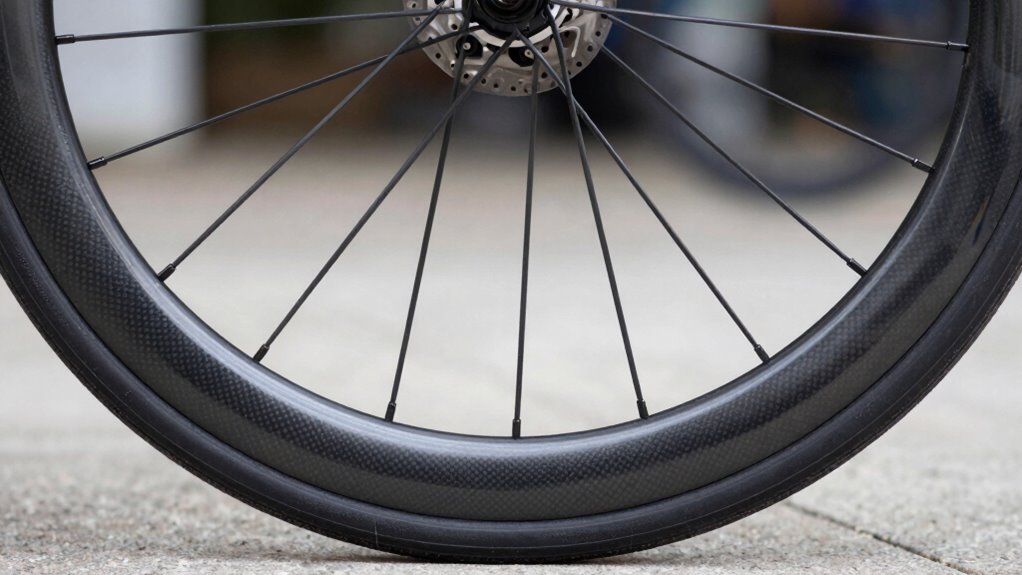

Wider internal rim widths improve your bike’s performance by boosting traction, stability, and cornering control. They allow you to run lower tire pressures safely, increasing contact with the ground for better grip. This results in a more responsive, confident ride across different terrains. Plus, wider rims distribute forces more evenly, making your wheels more durable and less prone to damage. If you want to discover how these benefits enhance your rides even further, keep exploring the details.
Key Takeaways
- Wider internal rims enhance tire contact patch for improved traction and cornering stability.
- They allow for lower tire pressures without risking pinch flats, boosting ride comfort.
- Wider rims distribute forces more evenly, increasing wheel durability and impact resistance.
- They improve aerodynamics and reduce drag, enhancing speed and efficiency.
- Compatibility with a broader range of tires offers greater versatility for different terrains.
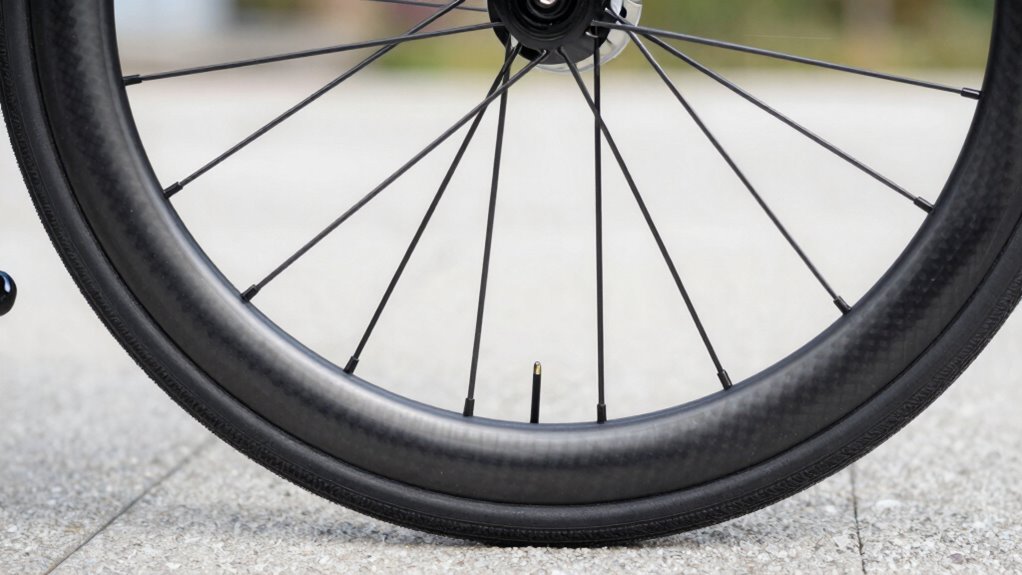
Wider internal rim widths are increasingly popular among cyclists because they offer several performance benefits that can enhance your riding experience. When you choose a rim with a broader internal width, you immediately improve how your tire interacts with the wheel, especially in terms of tire compatibility. Wider rims allow you to run lower pressures without risking pinch flats, which is a game-changer for comfort and grip. This means you can enjoy better traction and control, especially on rough or technical terrain. Plus, with the increased contact patch that wider rims provide, your tires sit more evenly, reducing sidewall roll and improving cornering stability. You’ll notice a more confident ride as your bike responds more precisely to your inputs.
Wider rims enhance tire interaction, improve stability, and allow lower pressures for better grip and control on challenging terrain.
Another essential advantage of wider internal rim widths is the enhancement of wheel strength. Generally, a broader rim spreads the forces exerted during riding more evenly across the wheel structure, making it less prone to damage from impacts or heavy loads. This added durability means fewer worries about denting or warping your wheels after rough rides or when hitting obstacles. It also translates into longer-lasting wheels, saving you money and time on repairs or replacements. The increased strength can be particularly appealing if you frequently ride off-road or carry loads, where wheel robustness becomes indispensable. Additionally, wider rims can improve the overall performance of your bike by providing a more stable platform for your tires. Incorporating wider internal rim widths can also help in optimizing aerodynamics, especially at higher speeds, which can be advantageous for competitive cycling. A broader rim profile can also contribute to a more aerodynamic setup, reducing drag and improving efficiency. Furthermore, wider rims can also influence rolling resistance, making your ride smoother and more efficient over various terrains.
Furthermore, wider rims can influence aero efficiency by reducing drag at high speeds, making them beneficial for racing scenarios. Switching to wider internal rims doesn’t just boost performance; it also simplifies your setup. Because wider rims accommodate a broader range of tire widths, you have more flexibility to choose tires suited for different riding styles and conditions. Whether you’re looking for a fast-rolling tire for pavement or a more voluminous one for trail riding, wider rims let you optimize your setup easily. This flexibility contributes to better overall ride quality and allows you to adapt quickly to changing terrains or preferences.
However, it’s important to consider tire compatibility when upgrading to wider rims. Not all tires are designed to work with broader internal widths, so you need to select tires that match your rim’s specifications. Using incompatible tires can lead to poor bead seating, decreased performance, or even safety issues. Consulting manufacturer guidelines ensures you pick the right combination, maximizing the benefits of wider internal rim widths without sacrificing safety or efficiency.
wider internal rim width bicycle wheels
As an affiliate, we earn on qualifying purchases.
As an affiliate, we earn on qualifying purchases.
Frequently Asked Questions
How Do Wider Rims Affect Tire Pressure Requirements?
Wider rims generally require lower tire pressure because they improve tire bead compatibility, creating a more stable and secure fit. When you use wider rims, they often adhere to standard rim width standards, ensuring proper contact between the tire and rim. This better contact reduces the need for higher pressures, enhancing comfort and grip. Be sure to check your specific tire and rim specs to optimize pressure and avoid over- or under-inflation.
Are Wider Internal Rims Compatible With All Bike Frames?
Wider internal rims may not fit all bike frames, especially those with tight clearances. You need to check your bike’s rim compatibility, considering rim material and frame spacing. While wider rims offer aerodynamic benefits and increased stability, they demand precise fitting. Think of your bike as a tailored suit—perfect fit matters. You might need adapters or specific frame allowances to guarantee your wider rims work seamlessly.
Do Wider Rims Increase the Risk of Tire Blowouts?
Wider rims don’t necessarily increase your risk of tire blowouts if you guarantee proper tire bead seating and rim strip compatibility. When the tire bead seats correctly, it creates a tight seal, reducing blowout chances. Using compatible rim strips helps prevent pinch flats and maintains pressure consistency. If you match your rim width with the tire size and check for proper fit, you can ride confidently without added blowout risks.
How Do Wider Rims Impact Overall Bike Weight?
Wider rims do add some weight to your bike, but the impact depends on the material durability. Aluminum rims, for instance, are lightweight yet durable, balancing weight and strength. While wider rims may slightly increase overall bike weight, they also enhance aesthetic appeal, giving your bike a more robust, modern look. This added weight can be offset by improved ride stability and tire performance, making wider rims a worthwhile upgrade.
Can Wider Rims Improve Riding Comfort on Rough Terrains?
Imagine cruising over rugged trails, your tires hugging uneven terrain with confidence. Wider rims boost riding stability, helping you absorb shocks and bumps more smoothly. You’ll notice improved comfort on rough terrains, making every ride feel steadier and less jarring. Plus, wider rims enhance aesthetic appeal, giving your bike a bold, aggressive look. Embrace the sensation of control and style as you conquer challenging paths with ease and confidence.
Conclusion
By embracing wider internal rim widths, you gain stability, improve control, and enhance comfort. You see a smoother ride, feel more confident on tough terrain, and enjoy better traction with each pedal stroke. Wider rims bring clarity to your handling, strength to your setup, and confidence to your journey. In choosing wider internal rim widths, you’re not just upgrading your bike; you’re transforming every ride into a more controlled, more comfortable, more enjoyable experience.