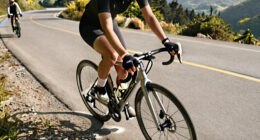
To descend more smoothly in corners, select a lower gear before hitting the turn to keep pedaling relaxed and maintain momentum. Shift your weight to the outside pedal, lean the bike into the corner while keeping your upper body relaxed and eyes focused on the exit. Brake beforehand and hold your speed through the turn. Steady handling and confident body positioning help you stay balanced and control your bike. Keep these tips in mind to improve your cornering skills further.

Get sports gear delivered free with Prime
- Fast, free delivery on millions of items
- Prime Video, Amazon Music and more included
- Member-only deals all year
Key Takeaways
- Select a lower gear before entering the turn to maintain steady cadence and smooth pedaling.
- Shift your weight outside the pedal and lean the bike into the corner for better balance.
- Keep a steady speed, brake before the turn, and avoid hard braking during the corner.
- Look through the exit of the corner to anticipate the curve and guide your line smoothly.
- Practice proper body positioning and stay relaxed to build confidence and improve control.

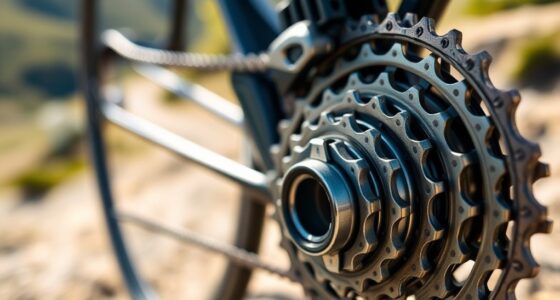
Descending smoothly through corners is essential for maintaining control and confidence on your ride. When you approach a turn, your bike gear and body positioning play vital roles in how well you navigate the curve. The right combination of these elements keeps your momentum steady and prevents nerve-wracking shifts or slips. Before you reach the corner, make sure you’re in the correct gear—usually a lower one—that allows you to pedal smoothly without putting too much strain on your legs. Shifting into a gear that provides a comfortable cadence helps you stay relaxed and maintain better control as you lean into the turn.
Choose the right gear before corners to maintain control and pedal smoothly through turns.
As you begin descending into the corner, your body positioning is key. You want to shift your weight slightly to the outside pedal, which should be weighted down, and lean your bike into the corner while keeping your upper body relaxed. This body position lowers your center of gravity and helps your bike respond more predictably. Keep your elbows out and your head up, looking through the turn to where you want to go. This focus helps you steer precisely and anticipate any shifts in terrain or road surface. Developing good cornering technique can significantly improve your confidence in tight turns.
Your body should be angled with the bike, not stiffly upright or overly leaned. The goal is to stay balanced, with your hips slightly off the saddle—this allows the bike to lean naturally beneath you without losing traction. Your hands should grip the handlebars firmly but not rigidly, allowing for small adjustments as needed. Maintaining a consistent speed through the corner is important; braking too hard while cornering can cause loss of traction, so try to brake before entering the turn and then maintain your speed. Additionally, understanding how to manage your body position effectively can greatly improve your confidence and control during descents.
Keep your eyes on the exit of the corner. This not only helps with anticipating the curve but also encourages better body positioning and bike control. If your bike starts to feel unstable, adjust your body slightly—shifting your weight back or forward as needed—while maintaining a steady line. Additionally, practicing proper body positioning helps you develop better control and confidence during descents. Practice is essential here; the more you refine your body positioning and get comfortable with different bike gear settings, the smoother your descents will become. Remember, confidence grows with experience, and keeping your body relaxed and your gear appropriate for the descent makes all the difference. With time and attention, you’ll find yourself descending corners more fluidly, with control and ease on every ride.
bike gear shifter for smooth cornering
As an affiliate, we earn on qualifying purchases.
As an affiliate, we earn on qualifying purchases.
Frequently Asked Questions
What’s the Best Bike Setup for Smoother Corner Descents?
You should optimize your bike setup for smoother corner descents by adjusting your bike geometry to lower your center of gravity, which improves stability. A balanced suspension setup helps absorb shocks and maintain control through turns. Make sure your suspension is neither too stiff nor too soft, and consider a slightly slacker head angle for better handling. These tweaks give you more confidence and control, letting you glide through corners with ease.
How Does Tire Pressure Affect Cornering Stability?
Tire pressure is the backbone of your cornering stability, acting like a steady hand guiding your bike through sharp turns. When you maintain proper pressure monitoring, your tires grip better, preventing slips and skids. Under-inflated tires wear unevenly and reduce control, while over-inflated ones diminish grip. Keep your tire wear in check, adjust pressures accordingly, and you’ll find your confidence soaring like an eagle, carving corners with grace and precision.
Can Body Position Improve Descent Smoothness?
Yes, your body position can improve descent smoothness. Keep your body aligned with the bike, leaning into the turn while maintaining a relaxed posture. Engage your core to stabilize yourself and control movements. Proper body alignment helps distribute weight evenly, reducing wobbling. By actively engaging your core and staying centered over the bike, you’ll find your descent becomes more fluid, controlled, and confident, especially through tricky corners.
What Role Does Brake Modulation Play in Cornering?
Brake modulation is essential for smooth cornering because it controls your speed at corner entry. You need to adjust brake sensitivity precisely, easing off gradually to avoid abrupt shifts that can upset your balance. Proper brake modulation allows you to enter corners confidently, maintaining control and flow. Focus on smooth, progressive braking as you approach the turn, reducing speed steadily without locking wheels, which helps you descend more smoothly through each corner.
How Do Weather Conditions Influence Corner Descent Techniques?
Weather conditions profoundly influence your corner descent techniques. When the road surface is wet or slick, you need to reduce your speed early and brake gently to maintain control. Wind impact can push you off your line, so stay alert and adjust your body position accordingly. Keep a relaxed grip on the handlebars, and anticipate changes in weather to adapt your technique smoothly, ensuring safety and stability during descent.
Conclusion
Mastering smooth corner descents takes practice and confidence. Remember to stay relaxed, look through the turn, and control your speed. As you refine your technique, you’ll find yourself carving corners more effortlessly and safely. Isn’t it worth feeling in control and enjoying every twist and turn? With patience and focus, you’ll soon be descending corners with fluidity and ease, turning every ride into a seamless adventure. Ready to take your skills to the next level?
Fall Picks
fall essentials
As an affiliate, we earn on qualifying purchases.