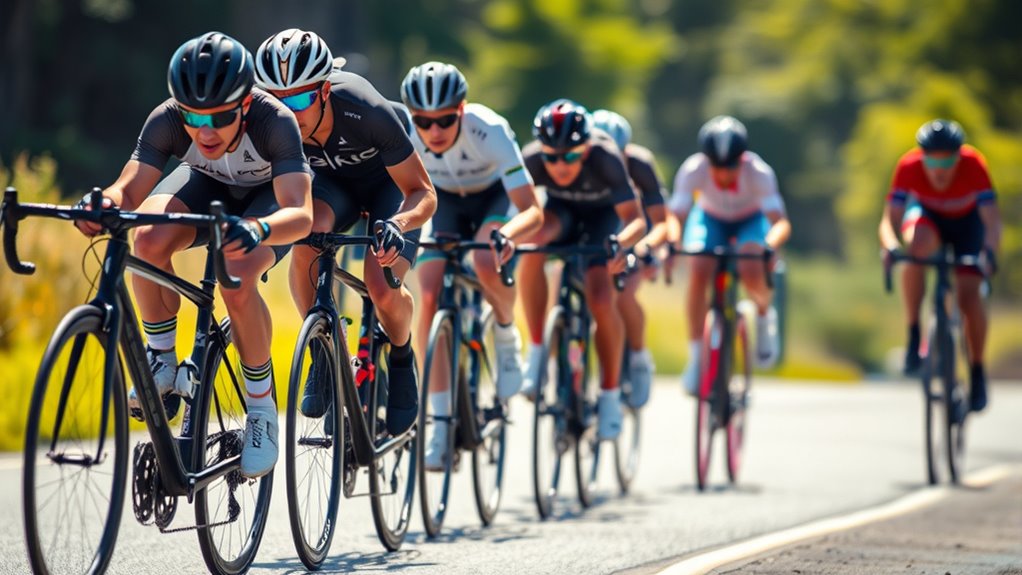

Drafting and rotating pacelines are key skills to boost your cycling efficiency. By riding close behind others, you reduce wind resistance and conserve energy. Maintaining a steady pace and well-timed rotations helps share the workload evenly, keeping everyone fresh and moving faster. Proper positioning and communication are crucial for smooth transitions and group safety. Mastering these techniques improves your endurance and speed—stay with us to learn more about perfecting your paceline skills.
Open a free Amazon Business account
Business pricing, bulk buying and tax-exempt orders.
As an affiliate, we earn on qualifying purchases.
Key Takeaways
- Drafting involves riding close behind another cyclist to reduce wind resistance and conserve energy.
- Proper positioning and steady pace are essential for effective drafting and avoiding collisions.
- Rotations should be well-timed to share workload evenly and maintain group momentum.
- Signaling readiness and smooth transitions enhance group cohesion and safety during paceline rotations.
- Developing consistent riding rhythm and aerodynamic awareness improves overall performance and endurance.
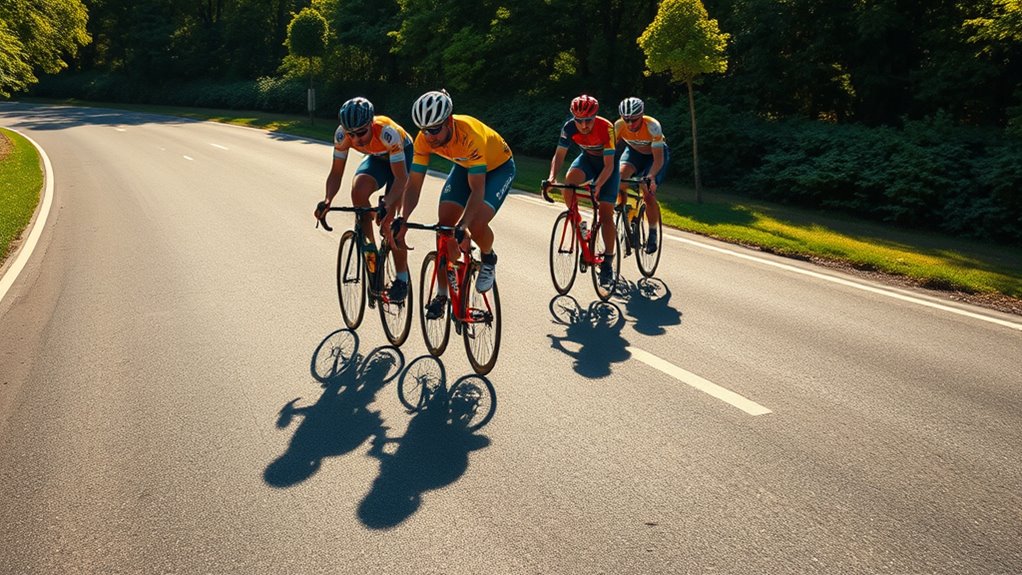
Drafting and rotating pacelines are essential skills for any cyclist looking to maximize efficiency and conserve energy during a ride. When you master these techniques, you’ll notice how much easier it becomes to maintain higher speeds without exhausting yourself. Central to this is aerodynamics optimization, which means positioning yourself to reduce air resistance. Drafting techniques are all about riding close behind another rider to take advantage of the slipstream, where the lead rider disrupts the airflow and creates a pocket of reduced wind resistance behind them. By staying in this slipstream, you use markedly less energy to maintain your speed. It’s a simple yet powerful way to increase efficiency, especially on long rides or challenging terrains.
To effectively utilize drafting techniques, you need to focus on positioning and timing. Keep your body low and close behind the rider ahead, maintaining a steady distance—usually about one to two bike lengths—so you stay within the slipstream without risking a collision. As the lead rider pedals steadily, you follow closely, feeling the benefit of reduced drag. When it’s time to rest or recover, you can rotate to the front of the paceline. This rotation allows others to draft behind you, sharing the workload evenly across the group. Properly timed rotations keep the pace consistent and prevent fatigue from building up unevenly among riders. The key is communication; signaling when you’re ready to take the front, then smoothly moving into position without sudden movements that could cause crashes.
In addition to conserving energy, drafting and rotating pacelines improve overall ride efficiency. When everyone takes turns at the front, the group maintains a higher average speed with less individual effort. This method also fosters group cohesion and safety, as riders stay more alert when working together. Practice your drafting techniques by focusing on smooth, controlled movements—avoid sudden changes in position or speed. It’s important to stay relaxed and attentive to the group’s rhythm, making adjustments as needed. Over time, your ability to read the group’s speed and respond with appropriate rotations will become second nature, giving you an advantage during races or long-distance rides. Additionally, understanding aerodynamic optimization can help you improve your overall cycling performance.
cycling drafting and paceline training gear
As an affiliate, we earn on qualifying purchases.
As an affiliate, we earn on qualifying purchases.
Frequently Asked Questions
How Do I Communicate Effectively Within a Paceline?
To communicate effectively within a paceline, use clear hand signals to indicate turns, stops, or hazards. Make eye contact with riders nearby to confirm understanding and maintain awareness of the group’s movements. Keep your gestures consistent and visible, and avoid unnecessary chatter. Respect others’ signals and respond promptly, helping everyone stay synchronized and safe. Good communication guarantees smooth pacing and a more enjoyable ride for all.
What Are the Best Strategies for Rotating Smoothly?
Imagine a well-oiled machine, each gear moving seamlessly—this is your goal for rotating smoothly. To accomplish this, focus on group dynamics and pacing strategies; signal clearly, maintain steady pace, and communicate intentions early. Pay attention to the rider behind you, easing out gently and accelerating smoothly when it’s your turn to lead. This ensures everyone stays synchronized, reducing fatigue and keeping the group cohesive and efficient throughout the ride.
How Does Terrain Affect Paceline Drafting Techniques?
Terrain impact substantially influences your drafting techniques, especially during elevation changes. When climbing, you should stay close to the rider in front to conserve energy, but avoid crowding. On descents, maintain a steady pace and be ready to shift positions smoothly. Uphill terrain requires more focus on maintaining distance, while downhill sections allow for faster drafting. Adjust your position proactively to optimize aerodynamics and energy savings across varying terrain.
What Safety Precautions Should Be Taken During Rotations?
You should always wear protective gear like helmets and gloves for safety during rotations. Communicate clearly using emergency signals, such as hand gestures or bike bells, to alert others of your intentions or hazards. Maintain a steady pace and stay alert to changes in terrain or rider behavior. Never overlap wheels or ride too close, and keep a safe distance if someone needs to stop or slow down.
How Do Wind Conditions Influence Paceline Positioning?
Imagine wind as an unpredictable tide shaping your ride. When wind impact increases, you’ll want to adjust your paceline to stay sheltered and maintain drafting efficiency. Headwinds push you back, so you’ll bunch closer and shift positions often, while tailwinds let you stretch out, saving energy. Crosswinds challenge your stability, requiring quick reactions. Adapting to these wind conditions keeps your paceline effective and your ride smooth, no matter what nature throws at you.
Conclusion
By mastering drafting and rotating pacelines, you can conserve energy and ride more efficiently. Remember, riding in a paceline can save you up to 30% of your effort, making long distances feel much easier. As you rotate smoothly, you’ll notice the group maintaining a steady pace, like a well-oiled machine. Keep practicing these skills, and you’ll become a more confident, powerful cyclist, capable of tackling challenging routes with ease and stamina.
NFL season / tailgating Picks
team gear
As an affiliate, we earn on qualifying purchases.