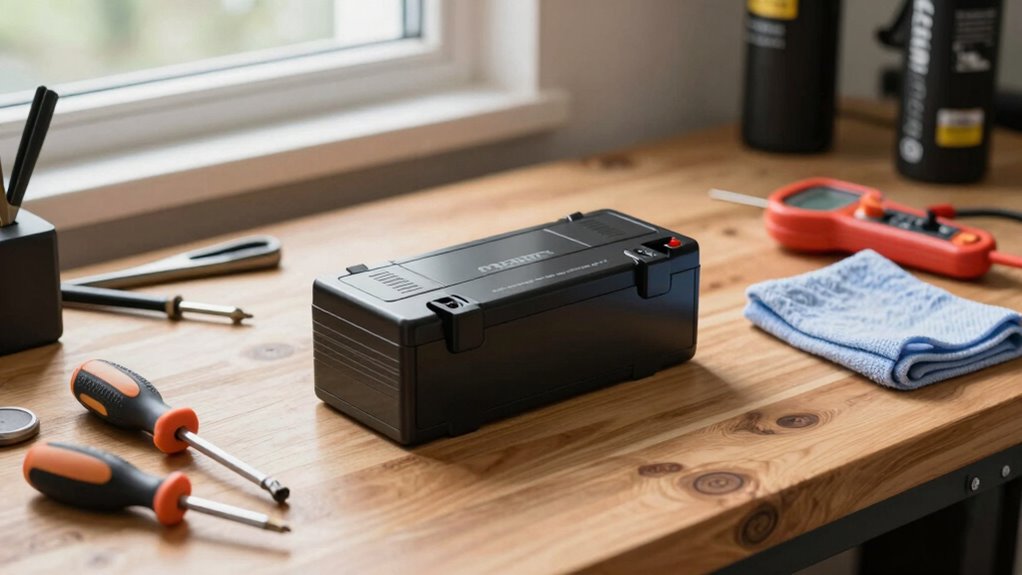

To store your e-bike battery for a longer life, first fully charge it but avoid overcharging. Keep it in a cool, dry place between 50°F and 68°F, and store it with about 40-60% charge. Regularly check the battery during storage and avoid placing it directly on concrete. Use the correct charger carefully, inspect for damage, and maintain a clean environment. Following these steps helps guarantee your battery stays healthy over time—learn more to maximize its longevity.
Key Takeaways
- Charge the battery to 40-60% before long-term storage to prevent capacity loss.
- Store in a cool, dry environment between 50°F and 68°F (10°C to 20°C).
- Regularly check and top up the charge if it drops below recommended levels during storage.
- Keep the battery and charger clean, and inspect for damage or wear periodically.
- Avoid storing the battery on concrete or in direct sunlight to prevent damage and degradation.
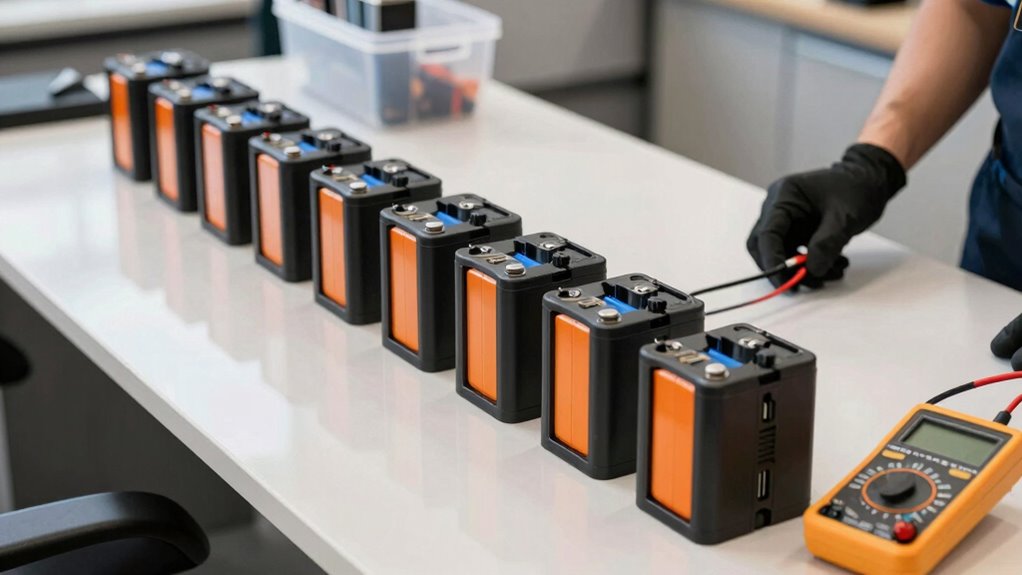
Proper storage of e-bike batteries is crucial to guarantee their longevity and peak performance. When you’re not riding, how you store your battery can make a significant difference in how long it lasts and how well it functions over time. One of the most important aspects to consider is charger maintenance. Before you put your battery away, ensure it’s fully charged but not overcharged. Avoid leaving it plugged in for extended periods after reaching full capacity, as this can strain the battery and reduce its lifespan. Using the correct charger and following the manufacturer’s guidelines for charging cycles helps prevent unnecessary wear. Regularly inspecting your charger for damage or wear and keeping it clean ensures safe, efficient charging sessions that don’t compromise your battery’s health.
Proper charger maintenance extends your e-bike battery’s lifespan and ensures safe, efficient charging.
Temperature control is equally vital. Your e-bike battery performs best when stored in a cool, dry environment, ideally between 50°F and 68°F (10°C to 20°C). Avoid exposing it to extreme heat, which can accelerate chemical degradation inside the cells, or cold temperatures, which can temporarily reduce capacity and make the battery more vulnerable to damage. If you live in a climate with significant temperature fluctuations, consider storing your battery indoors in a temperature-controlled space. When you’re using the bike, try to avoid leaving the battery exposed to direct sunlight or leaving it in a parked vehicle on hot days. Extreme temperatures stress the battery and can cause irreversible damage over time.
Additionally, monitoring filter indicators and maintaining clean components can help keep the system functioning optimally, similar to how proper airflow enhances air purifier performance. In addition to charger maintenance and temperature control, you should also pay attention to the storage state of charge. If you’re planning to store the battery for an extended period, aim to leave it with around 40-60% charge. Fully charged or completely drained batteries tend to degrade faster when left unused. Periodically check the battery during long storage periods, and if the charge drops significantly, top it up to the recommended level. Also, avoid storing the battery directly on concrete or bare floors—use a padded surface or shelf to prevent moisture and temperature fluctuations from affecting it.
Finally, always follow the manufacturer’s specific recommendations for storage and maintenance, as different batteries may have unique needs. By maintaining charger health, keeping the storage environment temperature-controlled, and handling your battery properly, you maximize its lifespan and ensure your e-bike remains reliable and ready whenever you need it. Proper care today means better performance and longer-lasting power tomorrow.

FLASLD E-Bike Battery Safe Bag Explosionproof – Large Capacity Fireproof Lipo Bag for Ebike Battery Charging and Storage (19.3 x 4.3 x 7in)
- Safeguards LiPo Batteries: Protects during charging, transit, and storage
- Fireproof and Waterproof: Reduces damage risk and is silicone coated
- Three-proof Design: Fireproof, explosionproof, waterproof, up to 1800℉
As an affiliate, we earn on qualifying purchases.
As an affiliate, we earn on qualifying purchases.
Frequently Asked Questions
How Often Should I Check My E-Bike Battery’s Voltage?
You should check your e-bike battery’s voltage at least once a month to guarantee proper battery maintenance. Regular voltage monitoring helps you spot potential issues early, like capacity loss or uneven discharge. If you notice significant voltage drops, it might be time to recharge or seek professional maintenance. Consistent checks keep your battery in good shape, extending its lifespan and maintaining ideal performance for your rides.
Can I Store My E-Bike Battery Outside in Winter?
Storing your e-bike battery outside in winter is like leaving a delicate flower exposed to harsh weather—it’s risky. You can do it if you use proper outdoor storage, ensuring the battery is fully charged and insulated. Wrap it with battery insulation and keep it in a dry, sheltered spot away from extreme cold. However, indoor storage is always safer, prolonging your battery’s life through winter’s chill.
What Are Signs of a Failing E-Bike Battery?
You’ll notice your e-bike battery is failing if it shows signs like swelling or bulging, which indicates internal damage. Additionally, you may experience unusual power loss, where the bike doesn’t accelerate or run as smoothly as before. If these issues occur, it’s time to replace the battery to guarantee safe riding. Regularly inspecting your battery helps catch problems early and extends its overall lifespan.
Is It Safe to Leave a Fully Charged Battery Unused for Months?
Leaving a fully charged e-bike battery unused for months isn’t safe, as it can degrade the battery’s health and increase safety risks. To protect your battery, avoid improper charging habits and consider discharging it to around 50% before storage. If it’s no longer usable, dispose of the battery responsibly through proper battery disposal channels. Regularly check on the battery’s condition to guarantee it remains safe and functional.
How Do Temperature Changes Affect Battery Longevity?
Temperature changes considerably impact your e-bike battery’s longevity. Exposure to cold cycling causes thermal expansion and contraction, which can damage internal components over time. Did you know that batteries can lose up to 20% of their capacity in cold conditions? To protect your battery, avoid extreme temperature fluctuations and store it in a stable, moderate environment. Keeping it between 50-68°F helps maintain ideal performance and extends its lifespan.
Conclusion
By following these simple storage tips, you’ll keep your e-bike battery humming like a well-tuned engine. Think of your battery as a delicate plant—nurture it with proper care, and it’ll reward you with longer, more reliable rides. Don’t let neglect be the rust that dulls its shine. With a little attention, your battery will stay energized and ready to power your adventures, turning every ride into a smooth, carefree journey.