
To use your gears better on rolling terrain, anticipate changes in elevation and shift early before climbs or descents. Keep your pedaling steady and match your gear to the terrain—downshift before an incline and upshift on flat sections or descents. Maintain a smooth cadence and stay relaxed to prevent muscle strain and energy loss. Proper bike maintenance and developing good shifting habits help you stay in control. Keep exploring these tips to enhance your riding efficiency even more.

Get sports gear delivered free with Prime
- Fast, free delivery on millions of items
- Prime Video, Amazon Music and more included
- Member-only deals all year
Key Takeaways
- Anticipate terrain changes and shift to lower gears before ascending rolling hills.
- Maintain a steady cadence by adjusting gears proactively during terrain variations.
- Use quick, smooth shifts to prevent strain and keep momentum on rolling sections.
- Keep your bike well-maintained for responsive gear changes and smooth shifting.
- Stay relaxed and centered to respond quickly to terrain and optimize gear transitions.

Ever wonder how to make your bike ride smoother and more efficient on rolling terrain? The key lies in mastering your gear selection and maintaining proper riding posture. When you’re tackling hills and gentle inclines, your bike’s gearing system is your best friend, but only if you use it wisely. To do that, you need to stay on top of good bike maintenance, making certain your gears shift smoothly and reliably. Regularly clean and lubricate your drivetrain, check your derailleur adjustments, and make sure your shifters are functioning properly. When your bike is well-maintained, shifting becomes effortless, allowing you to focus on your riding technique and terrain rather than fighting against mechanical issues.
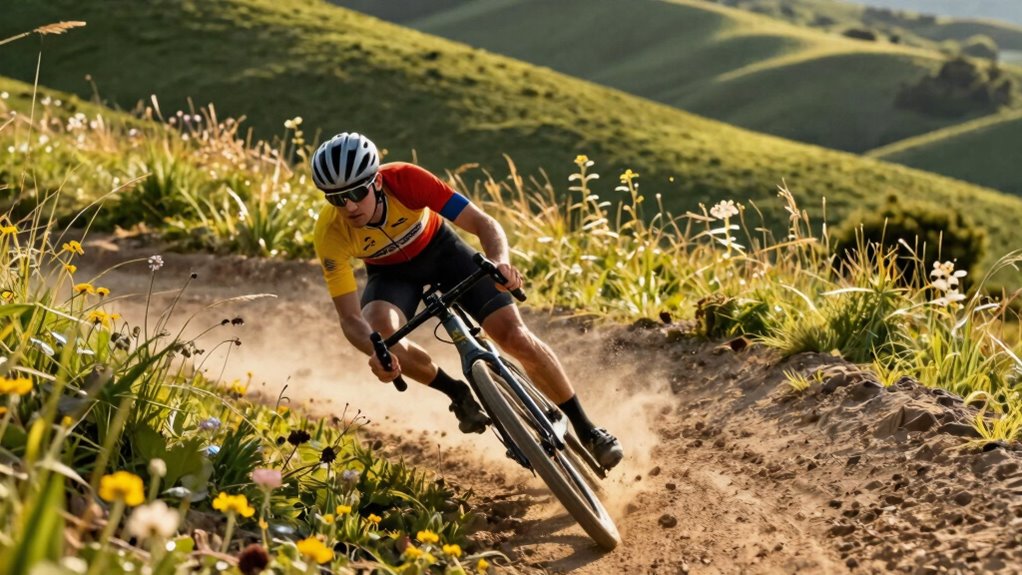
Your riding posture plays a vital role in how effectively you use your gears on rolling terrain. Keep your body centered over the bike, with a slight bend in your elbows and your core engaged. This position allows you to respond quickly to changes in terrain and shift gears smoothly without losing control or balance. When approaching a hill or an incline, anticipate the change and shift to a lower gear before you start climbing. This prevents you from straining your legs and keeps your momentum consistent. Conversely, as you crest the hill and start descending, shift back into a higher gear to maximize efficiency and reduce fatigue. Staying attentive to your body’s signals and terrain cues ensures you’re always in the best gear for the situation.
Maintain centered posture and anticipate terrain changes to shift gears smoothly and stay balanced on rolling hills.
On rolling terrain, it’s essential to develop a rhythm that matches your gear choices with your pedaling cadence. Maintain a steady cadence by adjusting your gears as the terrain changes—downshift before you hit the incline, then upshift when you’re descending or on flat sections. This seamless gear transition minimizes power loss and keeps your muscles fresh. Don’t forget to be mindful of your riding posture during these shifts. Keeping your upper body relaxed and centered allows for better control and more efficient power transfer. When you shift gears properly and keep your posture aligned, you conserve energy and make the ride feel less taxing. Additionally, understanding how your gear system works can help you optimize your shifting strategy, especially on varied terrain. Learning to anticipate gear changes based on terrain and cadence can further improve your riding efficiency, making your gear shifting technique more instinctive. Recognizing the importance of bike maintenance can also prevent unexpected mechanical issues that disrupt your rhythm. Incorporating proper shifting technique into your riding habits can significantly enhance your overall experience.
Ultimately, mastering gear use on rolling terrain is about preparation and awareness. Keep your bike well-maintained, stay in a good riding posture, and anticipate terrain changes to shift proactively. These habits help you maintain a steady, efficient cadence, reduce fatigue, and enjoy a smoother ride on every incline and decline. Developing a consistent shifting rhythm and understanding your bike’s capabilities can significantly enhance your ride quality and confidence. With practice, shifting becomes second nature, making your rides more enjoyable and less strenuous, no matter how the terrain unfolds.
As an affiliate, we earn on qualifying purchases.
Frequently Asked Questions
How Often Should I Shift Gears on Rolling Terrain?
You should shift gears frequently on rolling terrain, adapting to changes in elevation and your speed. Proper gear maintenance guarantees smooth shifting, so keep your drivetrain clean and well-lubricated. Focus on rider technique by shifting early before climbs or descents to prevent strain on your drivetrain. Anticipate terrain changes, and shift smoothly to maintain momentum and efficiency. This approach helps you conserve energy and enjoy a more comfortable ride.
What’s the Best Gear for Descending Hills Safely?
Think of descending hills as gliding on a smooth, controlled wave. The best gear for safety is a low, easy-to-pedal gear, which helps you maintain a steady speed and stay in control. Before you descend, check your bike maintenance to make certain brakes and gears work properly. Keep your rider posture relaxed, slightly leaning back, with elbows bent, to absorb shocks. This combo keeps you safe and comfortable on those steep descents.
How Can I Prevent Chain Drops on Uneven Terrain?
To prevent chain drops on uneven terrain, you need to guarantee proper chain tension and gear compatibility. Keep your chain tight but not overly tight, and regularly check for slack. Use gears that are compatible with your bike’s drivetrain to avoid mis-shifting. When riding over bumpy surfaces, shift smoothly and anticipate terrain changes to reduce stress on the chain and prevent it from slipping off.
What’s the Ideal Cadence for Climbing and Descending?
For climbing, aim for a cadence optimization around 60-70 RPM to maintain steady effort and prevent fatigue. When descending, increase your cadence to 80-100 RPM for better control and efficiency. Keep your gears well-maintained to guarantee smooth shifting, which helps you stay consistent. Adjust your cadence as terrain changes, and regularly check your drivetrain to avoid issues that could disrupt your rhythm during climbs and descents.
How Does Tire Pressure Affect Gearing Efficiency?
Lower tire pressure can improve gearing efficiency on rolling terrain by providing better grip and absorbing shocks, making it easier to pedal smoothly. Conversely, high tire pressure reduces rolling resistance, but might make pedaling less efficient on uneven surfaces. You should find a balance—adjust your tire pressure according to terrain and load—so your gears engage smoothly, reducing strain and enhancing overall riding efficiency.
Conclusion
Mastering your gears on rolling terrain is like tuning a fine instrument—you’ll find the harmony between effort and efficiency. When you shift smoothly and anticipate changes in elevation, riding becomes a dance rather than a struggle. Think of your gears as the pedals’ secret partners, working behind the scenes to keep your cadence steady. With practice, you’ll glide over hills with the ease of a leaf on a breeze, turning tough climbs into mere ripples in your ride.
Halloween Picks
halloween
As an affiliate, we earn on qualifying purchases.