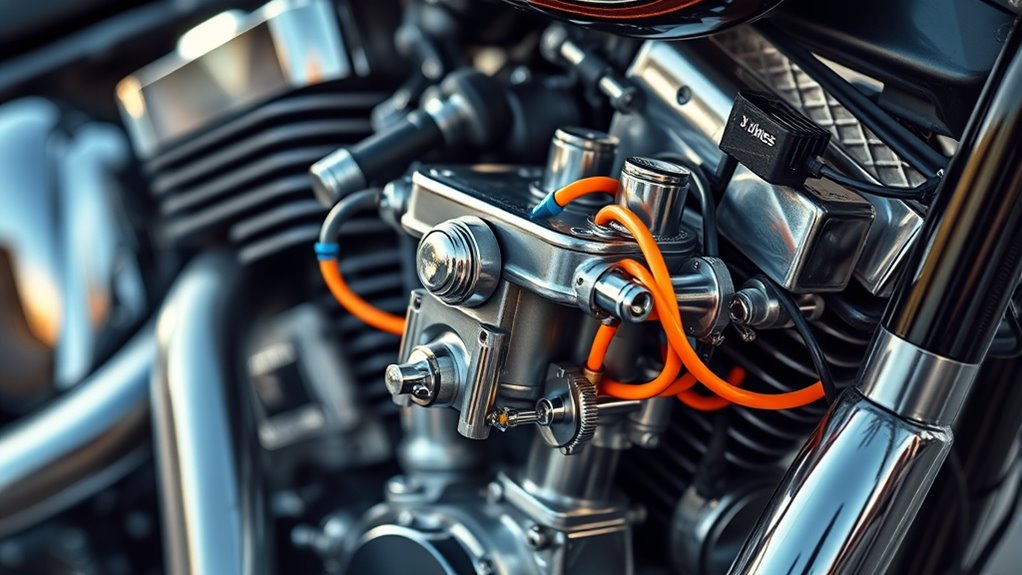

For long rides, optimize your carburetor timing by ensuring the idle mixture and throttle linkage are properly adjusted, allowing for smooth acceleration and fuel efficiency. Keep an eye out for signs like rough idling or hesitation, and make small tweaks to your screws for the best results. Regular checks and proper tuning prevent issues down the road. Stay tuned—more tips will help you keep your engine running smoothly all the way.
Key Takeaways
- Proper carburetor timing ensures optimal air-fuel mixture, improving engine responsiveness during long rides.
- Regularly check and adjust idle and mixture screws to prevent lean or rich running conditions.
- Synchronize multiple carburetors for smooth throttle response and consistent power delivery.
- Carry essential tools like screwdrivers and a timing light for on-the-road adjustments.
- Monitor engine performance and noise for early signs of timing issues, preventing long-term damage.
Understanding the Role of Carburetor Timing in Performance

Understanding how carburetor timing affects performance is vital because it directly influences how efficiently your engine mixes air and fuel. Proper timing ensures your engine runs smoothly and responds quickly during long rides. One key factor is adjusting spark plug gaps; a correctly gapped spark plug ignites the mixture reliably, optimizing combustion. Additionally, jet size selection plays an important role—choosing the right jets ensures the proper fuel delivery at various throttle levels. If the jets are too small or large, your engine may run lean or rich, leading to poor performance or fouled plugs. By fine-tuning these elements, you help your carburetor deliver a balanced mixture, maximizing power and efficiency during extended rides. Proper carburetor timing, combined with correct spark plug gaps and jet sizes, keeps your engine running at its best. Regularly checking and adjusting carburetor components can prevent common issues and improve overall performance. Additionally, understanding fuel mixture optimization is essential for maintaining consistent power output and preventing engine damage during long rides. Implementing these adjustments can also help prevent issues related to improper timing and improve your bike’s responsiveness on the road. Proper planning of the fuel mixture and timing is essential to avoid costly mistakes that could hinder your riding experience.
Common Signs of Improper Carb Timing During Rides

When your carburetor timing is off, you’ll notice a range of performance issues during your rides. One common sign is rough or uneven idling, which may indicate that the idle screw adjustment is out of sync. You might also experience hesitation or sputtering when accelerating, as the carburetor isn’t delivering the correct air-fuel mixture. Poor carburetor synchronization can cause inconsistent power delivery and reduced fuel efficiency. Additionally, you may feel a loss of top-end performance or stumble at higher RPMs. If these symptoms persist, it’s a clear sign that your carb timing needs attention. Recognizing these signs early helps you diagnose issues before they worsen, ensuring smoother rides and peak engine performance. Proper air-fuel mixture calibration can significantly improve overall engine responsiveness and efficiency. Regularly inspecting the carburetor’s components can prevent refrigerant leaks, which may also impact engine operation and fuel economy. Understanding how timing adjustments influence engine behavior allows for better troubleshooting and tuning. Moreover, incorporating synchronization techniques ensures that all carburetor circuits work harmoniously for optimal performance.
Simple Steps to Adjust and Optimize Your Carburetor

Adjusting your carburetor might seem intimidating, but with a few simple steps, you can enhance its performance and enjoy smoother rides. Start by locating the idle mixture screw; turn it slowly clockwise to lean the mixture or counterclockwise to enrich it. This adjustment improves fuel efficiency and throttle response at low speeds. Next, check the throttle linkage for smooth movement, ensuring it opens fully without sticking. Adjust the idle speed screw to set a steady engine idle—too high can waste fuel, too low causes stalling. Fine-tuning these settings helps your engine run more efficiently, providing better throttle response and fuel economy. Remember to make small adjustments, test ride after each, and record your settings for future reference. This simple process ensures your carburetor is dialed in for ideal performance. Additionally, inspecting the shower fixtures for leaks or blockages can prevent unnecessary fuel waste and maintain optimal engine operation. Proper maintenance of your carburetor can also extend its lifespan and maintain peak efficiency. Regularly checking the air-fuel mixture can prevent engine hesitation and improve overall reliability. Incorporating tuning techniques from Hyundai models can give you insights into optimal adjustments for different vehicle types, and understanding how carburetor components work together can further improve your tuning process.
Myths About Carb Tuning Debunked

Many common beliefs about carb tuning are actually myths that can lead you astray if followed blindly. One such myth is that perfect carb timing always boosts fuel efficiency, but in reality, over-tuning can cause inconsistent performance and increased engine noise. Some think that advanced carb tuning will eliminate engine noise entirely, yet improper adjustments can make engine noise worse or cause rough idling. Another misconception is that you should always aim for maximum throttle response, which may sacrifice fuel economy and smoothness. Remember, effective carb tuning balances fuel efficiency, engine noise, and reliability. It’s about understanding your engine’s specific needs rather than blindly following popular myths. Proper tuning ensures long-term performance without sacrificing efficiency or creating unnecessary engine noise.
Tips for Maintaining Proper Carb Timing on Long Journeys

Long journeys can put your carb timing to the test, making it essential to keep it properly calibrated throughout your trip. Regularly check your idle mixture and synchronization to guarantee ideal fuel efficiency. Carry basic tools like screwdrivers and a timing light to make quick adjustments if needed. Keep an eye on engine noise; increased noise or rough running can signal timing issues. Use a tachometer to monitor RPM stability, which helps maintain proper carb calibration. Staying attentive to changes in performance allows you to catch problems early, preventing fuel waste and engine strain. Proper carb timing not only boosts fuel efficiency but also keeps engine noise in check, ensuring a smoother, more reliable ride on long journeys. Additionally, practicing mindfulness and presence can help you stay focused on your vehicle’s performance, enabling quicker detection of issues before they become serious.
Frequently Asked Questions
Can Carb Timing Affect Fuel Efficiency on Long Rides?
Carb timing can definitely impact your fuel economy and throttle response on long rides. When timing is off, your engine may not burn fuel efficiently, causing you to use more gas than necessary. Properly tuned carbs ensure smoother throttle response, helping your bike run effectively over extended distances. Adjusting carb timing correctly allows you to maximize fuel efficiency, so you can enjoy longer rides without constantly worrying about running out of fuel.
What Tools Are Best for Precise Carb Timing Adjustments?
To get precise carb timing adjustments, you should use a vacuum gauge and a timing light. The vacuum gauge helps you monitor engine vacuum, indicating the ideal timing points, while the timing light allows you to see the exact timing mark on your engine’s crankshaft. Together, these tools give you accurate readings, ensuring your carb is timed perfectly for better performance and fuel efficiency during long rides.
How Often Should I Check Carb Timing During Extended Trips?
Thinking about your maintenance schedule, it’s wise to check your carb timing regularly during long trips. While you might not need to do it daily, inspecting every few hundred miles helps keep everything running smoothly. Keep an eye on carb cleaning too, as buildup can affect timing. This way, you prevent small issues from turning into big headaches, ensuring a smooth, enjoyable ride without unexpected stops.
Does Altitude Change Require Carb Timing Adjustments?
Altitude change does impact carb tuning, so you should consider altitude adjustment during your ride. As you ascend, the air becomes thinner, which can cause your engine to run lean if you don’t adjust your carb. Check your carb timing and mixture often and make small altitude adjustments to keep the engine running smoothly. Proper carb tuning ensures peak performance and fuel efficiency, especially during long rides through varying elevations.
Can Improper Carb Timing Cause Engine Damage?
Improper carb timing can cause engine damage by disrupting ignition timing and misfiring. If your ignition timing is off or your spark plug gap is incorrect, it can lead to inefficient combustion, overheating, or knocking. These issues strain engine components, potentially causing long-term damage. Ensuring your carb timing aligns with proper ignition timing and maintaining the correct spark plug gap helps prevent costly repairs and keeps your engine running smoothly.
Conclusion
Mastering your carb timing isn’t just about quick fixes; it’s about keeping your ride smooth and reliable through every mile. Think of your engine as a dance partner—when in sync, the performance is flawless. So, stay attentive, tune regularly, and never doubt the power of proper timing. After all, a well-timed carb isn’t just fuel for your bike—it’s the heartbeat that keeps your adventure alive.