To stay safe and perform well during hot rides, focus on consistent hydration and replenishing electrolytes. Drink water regularly every 15-20 minutes, and incorporate electrolyte-rich drinks, snacks, or tablets for longer, intense rides. Proper balance prevents dehydration, muscle cramps, and heat-related issues. Post-ride, rehydrate with sodium and potassium sources to restore electrolytes. Keep these strategies in mind to maintain your energy and safety—there’s more to learn about optimizing hydration in hot conditions.

Get sports gear delivered free — and shop member deals
- Fast, free delivery on millions of items
- Access to Prime Big Deal Days deals on October 6–7
- Prime Video, Amazon Music and more included
Key Takeaways
- Maintain steady hydration by sipping water regularly every 15-20 minutes during hot rides.
- Use electrolyte drinks or tablets to replace lost sodium, potassium, magnesium, and chloride.
- Consume electrolyte-rich snacks like bananas, nuts, or gels to support mineral balance.
- Replenish electrolytes post-ride with sodium and potassium-rich foods and beverages.
- Adjust hydration strategies based on ride duration, intensity, and heat conditions to prevent dehydration.
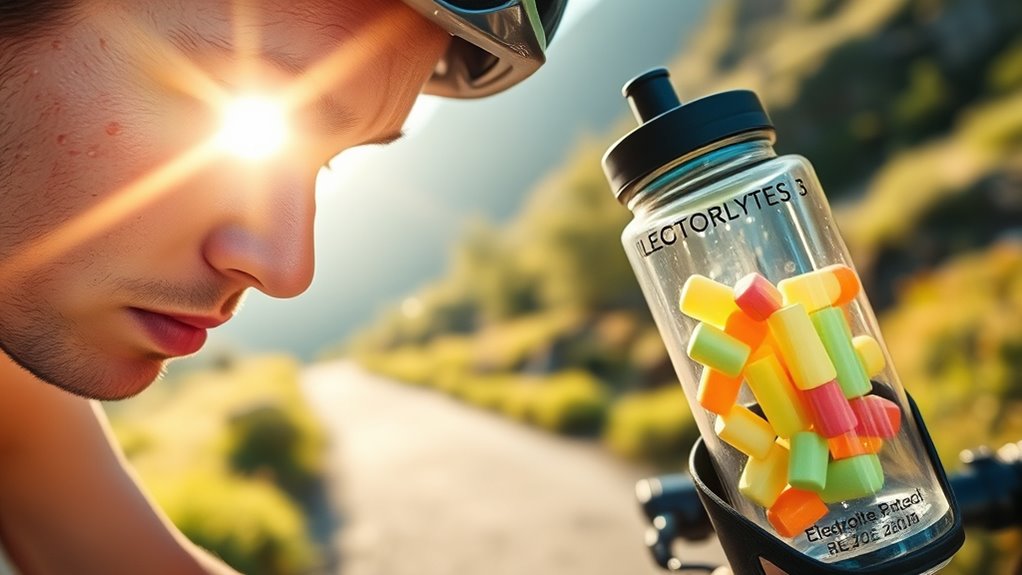
Staying properly hydrated is essential for maintaining your body’s balance of fluids and electrolytes, which are indispensable for nearly every bodily function. When you’re out on hot rides, sweat causes you to lose not just water but also critical electrolytes like sodium, potassium, magnesium, and chloride. These minerals help regulate nerve function, muscle contractions, and fluid distribution throughout your body. If you neglect to replace what you lose, you risk dehydration, muscle cramps, fatigue, and even more severe issues like heat exhaustion or heat stroke. That’s why understanding electrolyte balance and employing effective hydration strategies become indispensable for staying safe and performing at your best.
Proper hydration maintains fluid and electrolyte balance, vital for muscle function, nerve activity, and overall health during hot rides.
Electrolyte balance is the delicate equilibrium your body maintains to ensure all physiological processes run smoothly. During hot rides, your sweat rate increases, and so does your electrolyte loss. Drinking plain water alone can dilute your body’s electrolyte levels, leading to hyponatremia, a condition characterized by dangerously low sodium levels. To prevent this, you need hydration strategies that include replenishing electrolytes along with fluids. This might mean incorporating electrolyte drinks or adding electrolyte tablets to your water. These solutions help restore the balance faster and keep your muscles functioning properly, preventing cramps and fatigue that can derail your ride.
Your hydration strategies should be proactive and tailored to the intensity and duration of your ride, as well as the heat conditions. Before heading out, start by drinking water regularly to ensure you’re well-hydrated. During your ride, aim to sip fluids consistently, roughly every 15 to 20 minutes, rather than gulping large amounts infrequently. This steady intake helps maintain electrolyte levels and prevents dehydration. If you’re riding for more than an hour or in very hot weather, consider using electrolyte-infused drinks or snacks like sports gels or electrolyte tabs. These not only hydrate but also replenish the minerals lost through sweating, supporting muscle function and energy levels.
Post-ride hydration is equally important. Replenish lost electrolytes by drinking beverages that contain sodium and potassium, or consuming foods rich in these minerals, such as bananas, nuts, or dairy. Proper recovery helps your body restore electrolyte balance more efficiently, reducing soreness and fatigue, and preparing you for your next ride. Remember, every rider’s needs are different, so listen to your body and adjust your hydration strategies accordingly. Staying ahead of dehydration and electrolyte imbalance ensures you stay safe, comfortable, and ready to conquer those hot rides with confidence.
Additionally, the development of robust safety measures in AI systems is critical to mitigate vulnerabilities and ensure trustworthy performance.
electrolyte drink tablets for athletes
As an affiliate, we earn on qualifying purchases.
As an affiliate, we earn on qualifying purchases.
Frequently Asked Questions
How Do I Know if I’M Properly Hydrated During Exercise?
You can tell if you’re properly hydrated during exercise by paying attention to your urine color and hydration timing. Aim for light, straw-colored urine, which indicates good hydration. Drink fluids regularly, about every 15-20 minutes, rather than waiting until you’re thirsty. If your urine is dark or concentrated, increase your fluid intake. Staying consistent with hydration helps maintain performance and prevents dehydration during your workout.
Can Electrolyte Supplements Replace Water Entirely?
Electrolyte supplements can’t replace water entirely because maintaining electrolyte balance is only one part of proper hydration. During intense or hot rides, you need water to quench your thirst and support essential functions, while electrolytes help replenish salts lost through sweating. Use hydration strategies that combine both—drink water regularly and supplement with electrolytes when needed—to stay ideally hydrated and avoid imbalances.
Are Natural Foods Better Than Sports Drinks for Electrolytes?
Natural foods are generally better than sports drinks for electrolytes because they provide a wide range of nutrients without added sugars or artificial ingredients. Fruits like bananas and oranges, and vegetables like spinach, naturally replenish electrolytes effectively. Sports drinks can help in extreme conditions but often contain unnecessary additives. For regular, moderate exercise, choosing natural foods guarantees you get essential electrolytes while supporting overall health.
How Do Electrolytes Affect Muscle Cramps?
Imagine your muscles as a busy highway, with electrolytes like sodium and potassium acting as traffic lights, guiding signals smoothly. When you experience muscle cramps, it’s often because of muscle fatigue and electrolyte depletion. Replenishing electrolytes helps restore balance, calming overactive nerves and easing cramps. Proper electrolyte intake guarantees your muscles stay responsive, preventing those sudden, painful spasms during your ride. Keep your energy flowing, and cramps will be less likely to strike.
What Are Signs of Electrolyte Imbalance During Hot Rides?
You might notice signs of electrolyte imbalance during hot rides, like muscle cramps, excessive fatigue, dizziness, or nausea. An electrolyte deficiency can impair your hydration monitoring, making it harder to stay balanced. Keep an eye out for these symptoms, and make sure to replenish electrolytes through drinks or foods. Staying attentive helps prevent serious issues and keeps you performing your best in the heat.
Conclusion
Think of your body as a well-tuned garden hose. When you hydrate properly and replenish electrolytes, you’re watering this hose, keeping it flexible and strong. But neglect it, and it becomes brittle and prone to leaks. During hot rides, your body’s like this hose—needs steady nourishment to keep water flowing smoothly. Stay vigilant, sip wisely, and balance your electrolytes. That way, you’ll make certain your ride stays smooth, resilient, and ready to conquer every mile.
NFL season / tailgating Picks
team gear
As an affiliate, we earn on qualifying purchases.