
To protect your e-bike’s range, avoid storing the battery fully charged or completely depleted for long periods. Instead, keep it around 50% charge in a cool, dry place. Hot environments and improper storage speed up capacity loss. Using the wrong charger or fast charging can also harm the battery over time. Following these tips can boost lifespan and performance—continue exploring how to optimize your battery care for the best ride experience.
Key Takeaways
- Storing the battery at full charge (100%) can accelerate capacity loss and reduce range over time.
- Keeping the battery fully drained (0%) during storage damages cells and decreases lifespan.
- Long-term storage should be at around 50% charge in a cool, dry environment to preserve capacity.
- Avoid storing batteries in hot or humid locations, which can accelerate chemical degradation.
- Periodically check and recharge the battery during storage to prevent deep discharges and maintain health.
Proper care of your e-bike battery can markedly extend its lifespan and ensure dependable performance. One of the most critical factors influencing battery longevity is your charging habits. How you handle charging can make the difference between a battery that lasts for years and one that quickly loses its capacity. To maximize your battery’s performance, avoid common mistakes like overcharging or letting it drain completely. Instead, aim to keep your battery charged between 20% and 80%. Charging it fully to 100% regularly can stress the cells, leading to faster capacity loss over time. Similarly, letting the battery sit at 0% for extended periods can cause irreversible damage. Developing consistent charging habits helps maintain the health of the battery’s cells and preserves its overall lifespan.
Another key aspect is understanding how storage impacts your battery’s health. When not in use for extended periods, you might be tempted to store your e-bike with a fully charged or completely drained battery. Both scenarios are detrimental. Storing the battery at full charge for long durations can accelerate capacity fading, while storing it at a very low charge can cause the cells to degrade or become unstable. For ideal storage, keep the battery at around 50% charge and store it in a cool, dry place away from direct sunlight. Avoid storing it in hot environments, as high temperatures accelerate chemical reactions inside the battery, reducing its overall lifespan. If you’re planning to leave your e-bike unused for several weeks or months, make sure to check the charge level periodically and recharge it to the recommended level if needed.
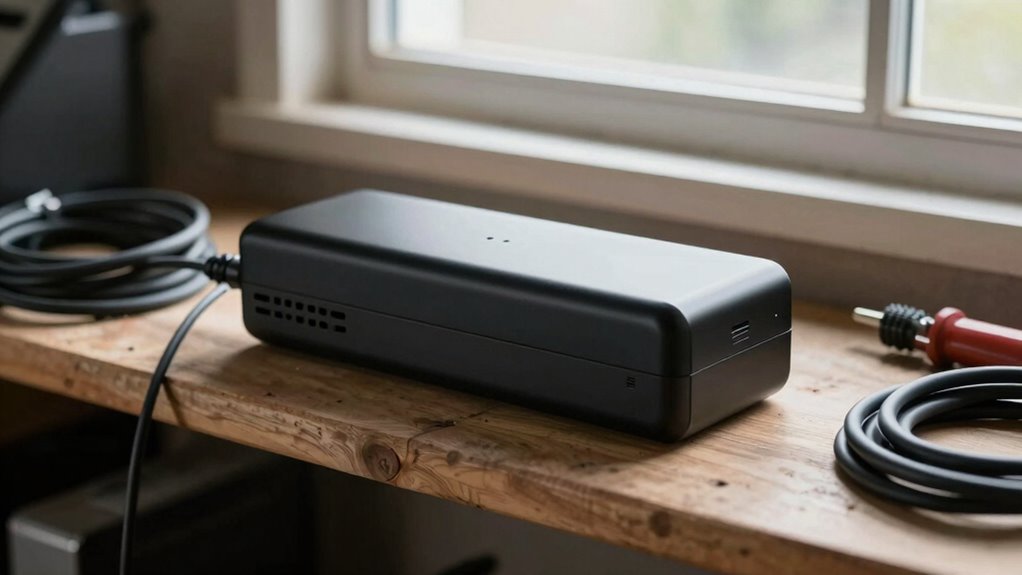
Additionally, pay attention to how you charge your e-bike. Using the original charger is always best because it’s designed specifically for your battery’s chemistry and voltage requirements. Using incompatible chargers or cheap alternatives can harm your battery and shorten its life. Also, try to avoid fast charging whenever possible. While quick charges are convenient, they generate more heat and stress the battery cells, which can diminish their capacity over time. Instead, opt for regular, slow charging sessions—this approach is gentler on your battery and helps it retain its capacity longer.
Frequently Asked Questions
How Often Should I Check My E-Bike Battery’s Health?
You should check your e-bike battery’s health every 3 to 6 months. During these checks, perform battery calibration and voltage monitoring to guarantee peak performance. Calibration helps maintain accurate battery readings, while voltage monitoring detects potential issues early. Regularly monitoring your battery’s health helps prevent range loss and prolongs its lifespan. Don’t forget to store it properly and avoid deep discharges between checks for the best results.
Can I Leave My E-Bike Battery Charging Overnight?
Sure, leave your e-bike battery charging overnight—if you want to shorten its lifespan. Overcharging disrupts battery calibration and adds unnecessary charging cycles, which wear your battery out faster. Instead, unplug once it’s fully charged to maintain peak health. Trust us, a little extra attention now means longer range and better performance later. Don’t let careless charging habits turn your ride into a short-lived adventure.
What Is the Ideal Temperature for Storing the Battery?
You should store your e-bike battery at a temperature between 50°F and 68°F (10°C to 20°C) for ideal temperature management. Avoid extreme heat or cold, as these can damage the battery over time. Keep storage duration in mind—don’t leave it unused for months without charging, and always store it in a cool, dry place. Proper temperature management helps preserve battery health and extends its lifespan.
Does Frequent Partial Charging Affect Battery Lifespan?
Frequent partial charging can impact your battery’s lifespan, especially if it disrupts proper battery calibration. Each partial charge counts as a charging cycle, and too many can wear out your battery faster. To extend its life, aim for full charges when possible and avoid excessive partial charges. This helps maintain accurate calibration and reduces unnecessary wear, ensuring your e-bike stays reliable and your range stays ideal longer.
How Do I Troubleshoot a Sudden Battery Capacity Loss?
To troubleshoot sudden battery capacity loss, start by performing a battery calibration—fully charge and then fully discharge it to reset the battery management system. Check the voltage monitoring readings to identify inconsistencies or drops that signal issues. If the problem persists, consider replacing the battery or consulting a professional. Regular calibration and monitoring help maintain accurate capacity readings and extend your e-bike’s range.
Conclusion
Think of your e-bike battery like a delicate plant—you need to water it just right. I once ignored storage tips and found my battery’s range plummeted faster than I expected, like a wilting flower. Proper care, especially avoiding extreme temperatures, keeps your battery thriving. Remember, a small mistake in storage can cut your range in half, turning a smooth ride into a frustrating stroll. Treat your battery with care, and it’ll reward you with miles of dependable riding.