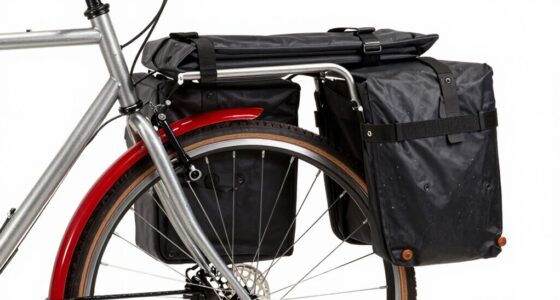
To organize your spare bike parts effectively, sort them by function and store small items like screws and nuts in divided containers or small cabinets, while larger components should go on labeled shelves or bins with lids. Use clear labels and keep a digital or paper inventory to track everything. Place your storage close to your workspace and maintain environmental controls to prevent damage. Keep exploring for more tips to optimize your bike part organization.

Get sports gear delivered free — and shop member deals
- Fast, free delivery on millions of items
- Access to Prime Big Deal Days deals on October 6–7
- Prime Video, Amazon Music and more included
Key Takeaways
- Categorize parts by function and size, using labeled, transparent containers for easy identification.
- Implement a master inventory system to track parts and locations efficiently.
- Store small parts in divided drawers and larger components on dedicated shelves with lids.
- Keep tools and parts organized on pegboards and shelves close to the maintenance area.
- Regularly inspect, update records, and rotate stock to ensure parts remain in good condition.
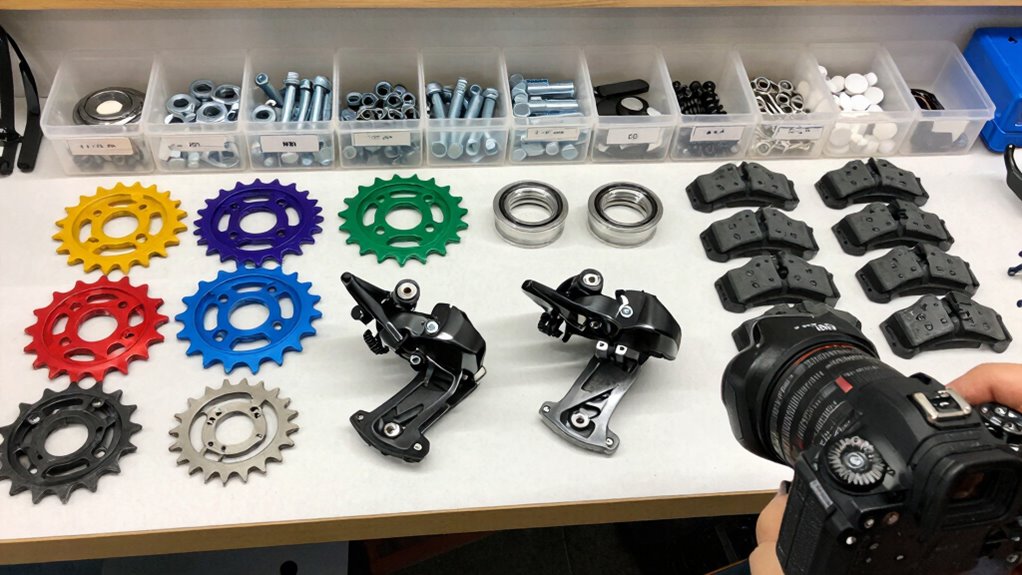
Keeping spare bike parts organized can save you time and frustration when you need a quick fix. When bike maintenance becomes urgent, digging through cluttered storage can delay repairs and test your patience. The key is to develop effective storage solutions that keep your parts accessible, clearly labeled, and protected from damage. Good organization isn’t just about neatness; it’s about ensuring you can quickly find what you need and maintain your bike efficiently.
Efficiently organized bike parts save time, prevent frustration, and keep your maintenance quick and stress-free.
Start by sorting your spare parts into categories based on their function—such as cables, brake pads, gears, chains, and bolts. Once sorted, invest in containers that are transparent or clearly labeled, so you can identify contents at a glance. Small plastic bins or divided compartment boxes work well for tiny parts like screws, nuts, and washers. For larger components like derailers or wheelsets, dedicated shelves or storage bins with sturdy lids keep everything secure and dust-free. Using stackable storage solutions maximizes space and keeps your setup organized. Incorporating proper labeling techniques can further streamline your organization process.
Labeling is essential if you want to avoid rummaging through multiple containers each time you need a specific part. Use waterproof labels or a permanent marker to mark each bin with its contents. For added efficiency, create a master inventory list, either on paper or digitally, listing all parts and their storage locations. This way, if you’re searching for a specific item, you can quickly check the list instead of wasting time opening every container. Additionally, understanding vehicle diagnostics can help you identify issues more precisely and avoid unnecessary replacements, making your organization even more effective. Regularly checking your inventory and maintaining accurate records can prevent missing or misplaced parts, saving you time in the long run.
Another smart tip is to store parts close to where you perform bike maintenance. Set up a dedicated workshop area with shelves or pegboards for tools and parts. Hanging tools on hooks keeps them within reach and frees up workspace. Smaller parts can be stored in drawer organizers or small parts cabinets, which allow you to retrieve items without disturbing the entire collection. Proper storage techniques also include considering the environmental conditions, such as humidity and temperature, to prevent damage over time. Understanding these factors can help protect your parts from environmental damage and extend their lifespan. Regularly check your stored parts for signs of deterioration and rotate stock to keep your inventory fresh.
As an affiliate, we earn on qualifying purchases.
Frequently Asked Questions
How Often Should I Review and Update My Spare Bike Parts Inventory?
You should review and update your spare bike parts inventory every three to six months. Regular inventory rotation helps you spot outdated or unused items, ensuring your stock stays current. Use a storage checklist to keep track of what’s available and what needs replacing. By doing this, you prevent clutter, avoid missing essential parts, and stay prepared for repairs, saving time and money when emergencies happen.
What Are the Best Labels or Markers for Organizing Bike Parts?
You should use clear, durable labeling techniques for organizing bike parts. Consider using waterproof markers like permanent markers or paint pens for quick, easy identification. For more organized storage, opt for pre-made labels, printable labels, or color-coded markers to differentiate parts by category. Choose marker types that resist wear and tear, ensuring your labels stay legible over time, making it simple to locate what you need when you need it.
How Do I Prevent Rust and Corrosion on Stored Spare Parts?
To prevent rust and corrosion on your stored spare bike parts, guarantee they are clean and dry before storage. Use rust prevention sprays or lubricants on metal surfaces, and keep parts in a dry, airtight container or resealable bag with silica gel packs to control humidity. Regularly check your stored parts, and consider applying a light coat of oil for added corrosion control, especially if you won’t be using them for a while.
Can Digital Tools Help Track My Spare Bike Parts Inventory?
Think of digital tools as your bike’s GPS, guiding you through the maze of spare parts. They help you track your inventory with ease, making bike maintenance smoother. By using apps or spreadsheets for spare parts categorization, you’ll quickly see what’s in stock, what’s missing, and when to restock. This keeps your bike gear organized, saves time, and guarantees you’re always ready for the road ahead.
What Is the Ideal Storage Environment for Bike Spare Parts?
You should store bike spare parts in a cool, dry, and dust-free environment to prevent rust and deterioration. Good storage solutions include sealed containers, labeled bins, or drawer organizers, which keep parts organized and accessible for bike maintenance. Avoid direct sunlight and extreme temperatures, as they can damage sensitive components. Maintaining a stable environment guarantees your spare parts remain in ideal condition, making bike repairs quicker and easier whenever needed.
Conclusion
So, as you find that one bolt tucked away in a forgotten corner, you realize that organizing your spare bike parts isn’t just about order—it’s about trusting that the right piece will appear when you need it most. Sometimes, it’s the small details, the accidental placements, that remind you how life’s little surprises mirror the chaos and clarity of a well-kept workshop. In the end, your organized space becomes a quiet affirmation to both preparation and serendipity.
NFL season / tailgating Picks
team gear
As an affiliate, we earn on qualifying purchases.