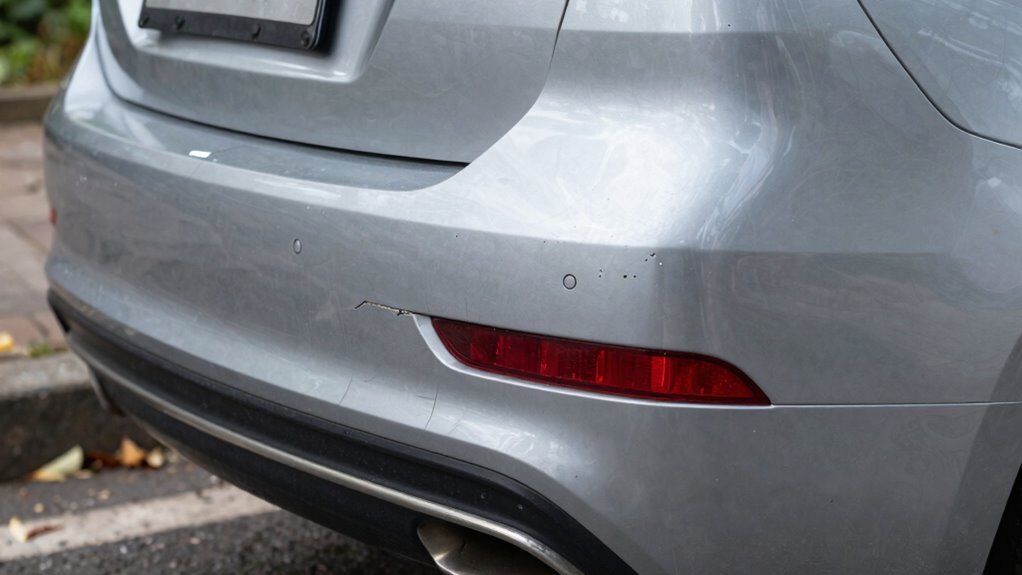

After a minor crash, start by inspecting your vehicle for visible dents, scratches, or misaligned panels that could signal hidden damage. Check the door, trunk, and hood for proper alignment and ease of closing. Look over tires and wheels for cracks or unusual wear. Don’t forget to listen for strange noises or vibrations when driving, and check fluid levels. To guarantee safety and avoid future issues, keep detailed records—there’s more to uncover if you look closer.
Key Takeaways
- Visually inspect for dents, scratches, and misalignment on doors, trunk, hood, and panels.
- Check tire condition and wheel integrity for cracks or unusual wear.
- Test drive the vehicle to listen for abnormal noises, vibrations, or steering issues.
- Review internal components like radiator, transmission, and fluid levels for leaks or damage.
- Document all damages and communicate with your insurance provider promptly.
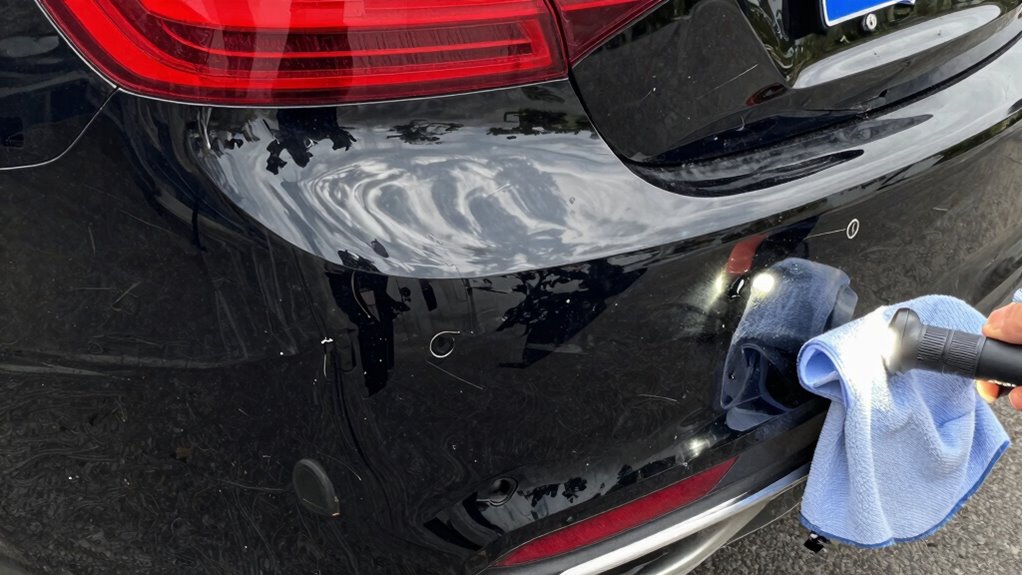
Even a minor crash can leave behind hidden damage that might cause bigger problems later. When you’re involved in a small collision, it’s easy to focus only on visible dents or scratches, but it’s crucial to look deeper. First, check your vehicle carefully for any signs of damage that aren’t immediately obvious. Pay attention to the alignment of the doors, trunk, and hood—if they don’t close properly or seem misaligned, that’s a sign of underlying frame issues. Also, examine the tires and wheels for any cracks or unusual wear, which can indicate suspension problems. Even if your car seems fine on the surface, don’t dismiss the possibility of hidden damage affecting safety or performance.
Even minor crashes can hide damage that affects safety—inspect alignment, tires, and internal components thoroughly.
Once you’ve done a visual inspection, it’s time to consider your next steps. Contact your insurance provider to report the incident and start the insurance claims process. Insurance companies often require a detailed account of the damage and may request an assessment from an approved mechanic or appraiser. Having a professional inspection can help you get accurate car repair estimates, which are essential for filing your claim and understanding the potential costs involved. These estimates give you a clearer picture of whether repairs are minor or more extensive, ensuring you’re not caught off guard by unexpected expenses later.
It’s also wise to get a professional assessment, even if your car seems okay. Sometimes, damage to the internal components, such as the radiator, transmission, or steering system, isn’t visible but can impact safety and drivability. A mechanic can perform a thorough diagnostic check, looking for issues like fluid leaks, abnormal noises, or vibrations when you drive. This step can prevent long-term problems, like engine trouble or alignment issues, which often stem from minor crashes. Additionally, understanding the importance of hidden damage can help you make more informed decisions about repairs and safety measures. Recognizing the significance of vehicle safety features can also aid in identifying potential risks caused by the collision. It’s helpful to remember that proper damage assessment techniques are vital for ensuring your vehicle remains safe to operate. Moreover, staying informed about your vehicle’s repair history can facilitate smoother claims processing and ongoing maintenance.
Keep detailed records of all inspections, repair estimates, and communication with your insurance company. These documents will be vital if there’s a dispute or if your claim needs to be processed quickly. Remember, even if the damage appears minor, neglecting to address it could lead to bigger, more costly repairs down the line. Taking proactive steps—like obtaining accurate car repair estimates and understanding your coverage—will help you navigate the aftermath of a minor crash with confidence. Protect your safety and your investment by being thorough now, so you can hit the road again with peace of mind.
car inspection mirror for minor damage
As an affiliate, we earn on qualifying purchases.
As an affiliate, we earn on qualifying purchases.
Frequently Asked Questions
Should I File an Insurance Claim for Minor Damages?
You should consider filing an insurance claim for minor damages if the repair costs are close to or exceed your deductible, or if you want to protect your claim history. During the insurance process, you’ll need a thorough damage assessment to determine the extent. Even minor damages can sometimes lead to bigger problems later, so weighing the cost of repairs against potential future issues will help you decide whether to file a claim.
When Is It Necessary to See a Mechanic After a Crash?
When wondering whether to see a mechanic after a crash, carefully consider critical clues. If you notice unusual noises, strange vibrations, or if the vehicle pulls to one side, it’s time for thorough vehicle inspections. Safety precautions are paramount; don’t delay if there’s any doubt. Seeing a mechanic guarantees hidden damage doesn’t hide, helping you maintain safety, avoid further issues, and keep your car running reliably.
How Do I Document the Accident for Insurance Purposes?
You should start by collecting an accident report from the scene if available, and then focus on photo documentation. Take clear photos of the damage, the entire scene, and any contributing factors like skid marks or traffic signs. Record details such as date, time, location, and weather conditions. These steps create a solid record for insurance claims, helping make sure your case is clear and well-supported.
Can I Drive My Car if It Looks Fine Visually?
You might think your car is a shining knight after a minor crash, but don’t be fooled by a quick visual inspection. Just because it looks fine doesn’t mean it’s safe to drive. Always perform safety precautions like checking for leaks, tire damage, and brake function. Trust your instincts, but also have a professional inspect your vehicle to guarantee hidden damage doesn’t turn into a dangerous surprise on the road.
What Steps Should I Take if the Other Driver Disputes the Accident?
If the other driver disputes the accident, stay calm and avoid arguing. Gather evidence like photos, videos, and contact info, and document your account of the incident. Seek legal advice to understand your rights and options. Don’t hesitate to reach out for emotional support if you’re feeling overwhelmed. Stay cooperative with authorities, and consider consulting a lawyer to navigate any disputes effectively.
Conclusion
After a minor crash, always inspect your vehicle thoroughly and don’t overlook hidden damages. Remember, about 20% of car accidents result in issues that aren’t immediately visible but can cause bigger problems down the road. Taking a few extra moments to check for leaks, dents, or unusual noises can save you money and stress later. Stay cautious and proactive—you’ll keep yourself safer and your car in better shape, even after the smallest of bumps.