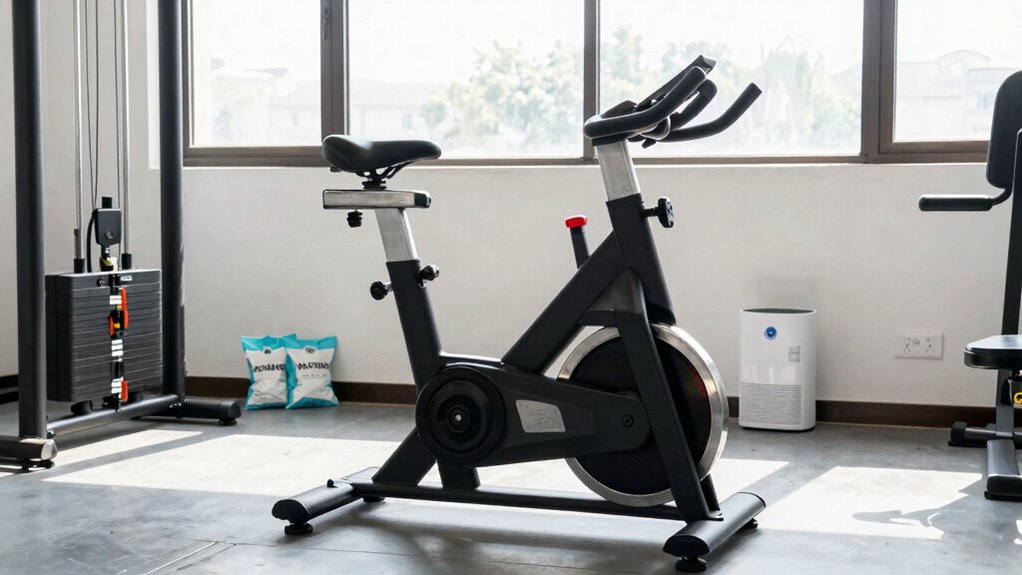

To prevent corrosion in your indoor training setup, keep humidity levels between 40-50% using dehumidifiers or air conditioning, and guarantee good airflow while avoiding moisture buildup. Regularly clean metal parts with dry cloths and apply anti-corrosion sprays or lubricants to protect contact points. Position your equipment away from damp areas and direct sunlight. Proper maintenance combined with environmental controls will help extend your gear’s lifespan—discover more tips to safeguard your setup.

Get sports gear delivered free — and shop member deals
- Fast, free delivery on millions of items
- Access to Prime Big Deal Days deals on October 6–7
- Prime Video, Amazon Music and more included
Key Takeaways
- Maintain indoor humidity between 40-50% using dehumidifiers and keep windows closed during humid days.
- Regularly clean metal components and apply anti-corrosion sprays or lubricants to protect against moisture.
- Elevate and position equipment in well-ventilated areas away from heat and moisture sources.
- Use moisture-absorbing packs or silica gel to reduce excess humidity around the setup.
- Conduct routine inspections to detect early signs of corrosion and address issues promptly.
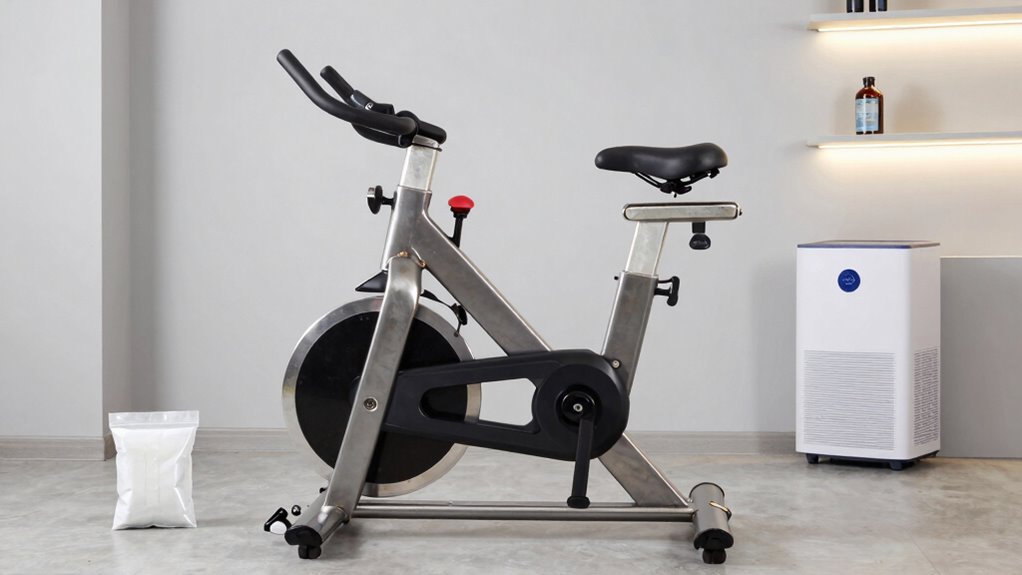
Ever wondered how to keep your indoor cycling setup free from corrosion? Maintaining your equipment’s longevity requires more than just regular cleaning. It’s about understanding how environmental factors, like humidity, impact your metal components and taking steps to protect them. Metal protection is vital because moisture in the air can cause corrosion, which weakens your bike’s frame and moving parts over time. The key to preventing this is controlling humidity levels in your training space and applying proper protective measures.
Maintaining your indoor bike involves controlling humidity and applying protective measures to prevent corrosion and extend its lifespan.
Start by managing humidity in your indoor setup. High humidity accelerates corrosion, especially on metal surfaces. Use a dehumidifier or air conditioner to maintain a stable, lower humidity level—ideally between 40% and 50%. If you live in a particularly damp climate, this step becomes even more critical. Keep windows closed during humid days and consider using moisture-absorbing packs or silica gel in the room to further reduce excess moisture. Regularly checking your environment guarantees that the air remains dry enough to slow down corrosion processes. Environmental control is essential for long-term equipment care. Additionally, monitoring environmental conditions can help you identify early signs of moisture buildup that could lead to corrosion. Implementing proper environmental management can further mitigate risks by optimizing airflow and reducing stagnant air pockets.
Next, focus on metal protection through preventive maintenance. Wipe down your bike regularly with a clean, dry cloth to remove sweat, dust, and moisture that can settle on the frame and components. Applying a light coat of lubricant or anti-corrosion spray specifically designed for bikes can create a protective barrier. This layer helps repel moisture and prevents rust from forming, especially on exposed metal parts like chains, cogs, and bolts. Be sure to target areas prone to moisture accumulation, such as joints and contact points. Regular inspection and maintenance will help catch early signs of corrosion before they develop into more significant issues.
Additionally, consider the placement of your indoor training setup. Keep your bike away from direct sunlight or sources of heat and moisture, which can accelerate corrosion. Elevating your equipment slightly off the ground can prevent exposure to damp floors or condensation that may develop overnight. Proper ventilation is also essential—good airflow will help keep humidity levels in check and reduce the buildup of moisture around your bike. Incorporating ventilation strategies can further improve air circulation and decrease the likelihood of corrosion. Good ventilation not only reduces humidity but also helps disperse any residual moisture that could otherwise settle on your equipment over time.
Ultimately, safeguarding your indoor training setup against corrosion involves a combination of humidity control and proactive metal protection. By maintaining ideal environmental conditions and applying protective coatings regularly, you guarantee your bike stays in top shape for years to come. Small, consistent efforts go a long way in preventing rust and corrosion, saving you money and frustration down the line. Your dedication to proper care will keep your equipment performing smoothly, giving you a better, safer workout every time.
indoor bike anti-corrosion spray
As an affiliate, we earn on qualifying purchases.
As an affiliate, we earn on qualifying purchases.
Frequently Asked Questions
Can Indoor Humidity Levels Affect Corrosion Rates?
Indoor humidity directly impacts corrosion rates; higher humidity levels increase moisture exposure, accelerating corrosion control issues on your equipment. When indoor humidity is too high, metal parts can rust more quickly, so you should monitor and regulate humidity to prevent damage. Using dehumidifiers and ensuring proper ventilation helps control indoor humidity, effectively reducing corrosion risks and prolonging the lifespan of your training setup.
Are Specific Materials More Resistant to Indoor Corrosion?
Certain materials are more resistant to indoor corrosion, especially when they have protective coatings or are made from corrosion-resistant metal alloys. For example, stainless steel and aluminum with proper coatings withstand humidity and moisture better than plain steel. You should choose these materials for your indoor setup, as their coatings and alloys create a barrier that prevents moisture from causing rust or corrosion, ensuring your equipment stays in top shape longer.
How Often Should I Inspect My Equipment for Corrosion?
You should inspect your equipment for corrosion every one to two months. Regular equipment maintenance is vital to catch early signs of rust or damage. Look for dull spots, discoloration, or rust buildup. Applying protective coatings, like anti-corrosion sprays or paints, helps prevent future corrosion. Frequent inspections make sure you catch issues early, maintaining your equipment’s longevity and performance while safeguarding your investment.
Do Cleaning Products Impact Corrosion Prevention?
Ever wondered if cleaning products affect corrosion prevention? Using the right cleaning agents is essential—they can either protect or harm your equipment. Harsh chemicals might strip protective coatings or cause corrosion, while products with corrosion inhibitors can actually help. Always select cleaning agents specifically designed for metal or indoor equipment, and avoid abrasive or corrosive cleaners. Proper cleaning combined with protective coatings creates a strong defense against corrosion in your indoor setup.
Does Temperature Fluctuation Influence Indoor Corrosion?
Temperature fluctuation can considerably influence indoor corrosion. When temperatures vary, moisture levels may increase, creating a humid environment that accelerates corrosion. To combat this, you should aim for temperature stability in your training space. Additionally, applying material coatings like paint or sealants provides a protective barrier against moisture. Maintaining consistent temperatures and using proper coatings help prevent corrosion, ensuring your indoor setup stays in top condition longer.
Conclusion
So, next time you marvel at your shiny indoor setup, remember to keep it dry and squeaky clean—unless you enjoy the thrill of rust creeping in like an uninvited houseguest. Corrosion may be sneaky, but with a little effort, you can keep your equipment looking showroom fresh and ready for action. Because let’s face it, nothing says dedication like fighting off rust while pretending you’re training for the Tour de France. Stay vigilant, and keep those metals sparkling!
Fall Picks
fall essentials
As an affiliate, we earn on qualifying purchases.