You should typically replace your brake rotors around every 70,000 miles or sooner if you notice signs of wear like deep grooves, cracks, or warping. Warped or damaged rotors can cause vibrations, uneven braking, or steering issues, so inspection is key. Keep an eye on your brake pads too, since excessive wear can damage the rotors faster. To learn more about maintaining safe brakes, continue exploring the essential tips and signs of wear.
Key Takeaways
- Replace rotors every 70,000 miles or when they show signs of damage or excessive wear.
- Inspect rotors regularly for grooves, cracks, rust, or warping to determine if replacement is needed.
- Resurface or replace rotors if they cause vibrations, squealing, or pulsing during braking.
- Replace rotors promptly if they are too thin after brake pad replacement or visible damage.
- Follow manufacturer recommendations and consult a professional mechanic for maintenance intervals.

Brake rotors are an essential component of your vehicle’s braking system, and knowing when to replace them can keep you safe on the road. These discs work with your brake pads to slow down or stop your vehicle, so making sure they’re in good condition is critical. Over time, rotors wear down, warp, or develop grooves, which can reduce braking efficiency. One key factor in determining when to replace your rotors is understanding your brake pad lifespan. Since brake pads typically last between 30,000 to 70,000 miles, the rotors often need attention around the same time. If your brake pads are worn thin, it’s a good idea to inspect the rotors for signs of damage or wear.
Rotor resurfacing frequency also plays a significant role in prolonging your brake system’s health. Resurfacing involves machining the rotor’s surface to remove imperfections and restore smoothness. However, this isn’t a cost-effective solution if the rotor is too thin or has suffered significant damage. Most experts recommend resurfacing the rotor only once or twice during its lifespan because excessive resurfacing can thin the rotor beyond safe limits. If you notice vibrations, squealing, or a pulsing brake pedal, it might be time for resurfacing or replacing the rotor altogether. Additionally, maintaining proper brake system maintenance can help extend the lifespan of your rotors. Regular inspections can also help identify issues like rotor warping before they become serious safety concerns. Recognizing the importance of rotor thickness is essential for safe braking. Furthermore, understanding the manufacturers’ recommendations can help guide your maintenance schedule and ensure optimal safety.
You should also pay attention to visual signs that indicate your rotors need replacing. Deep grooves, cracks, or significant rust can compromise braking performance and safety. Warped rotors can cause uneven braking force, leading to a shaky steering wheel or brake pedal. If you find yourself replacing your brake pads frequently, it could be a sign that your rotors are worn or damaged, as the pads may be prematurely grinding against uneven surfaces. This cycle can accelerate rotor wear, making replacement necessary sooner. Proper inspection techniques are crucial for early detection of potential issues, helping you avoid costly repairs later on.
In general, if your rotors are over 70,000 miles old or show signs of damage, it’s wise to replace them. Regular inspections by a mechanic can help you catch problems early, especially if you notice changes in braking behavior. Ultimately, the decision to replace or resurface your rotors depends on their condition, the brake pad life, and how often resurfacing has been performed. Keeping an eye on these factors ensures your brake system remains effective, keeping you safe every time you hit the road.
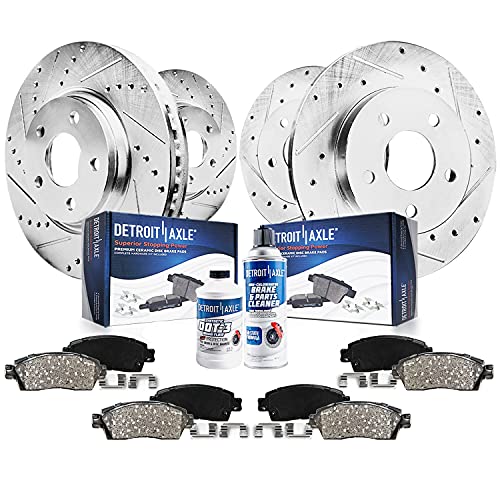
Detroit Axle – Brake Kit for 2013-2025 Nissan Altima, Drilled and Slotted
- Compatible Rotor Sizes: Fits 11.65 inch front and 11.46 inch rear rotors
- Model Compatibility: Suitable for 2013-2025 Nissan Altima
- Complete Brake Kit: Includes drilled/slotted rotors, ceramic pads, cleaner, and fluid
As an affiliate, we earn on qualifying purchases.
As an affiliate, we earn on qualifying purchases.
Frequently Asked Questions
Can You Replace Brake Rotors Yourself at Home?
Yes, you can replace brake rotors at home, but make certain you prioritize DIY safety. You’ll need basic tools like a jack, lug wrench, socket set, and possibly a brake caliper tool. Follow detailed instructions carefully to avoid damaging components or risking injury. If you’re inexperienced, consider consulting a professional. Proper safety measures and the right tools are essential for a successful and safe brake rotor replacement.
Do High-Performance Vehicles Require More Frequent Rotor Replacements?
High-performance vehicles often need more frequent rotor replacements because their rotor material and brake pad compatibility are critical for peak performance. The intense braking demands cause quicker wear, especially if you use high-quality or specialized rotors. Regularly check the rotor’s condition, and consider upgrading to better materials if needed. This way, you maintain safety and performance, preventing unnecessary damage to your braking system.
How Do Weather Conditions Affect Rotor Lifespan?
Did you know that harsh weather can cut rotor lifespan by up to 30%? Weather impact is real—rain, snow, and road salt accelerate rotor corrosion, leading to faster wear and potential brake issues. If you live in a humid or salty environment, you’ll need to monitor your rotors more closely and consider more frequent replacements. Proper maintenance and protective measures can help extend your rotor’s life despite weather challenges.
Are There Signs of Rotor Damage That Aren’t Audible or Visible?
You might not notice signs of rotor damage through sound or sight alone, especially if rotor materials or brake pad compatibility issues develop gradually. Look for subtle vibrations or uneven braking, which can indicate warped rotors. These problems often stem from incompatible brake pads or deteriorating rotor materials. Regularly inspecting your braking system and paying attention to performance changes helps catch damage early, even when visual or audible signs aren’t obvious.
What Is the Cost Difference Between OEM and Aftermarket Rotors?
The cost difference between OEM and aftermarket rotors depends on factors like brake pad compatibility and rotor material options. OEM rotors, designed specifically for your vehicle, tend to be more expensive but guarantee perfect fit and performance. Aftermarket rotors often cost less and come in various rotor material options, such as cast iron or ceramic. Your choice impacts longevity and braking efficiency, so weigh the benefits and costs carefully before making a decision.
Conclusion
Remember, replacing your brake rotors every 70,000 miles can keep your stopping power sharp and ensure safety on the road. Remarkably, studies show that worn rotors are responsible for nearly 60% of brake failures. So, don’t wait for squeaking or vibrations—stay proactive with regular inspections. By doing so, you’ll not only extend the life of your brakes but also prevent costly repairs down the road, keeping you safer with every mile you drive.