The best out-front bike lights balance useful road illumination with a secure mount and a beam that suits where you ride. I name the Magicshine RN 1500S the best overall pick for riders seeking a capable, versatile front light, while the Garmin Varia UT 800 stands out for riders invested in Garmin’s smart-light ecosystem and the Magicshine URBO for its rider-conscious cut-off beam. The main tradeoffs are raw brightness versus glare control, compactness versus battery capacity, and simple operation versus connected features. A high lumen figure alone cannot tell you whether a light will suit dark roads, city streets, or a daytime commute. Read on for how the seven options differ and which one fits your riding.

Get sports gear delivered free with Prime
- Fast, free delivery on millions of items
- Prime Video, Amazon Music and more included
- Member-only deals all year
Complete the kit


Key Takeaways
- The RN 1500S leads as the all-around choice, while buyers prioritizing a cut-off beam may prefer the URBO’s more road-conscious approach.
- The Varia UT 800 is the specialist pick: its smart-light positioning makes most sense for riders already using compatible Garmin equipment, not buyers seeking the simplest standalone light.
- Two ROCKBROS options share a 1000-lumen headline, so mounting, controls, charging, and the exact model details matter more than the repeated number when choosing between them.
- The RAVEMEN FR500 prioritizes 270-degree visibility and six modes, making it a different kind of choice from lights whose main appeal is higher stated output.
- Choosing by riding conditions beats choosing by maximum brightness: beam shape, runtime at usable settings, mount fit, and glare control can matter more on regular rides.
| Magicshine RN 1500S Bike Front Light |  | Best Overall | Maximum output: 1,500 lumens | Battery capacity: 5,000 mAh | Low-mode runtime: Up to 16 hours | VIEW LATEST PRICE | See Our Full Breakdown |
| ROCKBROS 1000 Lumens Bike Headlight USB-C Rechargeable Front Light |  | Best for Simple Battery Monitoring | Maximum brightness: 1,000 lumens | Battery capacity: 2,800 mAh | Water resistance: IPX6 | VIEW LATEST PRICE | See Our Full Breakdown |
| TOWILD CL1200 Rechargeable Bike Headlight | 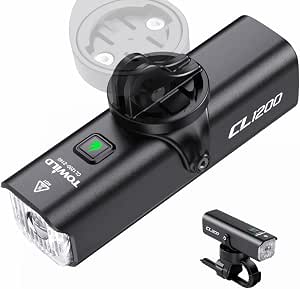 | Best for Documented Runtime | Maximum output: 1,200 lumens | Battery capacity: 5,000 mAh | Runtime: Up to 10 hours at 300 lumens; 5 hours at 600 lumens; 2.75 hours at 1,200 lumens | VIEW LATEST PRICE | See Our Full Breakdown |
| Garmin Varia UT 800 Smart Headlight with Dual Out-Front Mount |  | Best Smart-Riding Pick | Maximum output: 800 lumens | Steady high-output runtime: Up to 1.5 hours | Adjusted runtime with compatible Edge: Up to 4 hours | VIEW LATEST PRICE | See Our Full Breakdown |
| ROCKBROS 1000LM USB Rechargeable Bike Front Light |  | Best Wide-Beam Pick | Maximum output: 1,000 lumens | Beam: 90-degree wide beam | Beam range: 656 ft (200 m) | VIEW LATEST PRICE | See Our Full Breakdown |
| Magicshine URBO Bike Light Cut-off for Night Riding Rider‑safe Lightweight |  | Best Lightweight City Commuter Pick | Maximum output: 300 lumens | Stated range: 147 m | Weight: 48 g | VIEW LATEST PRICE | See Our Full Breakdown |
| RAVEMEN FR500 Rechargeable Bike Headlight, 500 Lumens, 270° Visibility, 6 Modes |  | Best for Bike-Computer Integration | Maximum output: 500 lumens | Lighting modes: 6 | Viewing angle: 270° | VIEW LATEST PRICE | See Our Full Breakdown |
| out-front bike light | Water resistance | Weight | Maximum output | Mount |
|---|---|---|---|---|
| Magicshine RN 1500S Bike Front | IPX7 | 5.82 ounces | 1,500 lumens | GoPro-style handlebar under-mount |
| ROCKBROS 1000 Lumens Bike Head | IPX6 | 136 g | — | Universal handlebar mount |
| TOWILD CL1200 Rechargeable Bik | IPX6 | 176 g | 1,200 lumens | — |
| Garmin Varia UT 800 Smart Head | IPX6 | 0.13 kg | 800 lumens | Dual out-front handlebar mount |
| ROCKBROS 1000LM USB Rechargeab | IPX6 | 150 g | 1,000 lumens | Hanging-style / handlebar mount |
| Magicshine URBO Bike Light Cut | IPX6 | 48 g | 300 lumens | Handlebar mount with quarter-turn quick release |
| RAVEMEN FR500 Rechargeable Bik | IPX6 | 101 g | 500 lumens | — |
More Details on Our Top Picks
Magicshine RN 1500S Bike Front Light
The Magicshine RN 1500S is the strongest all-round choice here for riders who want substantial road illumination without giving up long low-mode runtime. Its 1,500-lumen output exceeds the TOWILD CL1200 and both ROCKBROS lights, while the anti-glare beam is aimed at limiting dazzle for oncoming traffic. The 5,000 mAh battery also doubles as a power bank, a useful reserve for a phone or GPS on longer rides.
Its GoPro-style under-mount, included shims and wireless remote make cockpit placement and control more flexible than the simpler handlebar mount on the ROCKBROS 1000 Lumens light. The tradeoff is that this is a front light only, and fast recharging calls for a USB-C fast charger. Riders seeking a smaller, simpler setup may prefer the Garmin Varia UT 800, though it gives up peak output and battery capacity.
Pros:- 1,500-lumen maximum output with an anti-glare beam design
- 5,000 mAh battery offers up to 16 hours on low mode
- Can act as a power bank for other devices
- GoPro-style quick-release under-mount, shims and wireless remote are included
Cons:- Tail light is not included
- Fastest recharge requires a USB-C fast charger
- At 5.82 ounces, it is heavier than a minimal commuter light
Best for: Night riders who want a high-output front light, long low-mode runtime and a battery that can also top up another device.
Not ideal for: Riders who need a complete front-and-rear lighting kit or want the lightest, simplest handlebar setup.
- Maximum output:1,500 lumens
- Battery capacity:5,000 mAh
- Low-mode runtime:Up to 16 hours
- Charging:USB-C rechargeable
- Lighting modes:5
- Water resistance:IPX7
- Mount:GoPro-style handlebar under-mount
- Weight:5.82 ounces
Our verdict“Choose the RN 1500S for a versatile, high-output front light with long low-mode endurance, provided you are comfortable buying a rear light separately.”
ROCKBROS 1000 Lumens Bike Headlight USB-C Rechargeable Front Light
The ROCKBROS 1000 Lumens headlight suits riders who want a capable beam and a quick read on remaining charge. Its digital display shows battery and mode information, a practical advantage over the TOWILD CL1200, whose listed specs provide specific runtimes but no display. The 1,000-lumen ceiling is below the Magicshine RN 1500S and TOWILD CL1200, so this is better matched to everyday night rides than riders who want the most reach or output available here.
Smart auto and manual modes offer a choice between letting the light manage operation and controlling it directly. The universal handlebar mount keeps setup straightforward, and IPX6 protection suits wet-weather riding. The main uncertainty is endurance: battery capacity is listed as 2,800 mAh, but no runtime figures are provided. Compared with the ROCKBROS 1000LM USB light, this model is less specific about beam width and low-mode duration.
Pros:- Digital display shows battery level and selected mode
- Up to 1,000 lumens for routine night riding
- Smart auto and manual operation options
- IPX6 water resistance and universal handlebar mounting
Cons:- Runtime is not specified, making ride planning less certain
- 2,800 mAh capacity is smaller than the 5,000 mAh batteries in the Magicshine RN 1500S and TOWILD CL1200
- Beam range and width are not provided
Best for: Commuters who want a 1,000-lumen light with a visible battery readout and uncomplicated handlebar mounting.
Not ideal for: Riders planning long rides who need confirmed runtime figures, or those seeking the highest output in this lineup.
- Maximum brightness:1,000 lumens
- Battery capacity:2,800 mAh
- Water resistance:IPX6
- Weight:136 g
- Material:Aluminum
- Mount:Universal handlebar mount
- Operation:Smart auto and manual modes
- Power source:Battery powered
Our verdict“Pick this ROCKBROS if battery and mode visibility matter more to you than documented endurance or maximum beam output.”
TOWILD CL1200 Rechargeable Bike Headlight
The TOWILD CL1200 makes a strong case for riders who want to match brightness to a known ride duration. Unlike the ROCKBROS 1000 Lumens headlight, which lists no runtime, the CL1200 gives figures at three outputs: up to 10 hours at 300 lumens, five hours at 600 and 2.75 hours at 1,200. That makes it easier to choose a sustainable setting rather than relying on a headline brightness figure alone.
Its anti-glare beam and compatibility with Garmin quarter-turn and GoPro mounts add flexibility, especially for riders sharing a cockpit with a bike computer. The Magicshine RN 1500S offers more peak output and longer stated low-mode runtime, while the TOWILD’s 1,200 lumens are still substantial for many night rides. Its limits are clear: maximum brightness drains the battery quickly, and a full charge takes about four hours.
Pros:- Runtime figures are provided at 300, 600 and 1,200 lumens
- Anti-glare beam design aims to reduce glare for oncoming road users
- Compatible with Garmin quarter-turn and GoPro mounts
- USB-C charging and IPX6 water resistance
Cons:- Maximum-output runtime is 2.75 hours
- Charging takes about four hours
- At 176 g, it is heavier than the listed ROCKBROS 1000 Lumens model
Best for: Riders who want stated runtimes at several brightness levels and need Garmin or GoPro mount compatibility.
Not ideal for: Riders who regularly need maximum brightness for long stretches or want the longest listed low-mode runtime.
- Maximum output:1,200 lumens
- Battery capacity:5,000 mAh
- Runtime:Up to 10 hours at 300 lumens; 5 hours at 600 lumens; 2.75 hours at 1,200 lumens
- Charging:USB-C; approximately 4 hours
- Water resistance:IPX6
- Mount compatibility:Garmin quarter-turn and GoPro
- Weight:176 g
- Warranty:2 years
Our verdict“Choose the CL1200 if clear runtime expectations and flexible computer-compatible mounting matter more than the RN 1500S’s higher output and longer low-mode endurance.”
Garmin Varia UT 800 Smart Headlight with Dual Out-Front Mount
The Garmin Varia UT 800 stands apart from the higher-output Magicshine RN 1500S and TOWILD CL1200 by prioritizing automatic light control over maximum brightness. It adjusts output to ambient light, speed and ride profile, and compatible Edge computers can control brightness or switch the light on and off. That can reduce cockpit fiddling for riders already using Garmin’s ecosystem.
Its 800-lumen maximum is lower than every other light in this batch, so riders seeking a powerful beam for fast, unlit roads may be better served by the RN 1500S. The listed steady high-output runtime is up to 1.5 hours; the product description says Edge pairing can adjust brightness for up to four hours. It also offers five modes, including day and night flash, and IPX6 protection. This is a smart integration choice, not the endurance leader.
Pros:- Adjusts brightness to ambient light, speed and ride profile
- Compatible Edge computers can control light operation and brightness
- Five modes include day flash and night flash
- IPX6 water resistance
Cons:- 800-lumen maximum is the lowest among the lights in this batch
- Steady high-output runtime is listed at up to 1.5 hours
- Automatic computer features depend on compatible Garmin Edge equipment
Best for: Garmin Edge users who want a front light that can adjust to changing conditions and integrate with their cycling computer.
Not ideal for: Riders who need the strongest beam or long, uninterrupted high-output use on dark roads.
- Maximum output:800 lumens
- Steady high-output runtime:Up to 1.5 hours
- Adjusted runtime with compatible Edge:Up to 4 hours
- Lighting modes:5, including high, medium, low, night flash and day flash
- Water resistance:IPX6
- Mount:Dual out-front handlebar mount
- Weight:0.13 kg
- Material:Aluminum
Our verdict“The Varia UT 800 is the best fit for Garmin riders who value automated control more than the stronger output and longer stated runtime of the Magicshine RN 1500S.”
ROCKBROS 1000LM USB Rechargeable Bike Front Light
The ROCKBROS 1000LM is the most natural choice here for riders who value a broad field of view over a higher headline lumen count. Its 90-degree beam is specified to reach 656 feet, offering useful breadth for spotting the edges of a road or path. The Magicshine RN 1500S produces more peak output, but the ROCKBROS pairs its 1,000 lumens with a clearly described beam shape and up to nine hours of low-mode use.
The hanging-style mount can work with handlebars, bike computers, GPS units and GoPro, giving it more placement options than the basic handlebar mount on the other ROCKBROS 1000 Lumens model. Its aluminum body and IPX6 rating suit regular outdoor use, and it can also serve as a handheld flashlight. The compromises are limited mode customization, unspecified recharge time and a compact form that is not especially slim.
Pros:- 90-degree beam with a stated range of 656 feet
- Up to nine hours of runtime on low mode
- Hanging-style mount supports handlebars, computers, GPS units and GoPro
- Aluminum housing with IPX6 water resistance
Cons:- Five lighting modes may be limiting for riders who want more control
- Recharge time is not specified
- Compact size is still relatively bulky compared with ultra-slim lights
Best for: Commuters and path riders who want a wide beam, documented low-mode runtime and flexible mounting options.
Not ideal for: Riders who want a slim, minimal light or need detailed recharge-time information before planning regular use.
- Maximum output:1,000 lumens
- Beam:90-degree wide beam
- Beam range:656 ft (200 m)
- Battery capacity:4,500 mAh
- Low-mode runtime:Up to 9 hours
- Lighting modes:5
- Mount:Hanging-style / handlebar mount
- Water resistance:IPX6
- Weight:150 g
Our verdict“Choose this ROCKBROS over the Garmin Varia UT 800 if you want a wider, higher-output beam and flexible mounting rather than smart computer integration.”
Magicshine URBO Bike Light Cut-off for Night Riding Rider‑safe Lightweight
The URBO is the lineup’s strongest fit for riders who want a compact city light with a beam shaped to limit glare. Its cut-off optics direct illumination toward the road, while the vertically striped lens broadens side visibility—useful on streets shared with oncoming traffic. At 48 g, it is much lighter than the RAVEMEN FR500, though the FR500 offers more output and more lighting modes. The URBO’s stated 300 lumens and 147 m range suit commuting, twilight and daytime visibility better than fast riding on dark, unlit roads. Its USB-C charging, IPX6 protection and quick-release mount make daily use straightforward, but the product information lists only one setting, limiting flexibility. Choose it for a restrained, lightweight commuter setup; skip it if you need high output or several beam options.
Pros:- Cut-off beam directs light toward the road to reduce glare for oncoming traffic.
- At 48 g, it adds little weight to the handlebar.
- IPX6 water resistance suits wet commutes and road spray.
- USB-C charging, a battery indicator and quick-release mount support convenient daily use.
Cons:- The listed one-setting specification offers less control than the RAVEMEN FR500’s six modes.
- Its 300-lumen output is less suited to high-speed riding on unlit roads than brighter options in the roundup.
- The claimed 14.5-hour runtime applies to flash mode; low mode is listed at up to 10.5 hours.
Best for: Urban commuters and students who want a very light handlebar light with glare-conscious optics for lit streets and twilight rides.
Not ideal for: Riders regularly travelling fast on unlit roads or wanting several brightness and flash modes; its stated output is 300 lumens and the listed specs give one setting.
- Maximum output:300 lumens
- Stated range:147 m
- Weight:48 g
- Runtime:Up to 14.5 hours in flash mode; up to 10.5 hours in low mode
- Charging:USB-C; full charge in about 2 hours
- Water resistance:IPX6
- Mount:Handlebar mount with quarter-turn quick release
- Listed settings:1
Our verdict“Choose the URBO for a light, glare-conscious commuter beam on lit streets, but pick a brighter multi-mode option for dark, fast routes.”
RAVEMEN FR500 Rechargeable Bike Headlight, 500 Lumens, 270° Visibility, 6 Modes
The FR500 makes the most sense for riders building a tidy cockpit around a compatible bike computer. Garmin and Wahoo compatibility lets it work with supported computer mounts, while its 270-degree viewing angle adds visibility from the sides as well as ahead. Compared with the Magicshine URBO, it supplies more output and six modes, giving riders more choice between daytime flashing and night use—but it weighs 101 g, more than twice the URBO’s 48 g. The 500-lumen maximum is a useful step up for visibility, though it does not match the 1,000-lumen output cited for the ROCKBROS options. Its IPX6 protection and auto on/off mode suit regular riding in changeable weather. The catch is the mounting setup: an out-front mount is not included, and some computer-mount combinations are incompatible.
Pros:- Six modes provide more flexibility than the Magicshine URBO’s listed single setting.
- A 270-degree viewing angle helps make the rider visible from the sides.
- Compatible with Garmin and Wahoo computer mounts, with an auto on/off mode.
- IPX6 water resistance and a two-year warranty support regular all-weather use.
Cons:- The out-front mount is not included, adding a separate setup requirement.
- At 101 g, it is substantially heavier than the 48 g Magicshine URBO.
- Bryton compatibility needs a separately sold adapter, and the original Wahoo ELEMNT BOLT aero out-front mount is excluded.
Best for: Garmin or compatible Wahoo computer users who want a front light that can share a computer-mount setup and offers multiple daytime and night modes.
Not ideal for: Riders seeking a complete out-front mounting kit in the box, Bryton users unwilling to buy an adapter, or those needing the lightest or highest-output option.
- Maximum output:500 lumens
- Lighting modes:6
- Viewing angle:270°
- Weight:101 g
- Charging:USB-C rechargeable
- Computer compatibility:Garmin and Wahoo; Bryton with separately sold QTM04 adapter
- Water resistance:IPX6
- Dimensions:3.23 × 2.36 × 1.14 in
- Warranty:2 years
Our verdict“Pick the FR500 if computer-mount compatibility and six modes matter more than low weight or an included out-front mount.”
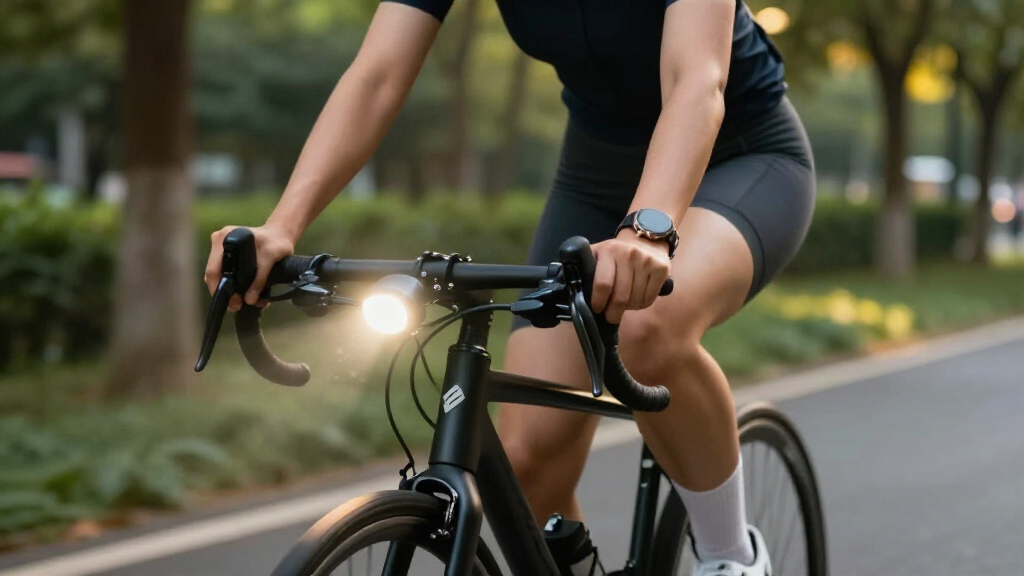
How We Picked
I compared the seven lights by how well their stated features answer real out-front lighting needs: illuminating the rider’s path, helping others notice the bike, and fitting reliably on a cockpit. I gave weight to beam design and glare control, not just lumen claims, then considered charging, mode flexibility, mounting arrangement, and whether a feature such as smart control serves a clear buyer need. These details affect everyday usability as much as headline output.
The order reflects distinct use cases rather than treating every light as interchangeable. The RN 1500S ranks first as the broadest all-round recommendation; the URBO and Varia UT 800 earn more specialized positions for beam control and connected riding. The two 1000-lumen ROCKBROS listings offer familiar high-output positioning, but their near-identical headline spec makes model-specific fit and operation important. The FR500’s 500-lumen rating is balanced against its wide visibility and mode range. I avoid treating lumen figures as directly comparable proof of real-world beam performance, since beam pattern, runtime by mode, and mounting compatibility can change the result.
| out-front bike light | Charging | Water resistance | Mount |
|---|---|---|---|
| Magicshine RN 1500S Bike Front | USB-C rechargeable | IPX7 | GoPro-style handlebar under-mount |
| ROCKBROS 1000 Lumens Bike Head | — | IPX6 | Universal handlebar mount |
| TOWILD CL1200 Rechargeable Bik | USB-C; approximately 4 hours | IPX6 | — |
| Garmin Varia UT 800 Smart Head | — | IPX6 | Dual out-front handlebar mount |
| ROCKBROS 1000LM USB Rechargeab | — | IPX6 | Hanging-style / handlebar mount |
| Magicshine URBO Bike Light Cut | USB-C; full charge in about 2 hours | IPX6 | Handlebar mount with quarter-turn quick release |
| RAVEMEN FR500 Rechargeable Bik | USB-C rechargeable | IPX6 | — |
Factors to Consider When Choosing Best Out-front Bike Lights
Before choosing a light, match it to the route and the way you mount accessories. These broader checks can prevent a common mismatch: buying for a peak-output number, then finding the beam, runtime, or cockpit fit does not suit regular rides.
Choose a beam for the roads you actually ride
On unlit roads, a useful beam needs to show the surface ahead, including bends and changes in pavement. In lit urban areas, being seen and avoiding glare may matter more than a long, intense beam. A cut-off pattern can help direct light down toward the road, but it may not suit every route or mounting angle. Avoid assuming that two lights with similar lumen figures illuminate the same area. Check whether the manufacturer describes beam shape and intended use, and consider where the light will sit relative to your handlebars. If your rides mix dark lanes and city streets, mode flexibility can be more useful than a single maximum-output setting.
Treat lumen claims as a starting point, not a buying verdict
Maximum lumens describe a light’s stated output at a particular setting, not how much of the road the beam covers or how long that setting lasts. A broad, well-aimed beam can be more practical than a brighter hotspot that leaves the edges dark. Runtime claims also vary by mode, so compare the setting you would actually use rather than the longest advertised duration alone. Frequent night riders may value a light with a dependable medium mode more than one whose brightest mode is rarely sustainable. For daytime use, a conspicuous flash pattern may serve a different purpose from steady illumination. When product information does not give runtime for each mode, treat that uncertainty as a reason to check further before buying.
Check mount compatibility before adding cockpit accessories
Out-front lights can share handlebar space with a bike computer, bell, or other accessories, so confirm the mount style and the bar diameter it supports. A dual out-front arrangement may suit a computer-and-light setup, but it can be unnecessary if you have a simple cockpit. Look at whether the light can be removed easily for charging or security without disturbing the rest of the mount. Riders on rough roads should favor a secure attachment over a quick-release mechanism that feels convenient on paper but shifts when riding. If your handlebars have an unusual shape or limited space, verify fit rather than assuming a standard clamp will work. A poorly positioned light can also point too high, increasing glare for oncoming traffic.
Match battery and charging habits to ride length
USB-C charging can make topping up simpler when your other devices use the same cable, but charging convenience does not reveal actual runtime. Think about your longest regular ride, whether you use steady or flashing modes, and whether you can recharge between outings. A compact light may be easier to carry and mount, while a larger battery can be more reassuring for extended night rides. Do not plan around the maximum runtime unless it applies to the mode and output you need. If you commute after dark, a low-battery indicator or predictable charging routine can matter more than an extra mode. Check whether the light can operate while charging only if that feature is clearly specified and relevant to your riding.
Decide whether smart features earn their place
Connected lighting can be useful when it works smoothly with equipment you already own, but it adds compatibility questions that a standalone light avoids. Before paying for smart control, check which devices and functions are supported and whether setup depends on a particular ecosystem. A rider who wants to switch on a light and ride may prefer straightforward physical controls. Someone with compatible cycling electronics may value coordinated operation enough to accept extra setup. Avoid choosing a smart model simply because it sounds more advanced; the benefit depends on your actual setup. Also check whether the light remains usable through its direct controls if you do not want to connect it for every ride.
Prioritize visibility without creating glare
A front light has two jobs: helping you see and helping others see you. Wider side visibility can help at intersections, while a focused forward beam may serve better on dark roads; those aims are related but not identical. Point the light down enough to illuminate the road without shining into other people’s eyes, and recheck its angle after removing or adjusting the mount. More output is not always better in traffic, especially when the beam has no clear cut-off. Riders who mostly travel in well-lit areas may be better served by conspicuity and side visibility than by maximum forward brightness. Consider a separate backup light for long or remote rides, since any rechargeable unit can run out of charge or fail.
Frequently Asked Questions
Is a 1000-lumen light automatically better than the 500-lumen RAVEMEN FR500?
No. The lumen number describes stated light output, but it does not show beam shape, how much light reaches the road, or how long a mode lasts. The FR500’s 270-degree visibility and six modes may suit riders who want side visibility and flexible use, while a higher-output option may better fit darker routes if its beam and runtime meet your needs. Compare the beam design and mode-specific runtime where available. Choose for your route rather than treating the largest number as a universal win.
Should I pick the Garmin Varia UT 800 if I do not use a Garmin bike computer?
The Varia UT 800 is easiest to justify when its smart-light features and dual out-front mount fit equipment you already use. Without compatible Garmin devices, check whether its standalone controls and mounting arrangement still offer a clear advantage for your setup. A simpler USB-rechargeable light may mean less setup and fewer compatibility questions. The right choice depends on whether connected control solves a routine problem for you. Confirm the specific features supported by your device before buying.
How do I choose between the two ROCKBROS 1000-lumen lights?
The two listings have similar stated output, so the headline lumen figure does not settle the choice. Compare the exact model identifiers and manufacturer details for mounting, charging, control layout, and modes, since similarly named lights can differ in practical ways. Check that the mount suits your handlebar and leaves room for a computer or other accessories. Look for runtime information at the output setting you plan to use. If those details are unclear, avoid assuming the products are identical just because both say 1000 lumens.
Do I need a cut-off beam for everyday riding?
A cut-off beam can help direct light toward the road rather than into the eyes of oncoming riders and drivers, which is useful on shared or lit streets. It is not a universal requirement: riders on unlit roads may prioritize seeing farther and around bends. Mount angle and beam pattern both affect glare, so even a rider-conscious design needs careful aiming. The Magicshine URBO is the lineup’s specific cut-off-beam option, while other picks may suit different priorities. Choose based on where you ride most often, not only on the feature label.
When is it worth choosing a light with a higher stated output?
Higher output can help on dark, unlit routes where you need to see road defects and changes in direction, but it matters less on streets with strong lighting. A brighter setting may use battery more quickly, and a poorly aimed beam can create glare without improving your view. Consider your usual ride length and whether the light has a practical middle setting, not just a maximum mode. If most of your riding is in town, visibility to others and manageable beam control may deliver more value. For longer night rides, compare usable-mode runtime before choosing based on output alone.
Conclusion
I would choose the Magicshine RN 1500S as the best overall for riders who want the broadest all-around fit in this lineup. For best value, compare the two ROCKBROS 1000-lumen models by their exact mounting, charging, and mode details rather than assuming their shared output claim makes them interchangeable. The Garmin Varia UT 800 is the best premium-style pick for riders who can use its smart-light setup, while the Magicshine URBO is my best choice for riders who prioritize a cut-off beam. Beginners who want a straightforward standalone option should favor clear controls, a secure mount, and a manageable set of modes; the RN 1500S is the most balanced place to start, subject to checking fit and runtime details. For specific needs, choose the RAVEMEN FR500 for its 270-degree visibility, the URBO for cut-off beam design, or the Varia UT 800 for compatible Garmin integration.
Halloween Picks
halloween
As an affiliate, we earn on qualifying purchases.