
For most high-end gaming rigs, I would start with the ASUS TUF Gaming RTX 5080: its 16GB of GDDR7 and premium cooling make it a strong all-around choice, while the Radeon RX 9070 XT models stand out for buyers prioritizing 16GB of memory and gaming performance without stepping up to an RTX 5090. The RTX 5090 is the pick for maximum headroom, but its class of performance can demand more from your case, power supply, and budget. The main tradeoffs are raw speed versus system fit, newer features versus older flagship hardware, and premium cooling versus simpler designs. I compare all 14 cards by gaming role, memory, cooling, and practical build requirements below.

Get sports gear delivered free with Prime
- Fast, free delivery on millions of items
- Prime Video, Amazon Music and more included
- Member-only deals all year
Complete the kit


Key Takeaways
- The RTX 5080 models offer the broadest high-end fit: several versions provide 16GB of GDDR7, but cooler design, card dimensions, and power planning separate them more than the GPU name alone.
- RX 9070 XT cards form the strongest AMD cluster: the ASUS Prime, GIGABYTE Gaming OC, and ASRock Steel Legend all pair 16GB with different cooling and chassis considerations.
- The RTX 5090 is a specialist choice, not a default upgrade: its 32GB memory gives it the most headroom here, but the supporting system must suit a particularly demanding flagship card.
- Midrange models can be premium choices for the right display: the RTX 5070, RTX 5070 Ti, and RTX 5060 Ti 16GB serve different performance and memory needs rather than replacing the faster 5080 tier.
- Older flagships need a use-case check: the RTX 4080 and RTX 3090 Ti may still interest buyers with specific compatibility or workload priorities, but age and platform demands matter alongside headline performance.
| ASUS Prime Radeon RX 9070 XT 16GB GDDR6 OC Edition Gaming Graphics Card |  | Best Balanced AMD Pick | GPU: AMD Radeon RX 9070 XT | Memory: 16GB GDDR6 | OC-mode clock: Up to 3030 MHz | VIEW ON AMAZON | See Our Full Breakdown |
| NVIDIA GeForce RTX 4080 16GB GDDR6X Graphics Card |  | Best for Ray-Tracing-Focused Builds | Graphics processor: NVIDIA GeForce RTX 4080 | Memory: 16GB GDDR6X | CUDA cores: 9,728 | VIEW ON AMAZON | See Our Full Breakdown |
| ASUS TUF Gaming GeForce RTX 5070 Ti 16GB GDDR7 OC Edition Graphics Card |  | Best for Durable, Feature-Rich Builds | GPU: NVIDIA GeForce RTX 5070 Ti | Memory: 16GB GDDR7 | GPU clock: 2610 MHz | VIEW ON AMAZON | See Our Full Breakdown |
| GIGABYTE Radeon RX 9070 XT Gaming OC 16G Graphics Card |  | Best for RGB-Focused AMD Builds | GPU: AMD Radeon RX 9070 XT | Memory: 16GB GDDR6 | Interface: PCIe 5.0 | VIEW ON AMAZON | See Our Full Breakdown |
| MSI GeForce RTX 5080 16G SUPRIM Liquid SOC Graphics Card |  | Best Premium Liquid-Cooled Pick | Chipset: NVIDIA GeForce RTX 5080 | Video memory: 16GB GDDR7 | Memory interface: 256-bit | VIEW ON AMAZON | See Our Full Breakdown |
| GIGABYTE GeForce RTX 5080 Gaming OC 16G Graphics Card |  | Best Overall | Graphics coprocessor: NVIDIA GeForce RTX 5080 | Memory: 16GB GDDR7 | GPU clock speed: 2.73 GHz | VIEW ON AMAZON | See Our Full Breakdown |
| ASUS Prime RTX 5070 NVIDIA GeForce Graphics Card |  | Best for Compact Premium Builds | Graphics coprocessor: NVIDIA GeForce RTX 5070 | Memory: 12GB GDDR7 | GPU clock speed: 2542 MHz | VIEW ON AMAZON | See Our Full Breakdown |
| MSI Gaming RTX 5080 16G Ventus 3X OC Black Graphics Card |  | Best for Multi-Display Gaming Setups | Chipset: NVIDIA GeForce RTX 5080 | Video memory: 16GB GDDR7 | Memory interface: 256-bit | VIEW ON AMAZON | See Our Full Breakdown |
| ASUS Prime GeForce RTX 5060 Ti 16GB GDDR7 Gaming Graphics Card |  | Best for Memory-Heavy Builds on a Lower GPU Tier | Graphics coprocessor: NVIDIA GeForce RTX 5060 Ti | Memory: 16GB GDDR7 | GPU clock speed: 2602 MHz | VIEW ON AMAZON | See Our Full Breakdown |
| ASUS TUF Gaming GeForce RTX 5070 12GB GDDR7 OC Edition Graphics Card |  | Best for Rugged, Feature-Rich RTX 5070 Builds | Graphics coprocessor: NVIDIA GeForce RTX 5070 | Memory: 12GB GDDR7 | GPU clock speed: 2640 MHz | VIEW ON AMAZON | See Our Full Breakdown |
| ASRock Radeon RX 9070 XT Steel Legend 16GB Graphics Card | 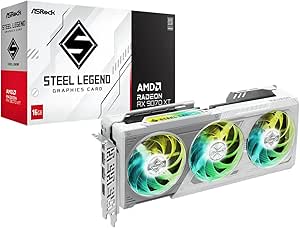 | Best for AMD-Focused 4K Builds | Graphics processor: AMD Radeon RX 9070 XT | Memory: 16GB GDDR6 | Boost clock: 2970 MHz | VIEW ON AMAZON | See Our Full Breakdown |
| ASUS TUF Gaming GeForce RTX 5090 32GB GDDR7 OC Edition Graphics Card |  | Best for Uncompromising Flagship Builds | Graphics processor: NVIDIA GeForce RTX 5090 | Memory: 32GB GDDR7 | GPU clock speed: 2580 MHz | VIEW ON AMAZON | See Our Full Breakdown |
| NVIDIA GeForce RTX 3090 Ti Founders Edition |  | Best for a High-Memory Previous-Generation Build | Graphics processor: NVIDIA GeForce RTX 3090 Ti | GPU series: NVIDIA RTX 30 Series | Memory: 24GB GDDR6 | VIEW ON AMAZON | See Our Full Breakdown |
| ASUS TUF Gaming GeForce RTX 5080 16GB GDDR7 OC Edition Graphics Card | 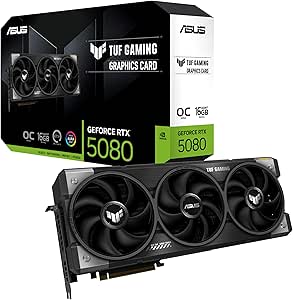 | Best Premium Balanced NVIDIA Pick | GPU architecture: NVIDIA Blackwell | Memory: 16GB GDDR7 | Boost clock: 2730 MHz | VIEW ON AMAZON | See Our Full Breakdown |
| premium graphics cards for gaming rig | Memory | Interface | Warranty | Video outputs |
|---|---|---|---|---|
| ASUS Prime Radeon RX 9070 XT 1 | 16GB GDDR6 | — | — | — |
| NVIDIA GeForce RTX 4080 16GB G | 16GB GDDR6X | PCI Express 4.0 | — | — |
| ASUS TUF Gaming GeForce RTX 50 | 16GB GDDR7 | PCI Express x16 | 3 years | — |
| GIGABYTE Radeon RX 9070 XT Gam | 16GB GDDR6 | PCIe 5.0 | — | — |
| MSI GeForce RTX 5080 16G SUPRI | — | — | 3 years | 3 x DisplayPort 2.1a, HDMI 2.1b |
| GIGABYTE GeForce RTX 5080 Gami | 16GB GDDR7 | PCI-Express x16 | — | DisplayPort, HDMI |
| ASUS Prime RTX 5070 NVIDIA GeF | 12GB GDDR7 | PCI-Express x16 | 3 years | HDMI 2.1, DP 2.1 |
| MSI Gaming RTX 5080 16G Ventus | — | — | 3 years | — |
| ASUS Prime GeForce RTX 5060 Ti | 16GB GDDR7 | PCI-Express x16 | 3 years | DisplayPort, HDMI |
| ASUS TUF Gaming GeForce RTX 50 | 12GB GDDR7 | PCI-Express x16 | 3 years | 3 × DisplayPort 2.1a, 2 × HDMI 2.1b |
| ASRock Radeon RX 9070 XT Steel | 16GB GDDR6 | PCI-Express x16 | 2 years | DisplayPort 2.1a, HDMI 2.1b |
| ASUS TUF Gaming GeForce RTX 50 | 32GB GDDR7 | PCI-Express x16 | 3 years | 3 × DisplayPort 2.1a, 2 × HDMI 2.1b |
| NVIDIA GeForce RTX 3090 Ti Fou | 24GB GDDR6 | PCI Express | — | — |
| ASUS TUF Gaming GeForce RTX 50 | 16GB GDDR7 | — | — | — |
More Details on Our Top Picks
ASUS Prime Radeon RX 9070 XT 16GB GDDR6 OC Edition Gaming Graphics Card
I’d place the ASUS Prime RX 9070 XT among the most balanced choices here for a premium gaming build that favors a capable AMD card without moving to liquid cooling. Its 16GB of GDDR6 and OC-mode clock up to 3030 MHz give it a strong gaming-focused feature set, while the 2.5-slot format is slimmer than the ASUS TUF RTX 5070 Ti at 3.125 slots. Axial-tech fans, dual-ball bearings, and a phase-change thermal pad are aimed at sustained cooling, and dual BIOS profiles let builders choose between performance and quieter operation.
The tradeoff is that it lacks the supplied display and ray-tracing detail of the NVIDIA GeForce RTX 4080, so buyers prioritizing those documented capabilities may prefer that card. Its 2.5-slot design still needs case clearance, and the OC and BIOS options may be more complexity than a casual plug-and-play buyer wants.
Pros:- 16GB GDDR6 memory and OC-mode clock up to 3030 MHz
- Axial-tech fans and phase-change thermal pad support cooling under gaming loads
- Dual BIOS provides performance and quiet profile choices
- Dual-ball fan bearings are designed for durability
Cons:- 2.5-slot thickness may rule it out of some compact cases
- Supplied specifications do not detail ray-tracing support or display outputs
- Multiple BIOS and performance settings may be unnecessary for casual builders
Best for: AMD-focused gaming PC builders who want a factory-overclocked 16GB card with cooling and BIOS options for performance or quieter operation.
Not ideal for: Small-case builders who cannot spare 2.5 slots, or buyers who want clearly specified NVIDIA ray-tracing and display capabilities.
- GPU:AMD Radeon RX 9070 XT
- Memory:16GB GDDR6
- OC-mode clock:Up to 3030 MHz
- Default-mode clock:3010 MHz
- Card design:2.5-slot
- Cooling:Axial-tech fans, phase-change thermal pad, dual-ball bearings
- BIOS:Customizable dual BIOS profiles
Our verdict“Choose the ASUS Prime RX 9070 XT if you want a cooled and configurable AMD gaming card, but compare its case fit and feature details against the slimmer-profile options before buying.”
NVIDIA GeForce RTX 4080 16GB GDDR6X Graphics Card
I’d favor the GeForce RTX 4080 for a gaming rig where the stated priority is NVIDIA ray tracing and a substantial set of graphics-processing resources. Its 9,728 CUDA cores, 2.51 GHz boost clock, and 16GB of GDDR6X are paired with support for DirectX 12 Ultimate and Vulkan RT. That gives buyers a clear reason to choose it over the ASUS Prime RX 9070 XT, whose supplied details emphasize cooling and BIOS flexibility rather than named ray-tracing APIs.
This card is a less compelling fit for someone choosing mainly by newer memory type or customized cooling: the ASUS TUF RTX 5070 Ti lists GDDR7 and three fans, while this RTX 4080 listing specifies two fans and GDDR6X. It also calls for a compatible high-end system and may draw substantial power. I’d shortlist it for feature-led NVIDIA gaming, not for a compact or low-power build.
Pros:- 16GB GDDR6X memory
- 9,728 CUDA cores and a 2.51 GHz boost clock
- Supports ray tracing, DirectX 12 Ultimate, and Vulkan RT
- Lists a maximum display resolution of 3840×2160
Cons:- Requires a compatible high-end system
- Potentially high power consumption
- Specified two-fan cooling may be less suited to buyers seeking a larger multi-fan cooler
Best for: NVIDIA-focused players building a high-end desktop around ray tracing, DirectX 12 Ultimate, and Vulkan RT support.
Not ideal for: Compact or power-conscious PC builders, and buyers who specifically want GDDR7 or a three-fan cooler.
- Graphics processor:NVIDIA GeForce RTX 4080
- Memory:16GB GDDR6X
- CUDA cores:9,728
- Boost clock:2.51 GHz
- Interface:PCI Express 4.0
- Display outputs:DisplayPort, HDMI
- Maximum display resolution:3840×2160
- Fans:2
Our verdict“Pick the RTX 4080 when its documented NVIDIA ray-tracing support matters more to your build than GDDR7 or newer-model cooling features.”
ASUS TUF Gaming GeForce RTX 5070 Ti 16GB GDDR7 OC Edition Graphics Card
The ASUS TUF RTX 5070 Ti is the fit I’d shortlist for builders who want a robustly specified NVIDIA card and have room for a large cooler. Its 16GB GDDR7, three axial-tech fans, and military-grade components set it apart from the NVIDIA GeForce RTX 4080, which lists GDDR6X and two fans. The multiple outputs—three DisplayPort 2.1a and two HDMI 2.1b—also give a multi-display gaming setup more connection options than the output details supplied for the RTX 4080.
That hardware comes with a meaningful fit and power tradeoff: this is a 3.125-slot card, and the listing calls for at least an 850W PSU with a 12V-2×6 connector. I’d skip it if the case is tight or the power supply needs replacing just to support the card. Compared with the liquid-cooled MSI RTX 5080 SUPRIM, it offers conventional three-fan cooling rather than a liquid setup.
Pros:- 16GB GDDR7 memory and 2610 MHz GPU clock
- Three axial-tech fans and advanced thermal management
- Military-grade components and protective PCB coating
- Three DisplayPort 2.1a and two HDMI 2.1b outputs
Cons:- 3.125-slot design needs substantial case clearance
- Requires a minimum 850W PSU with a 12V-2×6 connector
- Potentially high power consumption
Best for: Enthusiast PC builders who want 16GB GDDR7, a durable air-cooled design, and several DisplayPort and HDMI connections.
Not ideal for: Owners of compact cases or systems without an 850W PSU and 12V-2×6 connector.
- GPU:NVIDIA GeForce RTX 5070 Ti
- Memory:16GB GDDR7
- GPU clock:2610 MHz
- Interface:PCI Express x16
- Display outputs:3 x DisplayPort 2.1a, 2 x HDMI 2.1b
- Fans:3
- Card dimensions:13 x 5.5 inches
- Power supply requirement:Minimum 850W PSU with 12V-2×6 connector
- Warranty:3 years
Our verdict“Choose the TUF RTX 5070 Ti if your case and power supply can handle its size and requirements and you value its GDDR7 memory, cooling, and output selection.”
GIGABYTE Radeon RX 9070 XT Gaming OC 16G Graphics Card
I’d choose the GIGABYTE RX 9070 XT Gaming OC when a gaming rig’s visual style matters alongside its AMD graphics card. The supplied details pair 16GB GDDR6 and PCIe 5.0 with WINDFORCE cooling and RGB lighting, making it a straightforward alternative to the ASUS Prime RX 9070 XT. Both are RX 9070 XT cards with 16GB GDDR6, but ASUS provides more specific information about clock speeds, dual BIOS, bearings, and its 2.5-slot design; GIGABYTE’s description instead foregrounds its lighting and cooling system.
That lack of detail is the main limitation for a careful parts planner: the provided listing does not state dimensions, clock speed, fan count, or display outputs. I’d pick it for a build where WINDFORCE cooling and RGB are the draw, but favor the ASUS if documented BIOS options and physical fit matter more. Potentially high power use is another reason to check whole-system compatibility.
Pros:- 16GB GDDR6 memory
- WINDFORCE cooling system
- RGB lighting for a customized build
- PCIe 5.0 interface
Cons:- Supplied specifications omit dimensions, fan count, and clock speed
- Display output details are not provided
- Potentially high power consumption
Best for: AMD gaming PC builders who want a 16GB RX 9070 XT with RGB lighting and WINDFORCE cooling as part of a coordinated build.
Not ideal for: Buyers who need confirmed card dimensions, fan count, clock speed, or display connections before planning a case and system.
- GPU:AMD Radeon RX 9070 XT
- Memory:16GB GDDR6
- Interface:PCIe 5.0
- Cooling system:WINDFORCE
- Lighting:RGB
Our verdict“Choose the GIGABYTE RX 9070 XT for its stated RGB and WINDFORCE features, but prefer the ASUS Prime when more complete fit and operating details are a priority.”
MSI GeForce RTX 5080 16G SUPRIM Liquid SOC Graphics Card
The MSI RTX 5080 SUPRIM Liquid SOC is the specialist choice here for a premium rig built around liquid-cooled graphics. Its 16GB GDDR7, 2760 MHz GPU clock, and liquid cooling distinguish it from the air-cooled ASUS TUF RTX 5070 Ti, whose three fans make a more conventional choice. MSI also lists three DisplayPort 2.1a outputs, HDMI 2.1b, and support for resolutions up to 7680 x 4320, giving buyers a detailed connection and resolution profile.
Liquid cooling is not a free upgrade in convenience: it adds a cooling setup to plan for, so I’d only choose this model if the case can accommodate it and that approach suits the build. Its 256-bit memory interface and 16GB capacity are stated, but the product data does not specify cooler dimensions or power requirements. Compared with the RTX 4080, this is the more distinctive cooling-focused option, though the RTX 4080’s supplied ray-tracing support is more explicit.
Pros:- 16GB GDDR7 memory with a 256-bit interface
- Liquid cooling for thermal management
- 2760 MHz GPU clock
- Three DisplayPort 2.1a outputs, HDMI 2.1b, and maximum resolution of 7680 x 4320
Cons:- Liquid cooling adds installation and case-planning needs
- Product data does not specify power requirements
- Product data does not provide cooler dimensions
Best for: Enthusiast builders planning a liquid-cooled gaming rig who want an RTX 5080 with GDDR7 and modern display outputs.
Not ideal for: Buyers seeking a simple air-cooled installation, or those who need confirmed cooler dimensions and power requirements before selecting a case and PSU.
- Chipset:NVIDIA GeForce RTX 5080
- Video memory:16GB GDDR7
- Memory interface:256-bit
- GPU clock:2760 MHz
- Cooling:Liquid cooling
- Video outputs:3 x DisplayPort 2.1a, HDMI 2.1b
- Maximum resolution:7680 x 4320
- Dimensions:10.5 x 4.4 inches
- Warranty:3 years
Our verdict“Pick the MSI RTX 5080 SUPRIM Liquid SOC if liquid cooling is part of your build plan; choose the air-cooled TUF RTX 5070 Ti for a simpler cooler setup.”
GIGABYTE GeForce RTX 5080 Gaming OC 16G Graphics Card
For a premium gaming rig where high-end performance matters more than compact dimensions, I’d put the GIGABYTE RTX 5080 Gaming OC near the top of this group. Its 16GB of GDDR7 and listed 2.73 GHz GPU clock pair a strong graphics tier with memory suited to demanding games and creative workloads. Compared with the ASUS Prime RTX 5070, this card is the better fit for buyers targeting more demanding settings, while the ASUS Prime RTX 5060 Ti’s 16GB capacity does not put it in the same GPU class.
The three-fan WINDFORCE cooler and support for displays up to 7680×4320 give it a broad enthusiast remit. The tradeoff is physical: at 13.46 inches long, it needs a roomy case, and the data does not specify power requirements. I’d skip it for compact builds or buyers whose gaming needs fit a lower-tier card.
Pros:- RTX 5080 graphics with 16GB GDDR7 memory
- Three-fan WINDFORCE cooling system
- Listed GPU clock speed of 2.73 GHz
- Supports maximum resolution up to 7680×4320
Cons:- 13.46-inch length can rule it out for shorter cases
- The provided specifications do not state power requirements
- Its performance tier may be unnecessary for less demanding gaming builds
Best for: Enthusiasts building a spacious desktop for demanding gaming, high-resolution displays, and occasional creative workloads.
Not ideal for: Small-form-factor builders or players who do not need RTX 5080-class graphics performance and would rather choose a less demanding card.
- Graphics coprocessor:NVIDIA GeForce RTX 5080
- Memory:16GB GDDR7
- GPU clock speed:2.73 GHz
- Memory clock speed:30000 MHz
- Cooling fans:3
- Interface:PCI-Express x16
- Video outputs:DisplayPort, HDMI
- Maximum resolution:7680×4320 pixels
- Dimensions:13.46 × 5.59 inches
Our verdict“Choose this RTX 5080 for a spacious premium rig that needs high-end gaming capability, but not for a compact or modestly equipped build.”
ASUS Prime RTX 5070 NVIDIA GeForce Graphics Card
The ASUS Prime RTX 5070 is the lineup’s more space-conscious route to a premium gaming GPU. Its 2.5-slot design is slimmer than the ASUS TUF RTX 5070’s stated 3.125-slot footprint, which can make component planning easier in a tighter build. The 12GB of GDDR7 and 2542 MHz listed clock place it below the GIGABYTE RTX 5080 in this roundup’s performance hierarchy, but that difference can be a sensible trade when fitting a smaller desktop matters more than pursuing the higher GPU tier.
Three axial-tech fans and a three-year warranty add practical reassurance, while HDMI 2.1 and DP 2.1 support modern displays. At 12 inches long, it is not a tiny card, so I would check case clearance rather than assume it fits every compact enclosure. Buyers seeking the strongest listed graphics tier here should look to an RTX 5080 instead.
Pros:- Slimmer 2.5-slot design than the ASUS TUF RTX 5070
- 12GB GDDR7 memory
- Three axial-tech fans
- Three-year warranty
Cons:- 12GB memory is less than the 16GB on the RTX 5080 and RTX 5060 Ti picks
- Its 12-inch length still calls for careful case-clearance checks
- Below the RTX 5080 cards in the lineup’s graphics tier
Best for: Small-form-factor builders who want an RTX 5070-class card and have a case that can accommodate a 12-inch, 2.5-slot GPU.
Not ideal for: Buyers chasing the highest performance tier in this selection, or those with very short cases that cannot fit its 12-inch length.
- Graphics coprocessor:NVIDIA GeForce RTX 5070
- Memory:12GB GDDR7
- GPU clock speed:2542 MHz
- Slot design:2.5-slot
- Cooling fans:3 axial-tech fans
- Video outputs:HDMI 2.1, DP 2.1
- Interface:PCI-Express x16
- Maximum resolution:7680×4320 pixels
- Warranty:3 years
Our verdict“Pick this card for a compact build that can fit its 2.5-slot frame and does not need RTX 5080-class performance.”
MSI Gaming RTX 5080 16G Ventus 3X OC Black Graphics Card
The MSI Ventus 3X OC earns a distinct place here through its clearly specified display connections: three DisplayPort 2.1a outputs and one HDMI 2.1b. That makes it a natural match for a premium rig built around several modern displays. Like the GIGABYTE RTX 5080 Gaming OC, it uses an RTX 5080 GPU with 16GB GDDR7, so both target buyers seeking a higher graphics tier than the ASUS Prime RTX 5070.
MSI lists a 2640 MHz GPU clock and 256-bit memory interface, but the GIGABYTE model’s listed clock is higher at 2.73 GHz; those figures alone do not settle real-world performance. This card’s provided data also leaves dimensions and fan count unspecified, so case fit and cooling details need checking before purchase. It suits display-heavy builds, but buyers wanting fuller physical specifications may prefer a more completely documented option.
Pros:- RTX 5080 GPU with 16GB GDDR7
- Three DisplayPort 2.1a outputs plus HDMI 2.1b
- 256-bit memory interface
- Listed GPU clock speed of 2640 MHz
Cons:- Dimensions and fan count are not provided in the supplied specifications
- The listed GPU clock is lower than the GIGABYTE RTX 5080 Gaming OC’s 2.73 GHz figure
- Case fit and cooling characteristics need additional verification
Best for: Enthusiasts building an RTX 5080 gaming desktop with multiple DisplayPort monitors and a compatible case.
Not ideal for: Buyers who need confirmed card dimensions or fan specifications before checking fit, or players whose needs are met by the lower-tier ASUS Prime RTX 5070.
- Chipset:NVIDIA GeForce RTX 5080
- Video memory:16GB GDDR7
- Memory interface:256-bit
- GPU clock speed:2640 MHz
- DisplayPort outputs:3 × DisplayPort 2.1a
- HDMI output:HDMI 2.1b
- Maximum resolution:7680×4320
- Warranty:3 years
Our verdict“Choose the MSI Ventus 3X OC when its four modern display outputs suit your RTX 5080 setup and you can verify the card’s fit separately.”
ASUS Prime GeForce RTX 5060 Ti 16GB GDDR7 Gaming Graphics Card
The ASUS Prime RTX 5060 Ti stands out for pairing a 16GB GDDR7 frame buffer with a lower GPU tier than the RTX 5070 and RTX 5080 cards in this group. That combination may appeal to players whose workloads benefit from memory capacity but who do not need the RTX 5080 class represented by the GIGABYTE Gaming OC. I would not treat the matching 16GB figure as a sign that it performs like those RTX 5080 models: memory capacity and graphics-processing tier are different parts of the decision.
A three-fan cooler, 2.5-slot format, and listed 2602 MHz clock give the card a substantial desktop configuration, while the 12-inch length still needs a case check. Its provided specs list DisplayPort and HDMI but do not give specific versions or port counts. For buyers focused on maximum graphics performance, the ASUS Prime RTX 5070 or an RTX 5080 is the clearer step up.
Pros:- 16GB GDDR7 memory
- Three-fan cooling design
- Listed GPU clock speed of 2602 MHz
- Maximum display resolution up to 7680×4320
Cons:- RTX 5060 Ti sits below the RTX 5070 and RTX 5080 models in this selection
- 12-inch length and 2.5-slot thickness limit case compatibility
- Specific output versions and port counts are not supplied
Best for: Desktop gamers who want 16GB of GDDR7 memory and a mid-tier RTX 50 Series GPU for games or workloads that benefit from a larger frame buffer.
Not ideal for: Enthusiasts prioritizing the highest gaming performance in this roundup, or compact-PC builders unable to fit a 12-inch, 2.5-slot card.
- Graphics coprocessor:NVIDIA GeForce RTX 5060 Ti
- Memory:16GB GDDR7
- GPU clock speed:2602 MHz
- Cooling fans:3
- Interface:PCI-Express x16
- Video outputs:DisplayPort, HDMI
- Maximum resolution:7680×4320 pixels
- Dimensions:12 × 4.7 inches
- Warranty:3 years
Our verdict“Choose the Prime RTX 5060 Ti if 16GB of memory matters more to your build than moving up to the higher-tier RTX 5070 or RTX 5080 GPUs.”
ASUS TUF Gaming GeForce RTX 5070 12GB GDDR7 OC Edition Graphics Card
The ASUS TUF RTX 5070 is the sturdier, more connection-rich alternative to the slimmer ASUS Prime RTX 5070. It pairs the same RTX 5070 and 12GB GDDR7 class with a listed 2640 MHz clock, military-grade components, and a protective PCB coating. Those construction details make it a fit for buyers who value a reinforced card design alongside gaming performance, rather than choosing the Prime mainly for its 2.5-slot footprint.
Its three-fan cooling and five listed video outputs—three DisplayPort 2.1a and two HDMI 2.1b—also suit multi-display rigs. The cost of that larger design is physical: the card is 13 inches long and 3.125 slots thick, while the Prime is slimmer and shorter. I’d favor the TUF when durability features and ports matter, but skip it if case clearance is tight or the RTX 5080 tier better matches your performance target.
Pros:- RTX 5070 GPU with 12GB GDDR7
- Military-grade components and protective PCB coating
- Three-fan cooling system
- Three DisplayPort 2.1a and two HDMI 2.1b outputs
Cons:- 3.125-slot thickness can restrict case and adjacent-slot clearance
- 13-inch length requires a spacious case
- Buyers seeking a higher graphics tier should compare it with the RTX 5080 options
Best for: Builders seeking an RTX 5070 with reinforced construction, three-fan cooling, and several display connections in a roomy desktop case.
Not ideal for: Small-case builders or buyers who want a slimmer RTX 5070; the ASUS Prime RTX 5070 has a 2.5-slot design versus this card’s 3.125-slot footprint.
- Graphics coprocessor:NVIDIA GeForce RTX 5070
- Memory:12GB GDDR7
- GPU clock speed:2640 MHz
- Cooling fans:3
- Video outputs:3 × DisplayPort 2.1a, 2 × HDMI 2.1b
- Interface:PCI-Express x16
- Maximum resolution:7680×4320 pixels
- Dimensions:13 × 5.5 inches
- Warranty:3 years
Our verdict“Choose the TUF RTX 5070 for its reinforced build and broad output selection if your case has room for its 3.125-slot frame.”
ASRock Radeon RX 9070 XT Steel Legend 16GB Graphics Card
I’d choose the ASRock RX 9070 XT Steel Legend for a premium gaming rig that needs a factory-overclocked AMD card without moving to the exceptionally large RTX 5090 tier. Its 16GB of GDDR6 and 2970 MHz boost clock suit high-resolution gaming, while DisplayPort 2.1a and HDMI 2.1b provide modern display connections. The triple-fan cooler and reinforced frame are useful in a full-size case, but this card asks for an 800W power supply and two 8-pin connectors, so an existing system may need upgrades. Compared with the ASUS TUF RTX 5080, it’s the AMD-oriented alternative, not a direct promise of equivalent performance; buyers choosing NVIDIA features may prefer that model. I’d skip the Steel Legend for compact builds or lighter gaming needs.
Pros:- 16GB GDDR6 memory for high-resolution gaming and graphics workloads
- Factory boost clock reaches 2970 MHz
- Triple-fan cooling and reinforced metal frame
- DisplayPort 2.1a and HDMI 2.1b outputs
Cons:- Requires an 800W PSU and two 8-pin PCIe connectors
- 11.7-inch length and 5.2-inch width can constrain case fit
- Premium positioning may be excessive for casual gaming
Best for: AMD-focused builders with a roomy case, an 800W PSU, and a 4K gaming display
Not ideal for: Compact-PC owners or casual gamers who would not use its high-end GPU capacity and need an easier power fit
- Graphics processor:AMD Radeon RX 9070 XT
- Memory:16GB GDDR6
- Boost clock:2970 MHz
- Interface:PCI-Express x16
- Cooling:Triple fans
- Video outputs:DisplayPort 2.1a, HDMI 2.1b
- Dimensions:11.7 × 5.2 inches
- Warranty:2 years
Our verdict“Pick the Steel Legend if you want a factory-overclocked AMD card for a spacious 4K rig and already have the power capacity to support it.”
ASUS TUF Gaming GeForce RTX 5090 32GB GDDR7 OC Edition Graphics Card
The ASUS TUF RTX 5090 is the lineup’s pick for builders who want the largest memory buffer and are willing to build the rest of the PC around it. Its 32GB of GDDR7, PCIe 5.0 interface, and three-fan axial-tech cooling target demanding gaming and graphics workloads, while the listed outputs include three DisplayPort 2.1a and two HDMI 2.1b ports. Compared with the ASUS TUF RTX 5080, this is the more extreme choice for users prioritizing memory capacity and flagship-class hardware; the 5080 is the more restrained fit for a powerful gaming rig. The tradeoff is physical: at 13.7 inches long and about five pounds, the 5090 calls for a spacious, sturdy case. I wouldn’t choose it for a compact build or a system where size and power demands need to stay modest.
Pros:- 32GB GDDR7 memory for demanding gaming and graphics workloads
- Three axial-tech fans and vapor-chamber cooling
- Three DisplayPort 2.1a and two HDMI 2.1b outputs
- Three-year warranty
Cons:- 13.7-inch length requires careful case-clearance checks
- Approximately five-pound weight calls for sturdy card support
- Flagship positioning can be excessive for a gaming-focused build with less demanding needs
Best for: Enthusiast builders running demanding games and workloads who have a large case and a system planned around a flagship GPU
Not ideal for: Builders with compact cases, limited support for a heavy card, or no need for 32GB of graphics memory
- Graphics processor:NVIDIA GeForce RTX 5090
- Memory:32GB GDDR7
- GPU clock speed:2580 MHz
- Interface:PCI-Express x16
- Video outputs:3 × DisplayPort 2.1a, 2 × HDMI 2.1b
- Cooling:Three axial-tech fans
- Dimensions:13.7 × 5.7 inches
- Warranty:3 years
Our verdict“Choose the TUF RTX 5090 if your build can accommodate its size and weight and you specifically want 32GB of GDDR7.”
NVIDIA GeForce RTX 3090 Ti Founders Edition
I’d shortlist the RTX 3090 Ti Founders Edition for a gaming rig that also benefits from a large 24GB GDDR6 buffer. That memory capacity gives it a distinct case alongside newer cards such as the ASUS TUF RTX 5080, which uses 16GB GDDR7; the newer model is the more current architecture choice, while the 3090 Ti’s appeal here is its generous memory and support for demanding 4K gaming and workloads. The supplied product information lists a three-fan cooler and HDMI output, but does not specify a boost clock or a full set of display connections, so I wouldn’t choose it based on unlisted capabilities. Its high power draw and 12-inch length also demand planning around the PSU and case. This is a specialist fit, not my pick for a fresh, space-conscious build.
Pros:- 24GB GDDR6 memory for memory-heavy workloads
- Triple-fan cooling solution
- Designed for demanding high-resolution gaming
- Founders Edition design from NVIDIA
Cons:- High power consumption calls for a robust PSU
- 12-inch length may rule out compact cases
- Product data does not specify clock speed or a complete set of display outputs
Best for: Builders who need 24GB of graphics memory for gaming alongside memory-intensive creative or professional workloads
Not ideal for: Compact-system builders or buyers seeking a newer-generation card with specified modern display outputs and a clearly stated power requirement
- Graphics processor:NVIDIA GeForce RTX 3090 Ti
- GPU series:NVIDIA RTX 30 Series
- Memory:24GB GDDR6
- Interface:PCI Express
- Cooling:Triple fans
- Maximum resolution:3840 × 2160 (as listed)
- Dimensions:12 × 4 inches
- Model number:9001G1362505000
Our verdict“Choose the RTX 3090 Ti Founders Edition when its 24GB memory capacity matters more to your build than choosing the newer ASUS TUF RTX 5080.”
ASUS TUF Gaming GeForce RTX 5080 16GB GDDR7 OC Edition Graphics Card
The ASUS TUF RTX 5080 OC suits a premium gaming rig that wants a current Blackwell card and robust cooling without stepping up to the much larger RTX 5090. Its 16GB GDDR7, 2730 MHz boost clock, and DLSS 4 support make it a well-specified option for gamers building around NVIDIA features. The 3.6-slot cooler, axial-tech fans, and phase-change thermal pad favor sustained use, while the protective PCB coating and included GPU bracket add build-focused touches. Compared with the ASUS TUF RTX 5090, it gives up the larger 32GB memory pool; compared with the ASRock RX 9070 XT Steel Legend, it requires a different power connection and platform choice. Check for room for its 348mm length and a 12VHPWR connector with an 850W PSU before buying.
Pros:- 16GB GDDR7 memory and Blackwell architecture
- 2730 MHz boost clock and DLSS 4 support
- Axial-tech cooling with a phase-change thermal pad
- GPU bracket, protective PCB coating, and GPU Tweak III software
Cons:- Requires an 850W PSU and 12VHPWR connector
- 348mm length and 3.6-slot design limit case compatibility
- Heavy 4.3-pound card benefits from careful installation and support
Best for: NVIDIA-focused gaming builders who want a premium current-generation card and have room for a 3.6-slot cooler
Not ideal for: Owners of compact cases or systems without an 850W PSU and 12VHPWR connector
- GPU architecture:NVIDIA Blackwell
- Memory:16GB GDDR7
- Boost clock:2730 MHz
- System requirements:850W PSU, 12VHPWR connector
- Dimensions and slot design:348mm length, 3.6 slots
- Weight:4.3 pounds
- Cooling:Axial-tech fans, fin array, phase-change thermal pad
- Features:Protective PCB coating, GPU bracket, Auto-Extreme manufacturing, GPU Tweak III
Our verdict“Pick the TUF RTX 5080 if you want a premium NVIDIA gaming card with modern features but don’t need the RTX 5090’s 32GB memory tier.”

How We Picked
I ranked these cards for premium gaming rigs, not by model number or factory overclock alone. I weighed their GPU tier and memory capacity against the needs of high-resolution gaming, then looked at cooler design, card size, likely power and case demands, and practical ownership factors such as air versus liquid cooling. I also separated cards that share a GPU class by their particular build approach rather than treating every branded version as interchangeable.
The ordering favors cards with the clearest fit for a broad range of demanding gaming builds. The RTX 5080 and RX 9070 XT families rank highly for their combination of modern memory and high-end positioning; the RTX 5090 ranks as a specialized maximum-performance pick because system demands narrow its audience. Lower-tier and older cards appear later because they suit more specific display targets, workloads, or existing systems. Exact performance depends on the game, resolution, settings, and the rest of the PC, so I avoid treating a product name as a guarantee of frame rates.
| premium graphics cards for gaming rig | Interface |
|---|---|
| ASUS Prime Radeon RX 9070 XT 1 | — |
| NVIDIA GeForce RTX 4080 16GB G | PCI Express 4.0 |
| ASUS TUF Gaming GeForce RTX 50 | PCI Express x16 |
| GIGABYTE Radeon RX 9070 XT Gam | PCIe 5.0 |
| MSI GeForce RTX 5080 16G SUPRI | — |
| GIGABYTE GeForce RTX 5080 Gami | PCI-Express x16 |
| ASUS Prime RTX 5070 NVIDIA GeF | PCI-Express x16 |
| MSI Gaming RTX 5080 16G Ventus | — |
| ASUS Prime GeForce RTX 5060 Ti | PCI-Express x16 |
| ASUS TUF Gaming GeForce RTX 50 | PCI-Express x16 |
| ASRock Radeon RX 9070 XT Steel | PCI-Express x16 |
| ASUS TUF Gaming GeForce RTX 50 | PCI-Express x16 |
| NVIDIA GeForce RTX 3090 Ti Fou | PCI Express |
| ASUS TUF Gaming GeForce RTX 50 | — |
Factors to Consider When Choosing Premium Graphics Cards For Gaming Rigs
A premium card is only a good upgrade when it suits the whole gaming rig. I would settle the display target, physical fit, power plan, and cooling preference before choosing between nearby GPU tiers; those checks can matter more than a small factory overclock.
Match the GPU Tier to Your Display
Start with your monitor’s resolution and refresh rate, then identify the games you actually play. Higher resolutions and demanding effects can reward a faster GPU, while a card aimed at 4K gaming may be excessive for a standard 1080p display. High refresh rates also change the calculation: competitive games may favor consistent frame delivery over maximum visual settings. Check whether the games you care about support features such as ray tracing and upscaling before paying for a GPU tier largely for those capabilities. A common mistake is buying for a theoretical future monitor while leaving the current display as the bottleneck. I would match the card to a realistic display upgrade plan, not just the most demanding spec on a product page.
Check Case Clearance Before Choosing a Cooler
Graphics cards in the same GPU class can vary in length, thickness, and cooling layout. Measure the case’s usable GPU space with front fans or a radiator installed, and check the number of expansion slots the cooler occupies. A card that technically fits may still leave little room for airflow or block connectors needed elsewhere. Liquid-cooled designs add radiator placement, tubing clearance, and pump connections to the fit check. Do not rely on the case’s advertised maximum length if your installed components reduce that space. A compact build may benefit more from a suitable smaller card than from a larger model with a marginal factory overclock.
Plan Power Delivery Around the Whole PC
Do not choose a power supply by looking only at the graphics card’s listed power needs. The CPU, drives, cooling, and possible future upgrades all draw from the same supply, while transient demand can make a barely sufficient setup less appealing. Check the card maker’s PSU guidance, the connectors supplied with your power supply, and the card’s power connector requirements before ordering. Avoid improvised cable arrangements when the manufacturer calls for dedicated connections or a particular adapter setup. A high-end GPU can also expose an aging or low-quality PSU that seemed adequate with an older card. Replacing the supply may be part of the real upgrade cost and should factor into the decision.
Choose Memory for Your Workload, Not as a Shortcut
Video memory matters most when game assets, resolution, texture settings, or creative workloads push beyond a card’s comfortable capacity. More VRAM can provide useful headroom, but it does not make a slower GPU equivalent to a faster one. The 12GB, 16GB, and 32GB options in this roundup serve different needs, and buyers should weigh memory alongside the GPU tier and their actual games. If you stream, create content, or run GPU-accelerated applications, check those programs’ memory demands as well. Another common misstep is treating memory capacity as a simple future-proofing score without considering performance at the chosen resolution. I would pay for extra capacity when it supports a clear workload, not just because the number is larger.
Compare Cooling, Noise, and Maintenance
A larger air cooler can lower fan speeds under load, but it occupies more case space and may add substantial weight. Liquid cooling can move heat to a radiator, yet it introduces extra components, installation steps, and long-term pump considerations. Fan design and the case’s airflow can matter as much as the cooler attached to the card; a premium GPU in a poorly ventilated case may still run hot or loud. Check whether your case has a clear path for cool intake air and warm exhaust before choosing a three-fan or liquid-cooled model. Dust filters and regular cleaning help preserve airflow over time. For a quiet gaming rig, prioritize a balanced case-and-cooler setup rather than assuming the most elaborate card cooler is automatically the quietest.
Decide Whether the Upgrade Fits Your Platform
A new graphics card does not operate in isolation: the CPU, motherboard, display connections, and operating system all shape the result. An older CPU can limit frame rates in CPU-heavy games, especially at lower resolutions, so a GPU upgrade may not deliver the gain you expect. Confirm that the monitor cable and available ports match the display features you want to use. Check the motherboard slot and case layout, and review current driver support for any older card you are replacing. Newer PCIe generations are not a reason by themselves to replace a working motherboard, but the full platform should be checked for compatibility. If the GPU would leave the rest of the system struggling, a balanced upgrade may be a better use of your build space and power budget.
Frequently Asked Questions
Should I choose an RTX 5080 or Radeon RX 9070 XT for a high-end gaming PC?
I would decide based on the games, display, and graphics features you value rather than the names alone. The RTX 5080 options in this lineup pair a high-end GPU tier with 16GB of GDDR7, while the RX 9070 XT cards offer 16GB of GDDR6 in several distinct cooler designs. Check performance comparisons for your own games and resolution, especially if ray tracing or a particular upscaling feature matters to you. Also compare the exact card’s dimensions and power requirements, since board partners build different coolers around the same GPU. If both meet your frame-rate target, choose the one that fits your rig and feature priorities more cleanly.
Is the RTX 5090 a sensible choice if I mainly play games?
It can make sense for a buyer targeting demanding high-resolution gaming and seeking the greatest performance and memory headroom in this group. The RTX 5090’s 32GB of GDDR7 distinguishes it from the 16GB cards, but that capacity does not guarantee a visible benefit in every game. Its system demands also mean checking PSU capacity, case clearance, cooling, and CPU balance before purchase. If your monitor or games do not call for that level of GPU, a card lower in the lineup may deliver a more balanced rig. I would choose it for a clear performance target, not simply because it sits at the top of the product stack.
How much VRAM should I look for in a premium gaming graphics card?
There is no single capacity that suits every gaming PC: resolution, texture settings, game choice, and non-gaming work all affect memory use. In this roundup, 12GB options can suit buyers with more modest performance targets, while 16GB appears across several stronger choices and offers extra room for demanding settings. The RTX 5090’s 32GB is most relevant to buyers with especially heavy gaming or GPU workloads, not every player. A larger memory number cannot compensate for a GPU that lacks the processing power you need. I would use published benchmarks and the requirements of your own games to judge whether the extra capacity will help.
Can I install a liquid-cooled graphics card in a regular gaming case?
Possibly, but check more than the card’s dimensions. A liquid-cooled model needs a suitable radiator mounting location, enough clearance for its thickness, and a tubing route that does not interfere with other parts. You should also confirm that the case can maintain airflow after the radiator is installed and that the radiator does not conflict with a CPU cooler or memory. Compare these requirements with your case’s actual layout, not just its product listing. If the mounting plan is awkward or restricts airflow, a well-matched air-cooled card may be easier to install and maintain.
Is an older flagship such as the RTX 4080 or RTX 3090 Ti still worth considering?
It can be, especially if you already own one or have a specific reason to choose that model, but age changes the comparison. Check current game benchmarks, power needs, physical fit, driver support, and the exact card’s condition if you are considering a used unit. The RTX 3090 Ti’s 24GB of GDDR6X may appeal for memory-heavy tasks, yet that capacity does not make it the best gaming choice for every system. The RTX 4080 remains a 16GB option, but buyers should compare its performance and features against the newer cards listed here. I would choose an older flagship only when it fits a clear workload or system need better than the current alternatives.
Conclusion
For the best overall fit, I would choose the ASUS TUF Gaming RTX 5080 for a premium rig that can support a modern 16GB card and its cooling requirements. For best value within this premium group, compare the RX 9070 XT versions against your game benchmarks and case needs; the ASUS Prime, GIGABYTE Gaming OC, and ASRock Steel Legend offer different approaches within the same GPU tier. The best premium pick is the ASUS TUF RTX 5090 for buyers who can use its extra performance and memory and have the power and space to support it. Beginners building a more modest gaming system should look closely at the ASUS Prime RTX 5060 Ti 16GB or the RTX 5070 options, matching the choice to their monitor rather than buying the highest tier they can fit. For specific needs, consider the MSI RTX 5080 SUPRIM Liquid SOC if your case supports its radiator, and the RTX 3090 Ti only when its older platform and memory profile suit a clear requirement. My final check would be to confirm monitor target, PSU, and case clearance before choosing a model.
NFL season / tailgating Picks
team gear
As an affiliate, we earn on qualifying purchases.