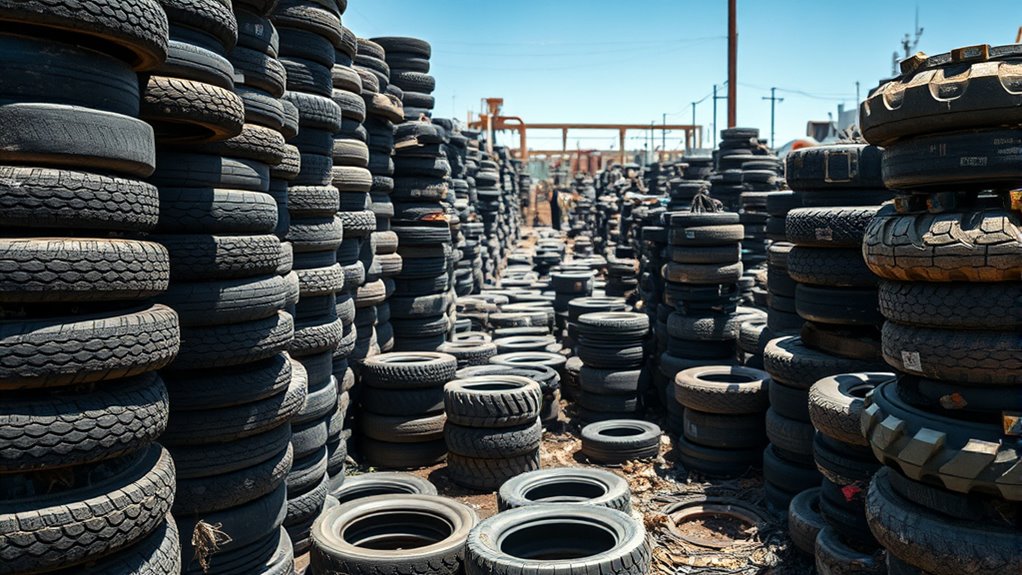

Recycling tires and tubes helps you prevent environmental pollution by turning waste into valuable products and conserving essential resources like rubber, metal, and oil. Proper disposal at recycling centers reduces landfill overflow and reduces harmful chemicals leaching into soil and water. Used tires and tubes can be transformed into mulch, flooring, or industrial fuel, supporting sustainability. Stay with us to discover more ways you can make a positive impact through recycling efforts.
Key Takeaways
- Tires and tubes can be recycled into mulch, infill, mats, and other useful products, reducing environmental pollution.
- Many recycling centers and auto stores accept tires and tubes for eco-friendly disposal at low or no cost.
- Recycling prevents harmful chemicals and heavy metals from leaching into soil and water, protecting ecosystems.
- Proper recycling supports waste reduction, conserves natural resources, and lowers greenhouse gas emissions.
- Community collection events and policies promote responsible disposal and sustainable waste management practices.
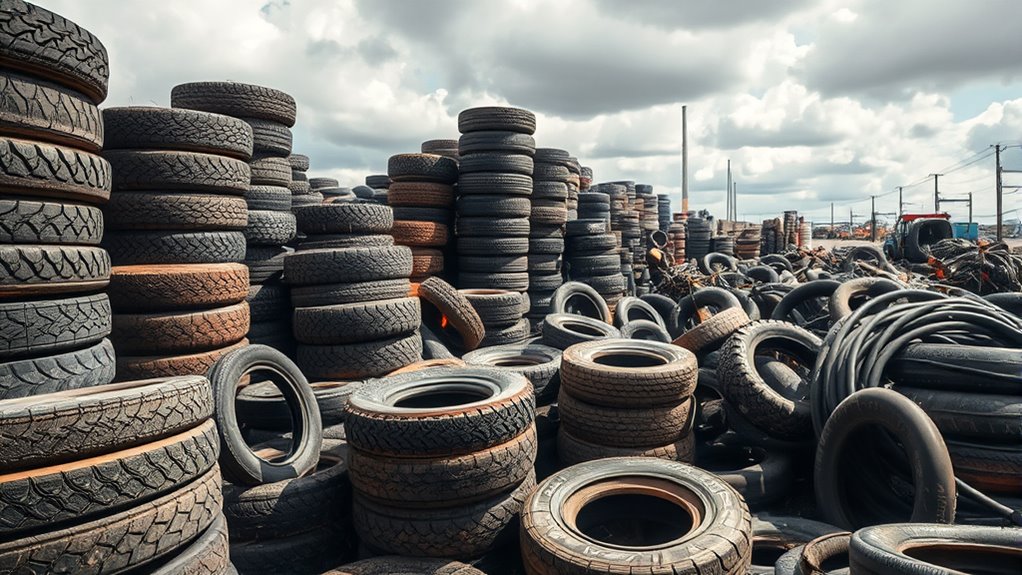
Recycling tires and tubes is an essential step toward reducing waste and protecting the environment. When you choose to recycle, you’re actively participating in waste reduction strategies that help combat the growing problem of landfill overflow. Tires and tubes are bulky, durable, and take hundreds of years to decompose naturally, so throwing them away poses a significant environmental impact. Instead, recycling transforms these materials into valuable resources, minimizing pollution and conserving natural resources.
By properly recycling tires and tubes, you help prevent harmful chemicals and heavy metals from leaching into the soil and water. These pollutants can contaminate ecosystems, threaten wildlife, and even impact human health. Recycling reduces the need to extract raw materials like rubber, oil, and metals, which are often associated with environmentally destructive mining and drilling practices. This process supports a more sustainable approach to resource management, aligning with the broader goals of waste reduction strategies designed to lessen the burden on landfills and reduce greenhouse gas emissions.
You might not realize it, but recycling tires and tubes also opens up opportunities to repurpose these materials into useful products. For example, shredded tires can be used as playground mulch, sports field infill, or even as fuel in certain industrial processes. Tubes, particularly rubber ones, can be repurposed into mats, flooring, or components for various manufacturing applications. These creative reuses not only divert waste from landfills but also save energy that would otherwise be used in producing new materials from scratch.
Recycling tires and tubes allows creative reuse, saving energy and reducing landfill waste through innovative product repurposing.
Participating in tire and tube recycling programs also supports community efforts to reduce environmental impact. Many local recycling centers and auto parts stores accept tires for free or at low cost. Some regions even have special collection events to ensure proper disposal. By making the effort to recycle, you’re contributing to a cleaner environment and encouraging others to follow suit. Your actions can influence local policies and promote the development of more sustainable waste management infrastructure.
Additionally, choosing preppy dog names inspired by sophisticated fashion or culture can add a touch of elegance to your pet’s identity, making the recycling mindset also extend to personal choices that reflect style and personality. In the end, recycling tires and tubes isn’t just about managing waste—it’s about making conscious choices that benefit the planet. Every tire or tube you recycle reduces the demand for new raw materials, cuts down on pollution, and helps lower your carbon footprint. It’s a simple yet powerful way to support waste reduction strategies that have a tangible positive impact on the environment. So, next time you replace your tires or tubes, remember that recycling is a straightforward step you can take to protect our planet for future generations.
As an affiliate, we earn on qualifying purchases.
Frequently Asked Questions
How Can I Identify if My Tires Are Recyclable?
You can identify if your tires are recyclable by checking the tire’s material composition, which usually includes rubber, steel, and fabric. Look for recycling certification labels on the sidewall, indicating the tire meets certain recycling standards. If you’re unsure, contact your local recycling center or manufacturer for guidance. These steps guarantee you’re properly sorting your tires for eco-friendly recycling and avoiding unnecessary waste.
What Are the Environmental Benefits of Recycling Tires and Tubes?
Recycling tires and tubes considerably reduces environmental impact by cutting down landfill waste and preventing harmful pollutants from seeping into the soil and water. The recycling advantages include conserving natural resources, saving energy, and lowering greenhouse gas emissions. By choosing to recycle, you help promote sustainability, protect ecosystems, and support a cleaner, healthier planet for future generations. Your efforts make a meaningful difference in reducing overall environmental harm.
Are There Any Costs Associated With Recycling Tires and Tubes?
Yes, there are cost implications when recycling tires and tubes. You might encounter recycling fees that vary depending on your location and the recycling facility. These fees help cover processing and environmental management costs. While some programs offer free recycling options, others might charge a small fee. It’s worth checking with your local recycling center to understand their specific costs and guarantee you’re prepared for any associated expenses.
How Long Does the Recycling Process for Tires and Tubes Take?
The recycling process for tires and tubes typically takes around one to two weeks, depending on the facility and the specific processing steps involved. You’ll see a timeline duration that includes initial collection, sorting, shredding, and further processing. During this time, the materials go through several stages to guarantee proper recycling. Your patience is essential, as each step is vital to transforming used tires and tubes into new, useful products.
Can Recycled Tires or Tubes Be Used for Home Improvement Projects?
Yes, you can reuse recycled tires and tubes for home improvement projects. You might upcycle tires into creative garden planters or turn tubes into unique wall art or cushions. These materials are versatile and durable, making them great for DIY projects around your home. With a bit of creativity, you’ll find many ways to give old tires and tubes a new life, enhancing your space while helping the environment.
Conclusion
By choosing to recycle tires and tubes, you help give these materials a gentle second chance, turning what once seemed worn out into new opportunities. Your efforts contribute to a more sustainable world, quietly nurturing the environment we all share. Remember, small actions like these create ripples of positive change, making our planet a cleaner, brighter place for everyone. So, keep embracing eco-friendly choices—your simple act of recycling can make a world of difference.