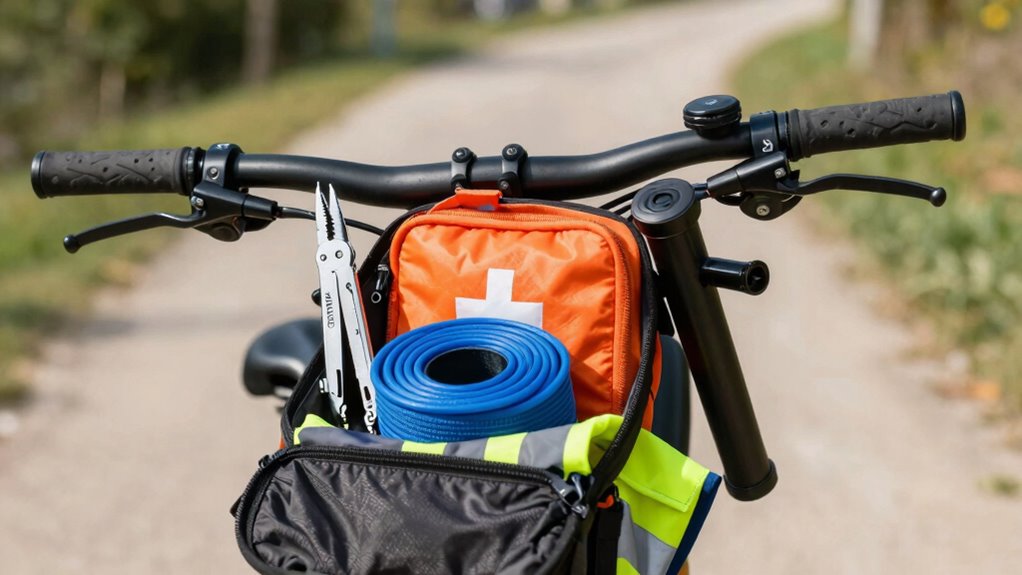

To pack an everyday emergency cycling kit, start with a multi-tool, tire levers, a spare tube, and a compact pump for quick repairs. Include a small first aid kit, high-energy snacks, and reflective gear for safety. Add weather-appropriate items like rain gear, a lightweight hat, and sunscreen. Don’t forget a fully charged phone, power bank, and a flashlight for visibility. For a complete guide on organizing your kit, keep exploring the essentials.

Get sports gear delivered free with Prime
- Fast, free delivery on millions of items
- Prime Video, Amazon Music and more included
- Member-only deals all year
Key Takeaways
- Prioritize compact, lightweight items like multi-tools, tire levers, and a spare tube for quick roadside repairs.
- Include weather-appropriate gear such as rain protection and sun safety items to handle varying conditions.
- Pack essential safety and emergency supplies like a fully charged phone, power bank, first aid kit, and reflective gear.
- Use eco-friendly and sustainable materials to minimize environmental impact and promote biodiversity considerations.
- Ensure visibility with reflective gear and lights, and stay informed about local e-bike laws for legal compliance.
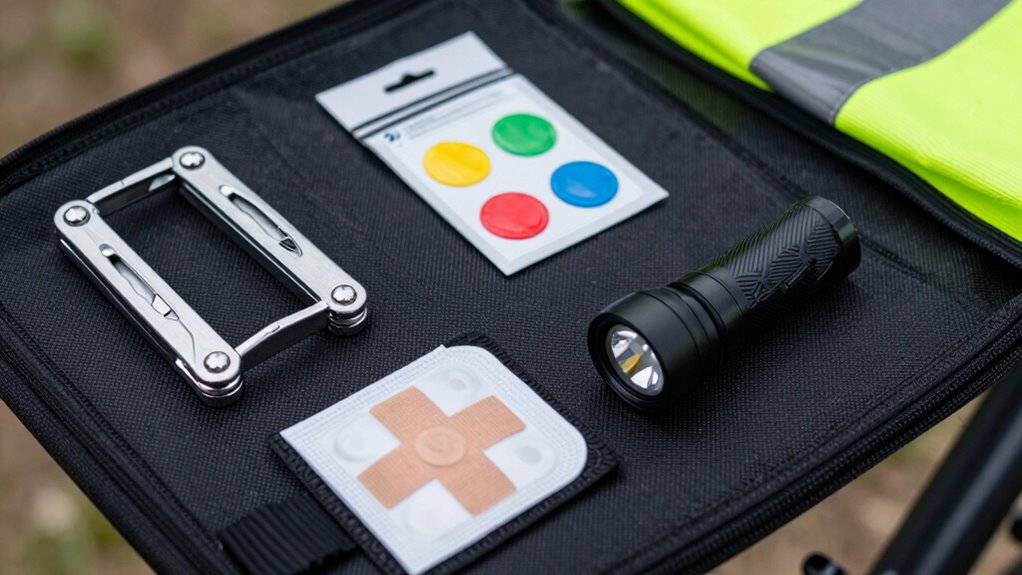
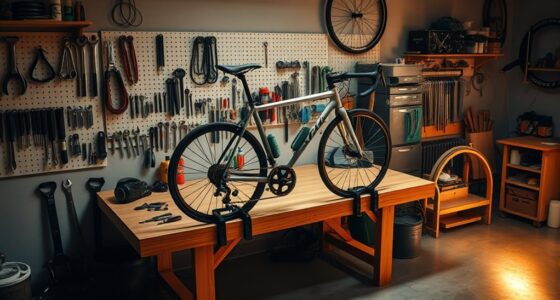
Whether you’re cycling alone or with a group, carrying an emergency kit guarantees you’re prepared for unexpected situations on the road. When you pack your kit, think about both bike maintenance and weather preparedness. Having the right tools and supplies can make the difference between a minor hiccup and a major setback. Start with a small, durable bag that can easily attach to your bike frame or fit into your backpack. Inside, include basic bike maintenance items like a multi-tool, tire levers, a spare tube, and a compact pump. These essentials help you quickly fix flat tires or minor mechanical issues without needing outside help. Also, consider carrying a small patch kit, so you can repair punctures without replacing the tube altogether.
Weather can change suddenly, so your emergency kit needs to be ready for various conditions. Pack lightweight rain gear, such as a compact rain jacket or poncho, to keep yourself dry in unexpected showers. A small, quick-drying towel can be useful if you get caught in the rain or sweat excessively. To stay warm if temperatures drop unexpectedly, include a thermal blanket or a set of insulated gloves. Likewise, a lightweight hat or buff can provide additional protection against wind or sun. For sun protection, carry a small bottle of sunscreen and sunglasses. Being weather-prepared allows you to keep riding comfortably and safely, even when conditions turn unfavorable. Incorporating biodiversity considerations into your cycling gear choices, like eco-friendly materials, can also support sustainable living practices. Additionally, selecting environmentally friendly gear can reduce your ecological footprint while enjoying your ride. Choosing gear made from sustainable materials can further lessen your environmental impact. Being aware of local regulations can help you ensure your gear complies with safety standards and legal requirements.
In addition to bike maintenance and weather gear, don’t forget some basic safety items. A fully charged cell phone with emergency contacts saved, a portable power bank, and a small first aid kit are essential. Your first aid kit should contain bandages, antiseptic wipes, pain relievers, and any personal medications. Bright reflective gear or a small flashlight can improve your visibility if you get stranded after dark. Also, consider carrying some high-energy snacks like energy bars or gels, especially on longer rides, so you can stay fueled if you need to wait for assistance or repair. Paying attention to U.S. e-bike laws and regulations can also help you ride safely and within legal boundaries.
Products Worth Considering

Therabody Theragun Mini 3rd Generation Massage Gun, Black

Garmin Striker Vivid 7cv Fishfinder with GT20-TM Transducer

Garmin Venu® 3 Premium Fitness Smartwatch 45mm Black
As an affiliate, we earn on qualifying purchases.
Frequently Asked Questions
What Size Should My Emergency Cycling Kit Be?
Your emergency cycling kit should be compact yet complete, roughly the size of a small pouch or compact backpack. It should fit easily into your bike’s frame bag or saddlebag, promoting gear organization and quick access. Focus on essentials like a multi-tool, spare tube, pump, and first aid supplies. Keeping it small ensures you prioritize bike safety without overloading, so you’re always prepared without sacrificing maneuverability.
How Often Should I Update My Kit?
You should update your emergency cycling kit at least every six months, or sooner if you notice any damaged or expired items. Regularly check your first aid supplies to guarantee they’re intact and within expiry dates, and verify that your spare tools still work properly. Weather changes and new gear can also influence what you need, so reassess your kit periodically to keep it effective and ready for any situation.
Can I Include Medications in My Kit?
Yes, you can include medications in your kit, making it your trusty sidekick in times of need. Just guarantee proper medication storage to keep essential drugs safe and effective. Pack small, labeled containers with pain relievers, allergy meds, or any personal prescriptions. Remember, like a secret weapon, your medications can be lifesavers during unexpected emergencies, so include them thoughtfully and keep them within easy reach.
What if I Have Limited Storage Space?
If you have limited storage space, focus on compact packing and smart storage solutions. Opt for multi-purpose items like a small multitool or a compact first aid kit that combines essentials into one. Use space-efficient containers or pouches to organize your gear neatly. Prioritize lightweight, small items, and consider a minimalist approach. This way, you maximize your storage and guarantee your kit remains manageable without sacrificing important emergency supplies.
Are Waterproof Containers Necessary for All Items?
Waterproof containers aren’t necessary for all your emergency gear, but they’re highly recommended for items prone to water damage like phones, maps, or snacks. If you ride in wet conditions or anticipate rain, using waterproof containers guarantees your gear stays dry and functional. For other items, lightweight, water-resistant bags can suffice. Prioritize protecting essential items that could be compromised by moisture, and adapt your container choices based on your riding environment.
Conclusion
So, next time you breeze out the door without your emergency kit, just remember—you might miss that tiny puncture or sudden chain slip. All it takes is a little foresight to save yourself from a sweaty walk home or an unexpected wait for help. Irony, isn’t it? The very kit you brushed off could be your ticket to avoiding that awkward, walk-of-shame down the street, clutching your bike like a fragile treasure.