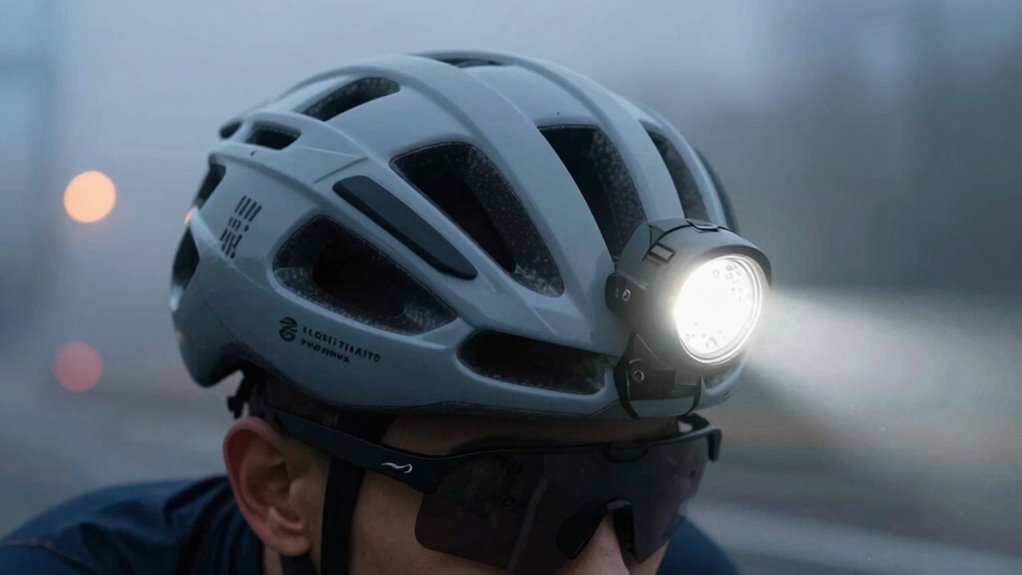

Built-in helmet lights give you the convenience of integrated, hands-free illumination, making them ideal for outdoor activities. They often feature rechargeable batteries, adjustable brightness, and battery indicators, helping you plan your energy use better. However, they can add weight and may have limited battery life, risking interruptions during long rides or hikes. While they’re easy to use, understanding their power management features can make a difference, so explore more to see if they’re right for your adventures.

Get sports gear delivered free with Prime
- Fast, free delivery on millions of items
- Prime Video, Amazon Music and more included
- Member-only deals all year
Key Takeaways
- Built-in lights eliminate the need for external mounts, providing a sleek, integrated design.
- They often have limited battery replacement options, potentially reducing long-term flexibility.
- Integrated lights can enhance safety with consistent illumination and easy control.
- Battery life may be constrained, requiring careful management or frequent recharging.
- Adjustable brightness and power indicators improve efficiency but may add to helmet complexity.

Built-In helmet lights are increasingly popular among cyclists, hikers, and other outdoor enthusiasts because they offer a convenient way to illuminate your path without extra gear. When choosing a helmet with integrated lighting, you’ll want to consider how long the battery lasts and how bright the light is. Battery longevity is essential because a short battery life can leave you in the dark midway through your adventure, forcing you to stop and recharge or replace batteries. Many helmet lights now feature rechargeable batteries that provide several hours of illumination on a single charge, which is usually enough for most outings. Additionally, some models include battery indicators that help you monitor power levels and plan your usage accordingly. Keep in mind that some models may drain power faster if you choose a higher light intensity setting, so balancing brightness with battery life becomes crucial. If you’re planning a long ride or trek, look for helmets that advertise extended battery life or allow you to swap batteries easily. Additionally, understanding the light intensity capabilities can help you select a product that meets your visibility needs without draining the battery too quickly. It’s also helpful to consider battery replacement options, as some models may require specialized parts for maintenance or upgrades. Furthermore, choosing a model with adjustable brightness can help optimize power consumption based on your environment. A good helmet light should have a focused beam pattern to enhance visibility without blinding oncoming riders or pedestrians. Being aware of the battery life and how it correlates with your usage can help you avoid unexpected interruptions during your outdoor activities.
As an affiliate, we earn on qualifying purchases.
Frequently Asked Questions
How Long Does the Battery Typically Last on Built-In Helmet Lights?
Built-in helmet lights usually last between 2 to 8 hours, depending on their battery capacity and brightness settings. You can expect longer runtime with lower brightness levels. Charging time varies from 1 to 4 hours, so it’s smart to plan ahead. Keep in mind that higher battery capacity generally means longer battery life, but it might also increase the weight of your helmet. Regular charging guarantees consistent illumination during your activities.
Are Built-In Helmet Lights Suitable for All Helmet Types?
Built-in helmet lights are suitable for many helmet types, but consider helmet weight and aesthetic design. If your helmet is lightweight, adding a built-in light might increase weight and affect comfort. Also, make certain the light’s design matches your helmet’s style; some may look bulky or clash with sleek aesthetics. Check compatibility with your helmet’s shape and fit, and choose a model that balances functionality with the helmet’s overall look.
Can Built-In Helmet Lights Be Easily Removed or Replaced?
Built-in helmet lights generally aren’t designed to be easily removed or replaced due to their integrated, sleek setup. However, some models feature a detachable design, making it simple to remove the light when needed. For replacement options, check if your helmet supports swapping out the built-in light or if you’ll need to replace the entire unit. Always refer to the manufacturer’s instructions for safe removal and replacement procedures.
Do Built-In Helmet Lights Comply With Safety Regulations?
Built-in helmet lights do comply with safety regulations, ensuring your safety and legal standards. They enhance aesthetic appeal and improve weight distribution, making your helmet comfortable and stylish. Manufacturers design these lights to meet safety standards, so you can trust their durability, visibility, and compliance. You benefit from a sleek look, balanced weight, and peace of mind knowing your helmet adheres to safety regulations while providing superior illumination.
How Waterproof or Weather-Resistant Are Built-In Helmet Lights?
Built-in helmet lights are generally designed to be weather-resistant, offering good rain resistance and dust protection. You can rely on them in light rain or dusty environments without worry. However, their waterproof capabilities vary; some models are fully waterproof, while others only resist splashes. Always check the product specifications for the level of rain resistance and dust protection, especially if you’ll use the helmet in harsh weather conditions.
Conclusion
In the end, built-in helmet lights can boost your safety and convenience, but they’re not without drawbacks. You’ll appreciate the hands-free illumination and streamlined design, yet you might face limited battery life or added weight. Did you know that nearly 60% of cyclists report improved visibility with integrated lights? Consider your riding habits and priorities carefully. Weigh these pros and cons to decide if a built-in helmet light is right for your adventures.
Fall Picks
fall essentials
As an affiliate, we earn on qualifying purchases.