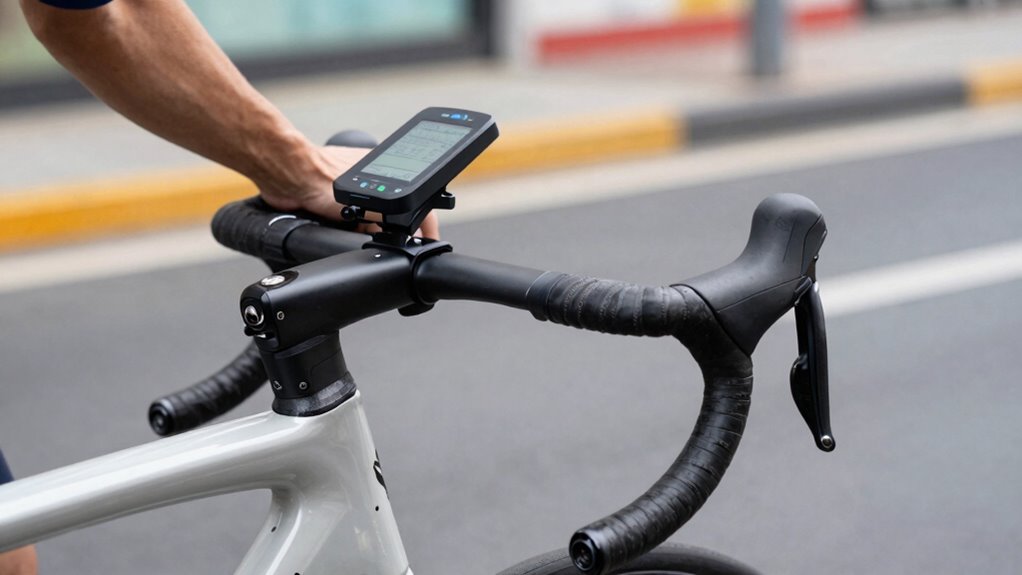

Cycling tech focused on precision gives you detailed, real-time data like heart rate, cadence, and bike performance to optimize your training and push your limits. Convenience features, on the other hand, prioritize comfort and ease, with ergonomic designs and simple controls to make riding more enjoyable and less tiring. Both approaches serve different goals—whether you’re after performance or comfort. If you keep exploring, you’ll discover how to choose the best tools for your riding style.

Get sports gear delivered free — and shop member deals
- Fast, free delivery on millions of items
- Access to Prime Big Deal Days deals on October 6–7
- Prime Video, Amazon Music and more included
Key Takeaways
- Precision cycling tech offers detailed real-time data and sensor integration for performance optimization, while convenience tech focuses on comfort and ease of use.
- Precision features are ideal for serious training and competitive riding, whereas convenience features suit casual riders and daily commuters.
- Precision tools require calibration and maintenance, adding complexity, whereas convenience options prioritize simplicity and intuitive controls.
- Precision technology provides comprehensive analytics for tracking progress, while convenience tech enhances ride comfort and reduces fatigue.
- The choice depends on riding goals: high performance and analytics favor precision, while comfort and simplicity favor convenience.
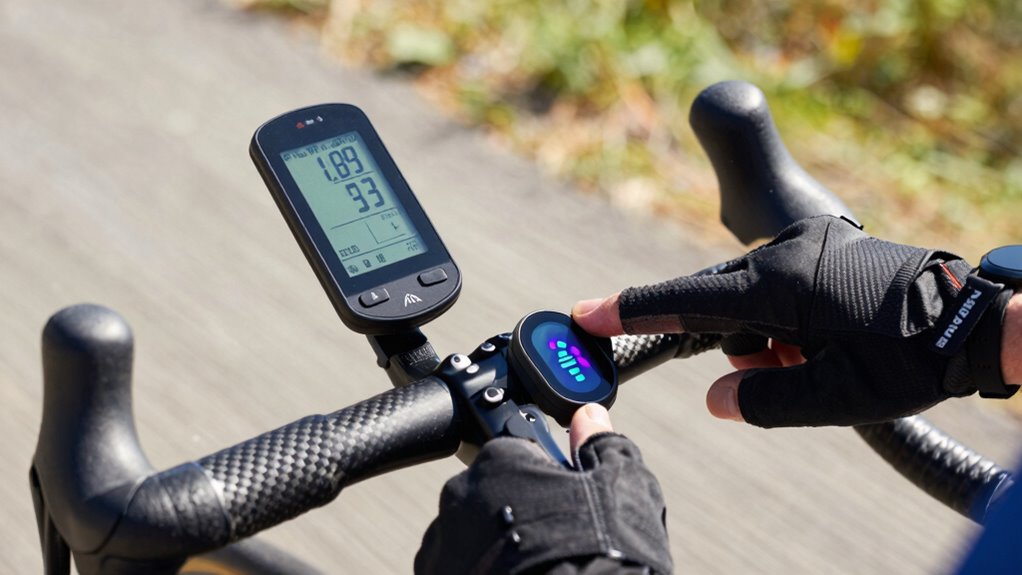
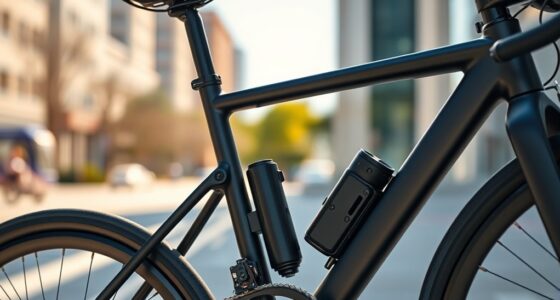
When choosing cycling technology, understanding the difference between precision and convenience can profoundly impact your riding experience. Precision-focused features, like smart sensor integration, aim to give you detailed, real-time data to optimize every aspect of your ride. These sensors can track your heart rate, cadence, power output, and even bike performance, providing insights that help you fine-tune your training and improve efficiency. If you’re serious about pushing your limits or competing, these tools allow you to monitor your progress with a level of accuracy that’s unmatched. They often sync seamlessly with apps on your phone or head unit, giving you instant feedback and detailed analytics. However, all this precision comes with a trade-off: sometimes, these systems can be complex, requiring calibration, maintenance, or updates, which might add a layer of inconvenience to your ride.
On the other hand, convenience-oriented cycling tech emphasizes making your ride smoother and more comfortable. This could mean an ergonomic handlebar design that reduces strain on your wrists, shoulders, and back, allowing you to ride longer without discomfort. Ergonomic handlebar designs are built to fit your natural grip and posture, minimizing fatigue and enhancing overall control. These features are especially valuable if you prefer casual rides or commute daily, where ease and comfort outweigh the need for detailed data. Convenience tech also includes features like integrated lights, easy-to-use gear shifting, or simplified electronic controls that remove complexity and make riding more intuitive. While these systems may not provide the granular data of high-precision sensors, they substantially enhance your riding experience by reducing effort and increasing comfort. Additionally, integrating biodiversity considerations into your cycling gear can promote environmentally conscious choices that benefit sustainable living.
Ultimately, choosing between precision and convenience depends on your riding goals. If you’re training for a race or trying to improve specific metrics, investing in smart sensor integration makes sense. It gives you the data-driven edge to refine your performance. Incorporating environmentally sustainable practices into your gear choices can also align your cycling habits with eco-friendly principles. Conversely, if you value comfort and simplicity, ergonomic handlebar design and user-friendly features will keep your rides enjoyable and less stressful. Many cyclists find that a balanced approach, combining precise monitoring with ergonomic comfort, offers the best of both worlds. The key is to identify what matters most for your riding style and priorities. Whether you lean toward high-tech analytics or user-friendly comfort, understanding these differences helps you select tools that genuinely enhance your cycling experience, making each ride more enjoyable and aligned with your goals.
As an affiliate, we earn on qualifying purchases.
Frequently Asked Questions
How Do Precision and Convenience Impact Cycling Performance?
Precision in cycling tech boosts your performance by allowing for precise gear customization, helping you optimize your setup for efficiency and power. Convenience, on the other hand, enhances rider comfort, making your rides more enjoyable and reducing fatigue. When both are balanced, you experience better control and endurance. Ultimately, accuracy guarantees your gear works perfectly, while convenience keeps you comfortable, together elevating your overall cycling performance.
Are There Specific Cycling Tech Brands Focused on Either Precision or Convenience?
Think of cycling tech brands as different navigators on your journey—some focus on precision, guiding you with exact measurements, while others prioritize convenience, making your ride smoother. Brands like Garmin and Wahoo specialize in precision tech, offering advanced cycling computers and sensors. Conversely, brands like Zwift and Bontrager emphasize convenience, providing user-friendly accessories and integrated systems. Your choice depends on whether you value pinpoint accuracy or effortless riding.
Can a Cyclist Prioritize Both Precision and Convenience Equally?
Yes, you can prioritize both precision and convenience equally by balancing your priorities and choosing tech that integrates seamlessly into your ride. Look for devices that offer accurate data while remaining user-friendly, like smart sensors with easy setup. By carefully selecting gear that harmonizes advanced features with simplicity, you guarantee ideal performance without sacrificing comfort or ease of use, making your cycling experience both precise and convenient.
What Maintenance Is Required for Precision-Focused Cycling Tech?
Think of your precision-focused cycling tech as a finely tuned instrument. You need to regularly check calibration accuracy, ensuring each component performs flawlessly. Keep it clean and free of dirt to maintain ease of use. Periodically, revisit the settings or firmware updates, just like tuning a musical instrument. This routine upkeep guarantees your device remains reliable and precise, helping you ride confidently with peak performance every time.
How Affordable Are Precision Versus Convenience Cycling Gadgets?
Precision cycling gadgets tend to be more expensive than convenience-focused ones, mainly due to advanced features and specialized components. A clear cost comparison shows that precision tech often requires a bigger investment upfront, but it enhances your user experience with more accurate data and performance insights. Convenience gadgets are more budget-friendly, offering ease of use without the higher price tag, making them ideal for casual riders or those new to cycling tech.
Conclusion
Ultimately, choosing between precision and convenience in cycling tech is like selecting the right compass—sometimes, you need the unwavering accuracy to stay true to your path, while other times, a simple, reliable guide is enough to keep you moving. Both serve as your navigators in the journey, but knowing when to rely on each defines your ride. Embrace the balance, and your cycling adventure becomes a voyage of both discovery and ease.
NFL season / tailgating Picks
team gear
As an affiliate, we earn on qualifying purchases.