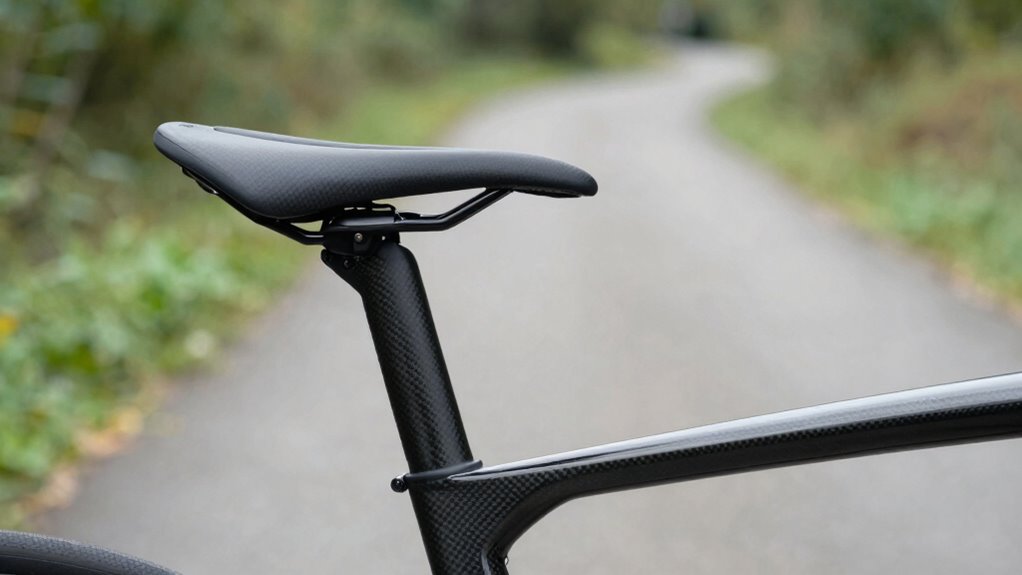

Your seatpost flex plays a key role in your ride comfort by absorbing shocks and vibrations from rough terrain or long rides. A flexible seatpost acts as a buffer between you and the bike frame, reducing fatigue and preventing soreness. Proper flexibility helps balance stability and comfort, allowing you to handle different terrains smoothly. If you want to discover how to optimize your seatpost for a more comfortable ride, keep exploring how various factors come into play.

Get sports gear delivered free with Prime
- Fast, free delivery on millions of items
- Prime Video, Amazon Music and more included
- Member-only deals all year
Key Takeaways
- Seatpost flexibility absorbs shocks and vibrations, reducing rider fatigue and enhancing comfort on rough terrains.
- Proper seatpost flex balances stability and cushioning, preventing instability during rides.
- Flexible seatposts help compensate for stiffness in rigid frame materials like carbon or aluminum.
- Adjusting seatpost stiffness allows fine-tuning ride comfort based on terrain and rider preference.
- Optimized seatpost flex improves overall ride smoothness, reducing discomfort during long-distance cycling.
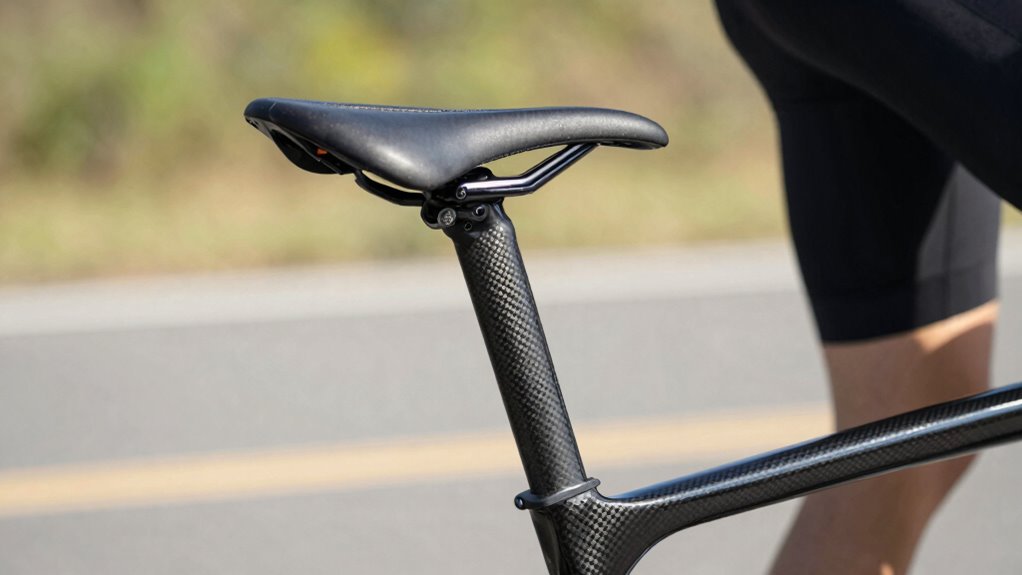
When it comes to riding comfort, the flexibility of your seatpost plays a vital role in how smooth and enjoyable your ride feels. The seatpost acts as a buffer between your body and the bike frame, absorbing shocks and vibrations that travel through the frame materials. If your bike frame is made from rigid materials like carbon fiber or aluminum, a flexible seatpost can compensate for this stiffness, reducing the impact that reaches your hips and lower back. Conversely, if you have a more compliant, steel frame, the seatpost’s flexibility still matters because it fine-tunes the ride comfort, especially over long distances or rough terrain. The key is finding the right balance—too much flex can lead to instability, while too little can transmit more road shock to your body. Proper seatpost stiffness can also help prevent fatigue and discomfort during extended rides. Additionally, considering shock absorption properties during seatpost selection can enhance overall comfort on varied terrain.
Your saddle ergonomics also influence how seatpost flex impacts comfort. An ergonomic saddle that fits well and supports your sit bones helps distribute pressure evenly, which means your body can better handle the vibrations transmitted through a less flexible seatpost. When your saddle is properly adjusted, it minimizes pressure points and reduces fatigue, allowing the seatpost’s flexibility to work more effectively at absorbing shocks. If your saddle is poorly fitted, even the most flexible seatpost won’t eliminate discomfort because improper saddle ergonomics can lead to soreness and numbness, negating the benefits of any shock absorption. Additionally, understanding the frame materials of your bike helps in choosing the appropriate seatpost flexibility to optimize comfort and control. Proper seatpost selection can also improve your bike handling and stability, especially over uneven terrain. Considering the bike geometry and riding style can help you select a seatpost that enhances shock absorption and overall comfort. Ultimately, seatpost flex isn’t just about comfort—it’s about optimizing your overall riding experience. By understanding how bike frame materials and saddle ergonomics come into play, you can choose a seatpost that enhances shock absorption, reduces fatigue, and keeps you comfortable mile after mile. Remember, small adjustments in seatpost stiffness can make a significant difference in how your body responds to the terrain, helping you ride longer and with more enjoyment.
As an affiliate, we earn on qualifying purchases.
Frequently Asked Questions
Does Seatpost Flex Impact Bike Handling Stability?
Seatpost flex can influence bike handling stability, especially if it’s excessive. If your seatpost absorbs some shocks with foam cushioning, it can reduce vibrations, making rides smoother. However, too much flex might make steering feel less precise. Confirm your seatpost is compatible with your frame, as mismatched parts can cause instability. Proper frame compatibility and the right cushioning help maintain control, balancing comfort and handling during your ride.
Can Seatpost Flex Cause Increased Fatigue Over Long Rides?
Yes, seatpost flex can cause increased fatigue on long rides. If your seatpost material isn’t stiff enough for your rider weight, it’ll flex more, leading to extra effort from your muscles to maintain position. Over time, this added strain can tire you out faster. Choosing a seatpost with the right material and stiffness for your rider weight helps reduce flex, making long rides more comfortable and less fatiguing.
What Materials Offer the Most Seatpost Flex?
Think of your seatpost as a willow branch—flexible yet resilient. Materials like carbon fiber and titanium offer the most seatpost flex, providing a smoother ride. Carbon fiber excels in flexibility comparison and material durability, absorbing shocks effectively. Titanium offers a balance of strength and flexibility, making it durable yet forgiving. Your choice depends on how much give you want, with these materials symbolizing strength and adaptability in your cycling journey.
How Does Seatpost Flex Influence Saddle Position?
Seatpost flex can influence your saddle position by allowing subtle adjustments in saddle height and tilt, especially on rough terrain. When you ride, a flexible seatpost absorbs shocks, helping you maintain better control and comfort. Just make certain your saddle stays aligned with your frame’s compatibility, as excessive flex might shift saddle position unexpectedly. Overall, a well-chosen flex enhances your riding experience without compromising frame compatibility or saddle stability.
Is There an Ideal Seatpost Flex for Different Riding Styles?
Imagine you’re riding with a vintage flair—your ideal seatpost flex depends on your riding style. For casual rides, a softer flex offers plush riding comfort, absorbing bumps gracefully. If you’re into aggressive racing, a stiffer seatpost provides better power transfer and control. So, choose a flex that matches your activity—so you stay comfortable and efficient no matter if you’re cruising or sprinting.
Conclusion
Understanding how seatpost flex impacts comfort can truly transform your ride. Did you know that riders using more flexible seatposts report a 15% decrease in fatigue over long distances? That’s a significant difference that could keep you riding longer and happier. So, next time you’re choosing your bike setup, remember that a bit of flex isn’t just about comfort—it’s about enjoying every mile. Prioritize seatpost flexibility for a smoother, more enjoyable ride.
Halloween Picks
halloween
As an affiliate, we earn on qualifying purchases.