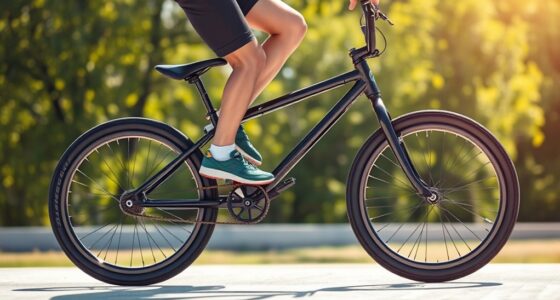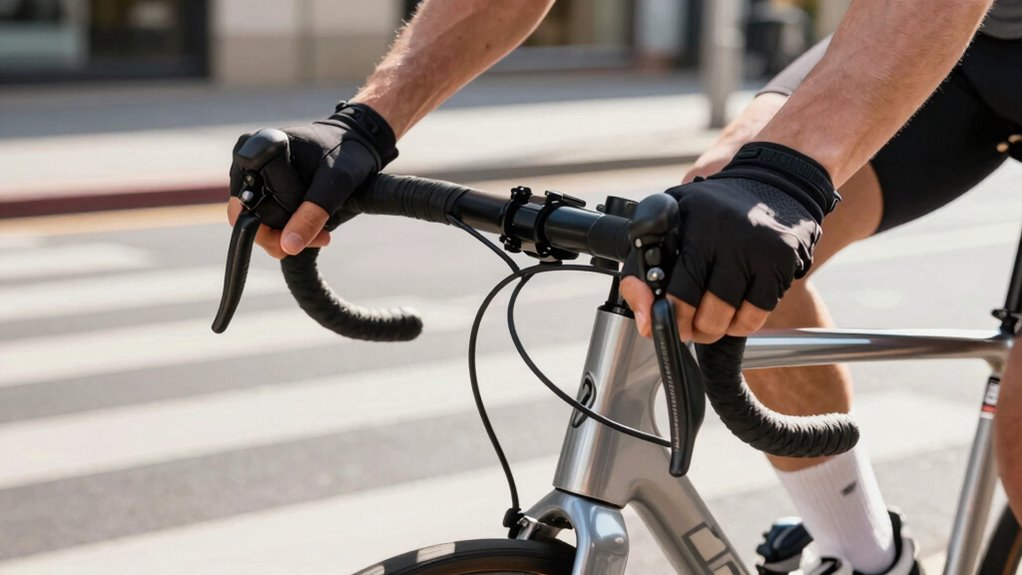

To boost your braking confidence, start by inspecting and maintaining your brake system regularly, replacing worn pads and cleaning braking surfaces like rims or rotors. Adjust your brakes so they engage smoothly with minimal pull, avoiding excessive tightness or looseness. Practice using steady pressure in various stopping scenarios to build control, and consider seeking professional help if needed. For more tips on safe and confident braking, you’ll find helpful strategies to keep you secure on every ride.

Get sports gear delivered free with Prime
- Fast, free delivery on millions of items
- Prime Video, Amazon Music and more included
- Member-only deals all year
Key Takeaways
- Regularly inspect and replace worn brake pads and damaged cables for reliable stopping power.
- Adjust brake tension and responsiveness to ensure quick, smooth engagement with minimal effort.
- Keep braking surfaces clean and free of dirt, oil, and debris for maximum grip.
- Practice various braking techniques to build confidence and control in different riding scenarios.
- Seek professional maintenance for precise adjustments and to address complex brake system issues.
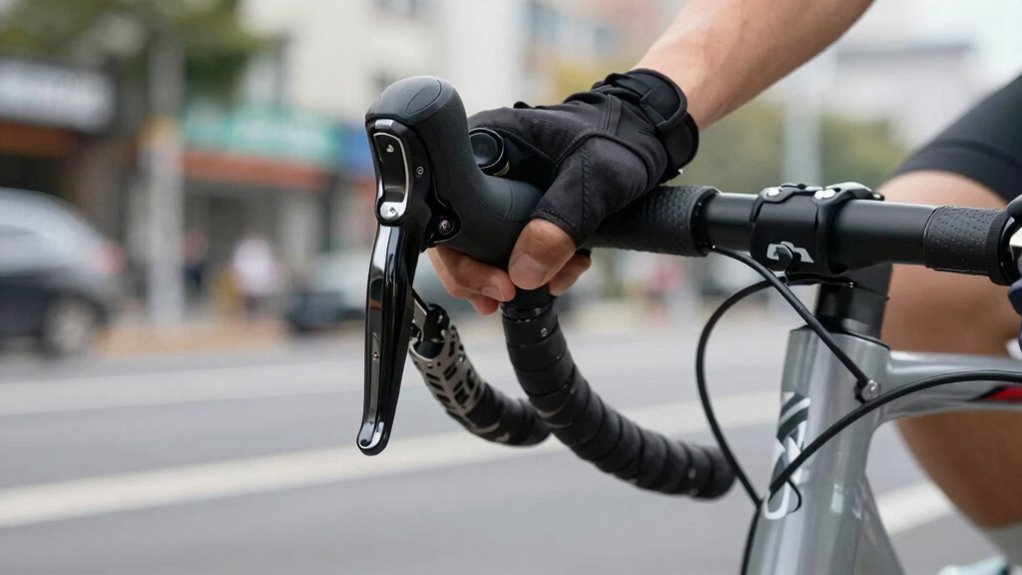
Boosting your braking confidence on a commuter bike is vital for safer, more enjoyable rides, especially in urban environments where quick stops are often necessary. When you feel confident in your bike’s braking ability, you can navigate city streets with less stress and more control. The foundation of this confidence lies in good bike safety practices and regular brake maintenance. Making sure your brakes are in top shape not only improves stopping power but also prevents sudden failures that could lead to accidents.
Start by inspecting your brake system regularly. Check brake pads for wear and replace them if they’re thinning or uneven. Worn pads decrease braking efficiency and can cause damage to your rims or rotors. When replacing pads, make sure they’re properly aligned with the rim or disc surface. Proper alignment is vital for consistent braking performance and prevents uneven wear. Also, examine the brake cables or hydraulic lines for any fraying, leaks, or damage. If you notice any issues, address them immediately to maintain best bike safety. Regular brake system checks are essential for keeping your bike in optimal condition. Additionally, consider consulting a professional if you’re unsure about your brake setup or need expert adjustments.
Regularly inspect and replace worn brake pads for optimal performance and safety.
Adjusting your brakes properly is another key step. Brakes that are too loose won’t engage quickly enough, while overly tight brakes can cause unnecessary tension and reduce responsiveness. You want the brake lever to engage with just a small pull, providing a firm, controlled stop. Most brake systems have adjustable screws or barrel adjusters that fine-tune tension. Spend a few minutes making small adjustments to find the sweet spot where your brakes respond smoothly and effectively.
Brake maintenance extends beyond just inspecting and adjusting. Keep your braking surfaces clean to maximize grip. Dirt, oil, and debris on rims or rotors can drastically reduce stopping power, so wipe them down regularly with a clean cloth. If your bike uses disc brakes, ensure the rotors are free of oil or grease, which can contaminate brake pads and diminish braking performance. Use isopropyl alcohol or a specialized cleaner for this task. Maintaining clean braking surfaces is crucial for reliable stopping performance. Regular cleaning and inspection will help you catch issues early before they affect your safety.
Finally, practice your braking technique. Get comfortable applying steady pressure rather than sudden, hard pulls. Practice stopping in different scenarios—quick stops, controlled slows, and gradual decelerations—so you’re prepared for any urban situation. The more familiar you are with how your brakes respond, the more confident you’ll become in your ability to stop safely when needed. Regularly checking your brake system and maintaining proper brake function is essential for optimal performance. The more familiar you are with how your brakes respond, the more confident you’ll become in your ability to stop safely when needed. Combining regular brake maintenance with attentive bike safety habits will greatly boost your braking confidence, making every ride safer and more enjoyable.
As an affiliate, we earn on qualifying purchases.
Frequently Asked Questions
Can Upgrading Brakes Improve Bike Handling Overall?
Upgrading your brakes can greatly improve your bike handling overall. Better brake materials, like hydraulic or carbon, provide more reliable stopping power and responsiveness. Upgrading your brake lever also enhances control, making braking smoother and more precise. When you combine high-quality brake materials with a comfortable, responsive brake lever, you’ll notice improved handling, especially in tricky situations or during quick stops, boosting your confidence on every ride.
Are Hydraulic Brakes Suitable for Commuter Bikes?
Hydraulic brakes are suitable for commuter bikes if they’re compatible with your bike’s design. You’ll want to check hydraulic compatibility before installation. They offer better stopping power and modulation, boosting your confidence. However, consider cost considerations, as hydraulic systems tend to be pricier than mechanical brakes. Maintenance can also be more involved. If you prioritize reliable stopping and are willing to invest, hydraulic brakes are a great upgrade for your commuter bike.
How Often Should Brake Pads Be Replaced?
You should replace your brake pads when they’re worn down to about 1-2 millimeters or if you notice a significant decrease in braking performance. Brake pad materials like organic or semi-metallic can influence how long they last, and some types are quieter. For noise reduction, consider switching to pads designed for quieter operation. Regular inspections help you catch wear early, ensuring safe and effective braking on your commuter bike.
Do Lightweight Brakes Compromise Stopping Power?
Coincidentally, lightweight brakes don’t necessarily compromise stopping power if they’re well-designed. The brake weight influences your control and can reduce fatigue, but it’s the quality of the brake system that truly affects stopping distance. Modern lightweight brakes often incorporate advanced materials and technology that maintain or even improve braking performance, ensuring you can stop safely without added weight. So, with proper choice, lightweight brakes can be just as effective.
Is Professional Installation Necessary for Brake Upgrades?
Professional installation isn’t always necessary for brake upgrades, but it’s highly recommended. You need to confirm the brake pad material matches your riding conditions and that the brake lever compatibility is maintained. A professional can correctly install and fine-tune these components, guaranteeing peak performance and safety. If you’re confident and experienced, you might do it yourself, but for best results, especially with complex systems, seeking expert help is wise.
Conclusion
Boosting your braking confidence isn’t just about feeling safer—it can actually reduce your stopping distance by up to 20%. Remember, practice makes perfect. Spend time with your bike in controlled settings to build trust in your brakes. As you become more comfortable, you’ll find yourself stopping smoothly and confidently, even in unexpected situations. Keep honing those skills, and you’ll enjoy your daily commute more—safer, smoother, and more in control every ride.
NFL season / tailgating Picks
team gear
As an affiliate, we earn on qualifying purchases.